Immediate Life Support Skills: Benefits for Dental Practice
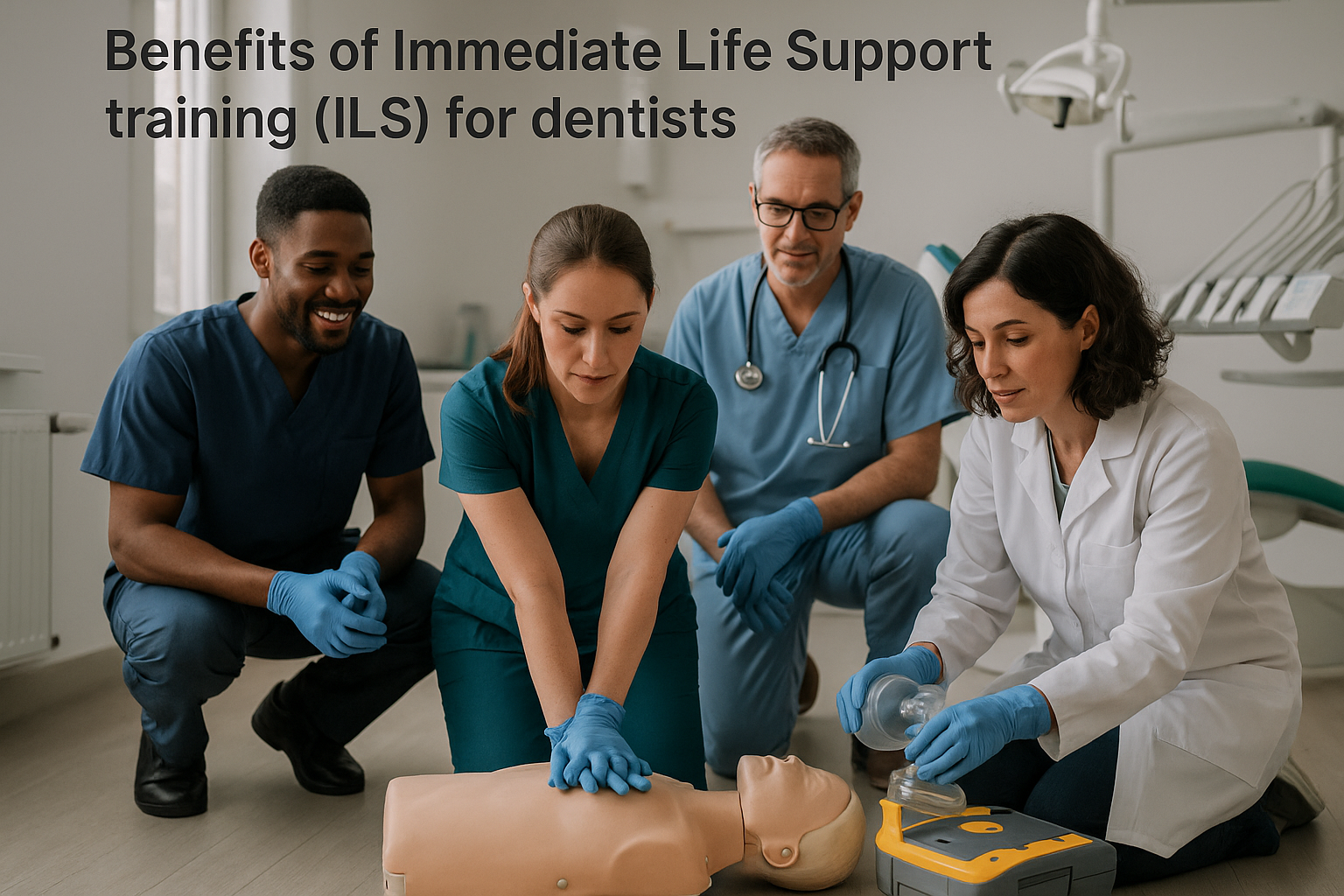

Medical emergencies happen in dental surgeries more often than most practitioners expect—fainting, severe allergic reactions, cardiac arrest, and airway obstruction can all occur during routine appointments. When they do, the difference between a positive outcome and a tragedy often comes down to whether your team has the skills and confidence to respond effectively in those critical first minutes.
This article explores why immediate life support training delivers substantial benefits for dental practices, covering the specific emergencies you're likely to face, how ILS differs from basic CPR training, and the patient safety, staff confidence, and compliance advantages that make this investment worthwhile.
Why Dental Practices Need Immediate Life Support Training
Immediate life support (ILS) training equips dental teams to handle medical emergencies like cardiac arrest, severe allergic reactions, and airway obstruction—situations where quick, coordinated action directly impacts whether a patient survives. ILS bridges the gap between basic first response and advanced paramedic care, giving dental staff a structured framework to manage deteriorating patients until emergency services arrive. The General Dental Council (GDC) expects dental professionals to be prepared for medical emergencies as part of safe patient care, and dental settings create unique risks that make this training particularly relevant.
Think about what happens in a dental surgery. Patients often feel anxious, which can trigger fainting. The reclined position used during treatment makes it harder to manage someone's airway if they lose consciousness. Add in local anaesthetics, latex gloves, and the possibility of someone inhaling dental materials, and you start to see why dental practices face different emergency risks than, say, an office building.
The difference between a team with ILS training and one without becomes obvious during an actual emergency. Trained teams spot warning signs earlier, respond systematically rather than panicking, and communicate clearly under pressure.
Immediate Life Support vs Basic Life Support for Dentists
Basic life support (BLS) focuses on chest compressions, rescue breaths, and using an automated external defibrillator (AED). It's the foundation of emergency response and absolutely essential for any healthcare setting. ILS builds on this foundation with additional skills and decision-making frameworks that prove particularly valuable in clinical environments like dental practices.
Core Skill Differences
ILS training expands your team's capabilities beyond CPR and defibrillation. You'll learn advanced airway techniques including bag-mask ventilation and how to use airway adjuncts—small devices that help keep someone's airway open when they're unconscious.
The course also covers emergency drugs. Your team learns when and how to give adrenaline for severe allergic reactions, oxygen for breathing emergencies, and glyceryl trinitrate (GTN) for cardiac chest pain. Perhaps most importantly, ILS emphasises team coordination, assigning clear roles during emergencies so everyone knows their specific job rather than three people trying to do the same thing while other critical tasks get overlooked.
Which Course Meets UK Dental Guidelines
ILS training aligned with Resuscitation Council UK guidance meets the expectations for healthcare professionals working in dental settings. While BLS certification demonstrates basic competence, ILS shows that your practice has invested in a higher level of preparedness appropriate to the clinical risks you face. Many dental indemnity providers and Care Quality Commission (CQC) inspectors recognise this distinction, viewing ILS as evidence of a more comprehensive approach to patient safety.
Emergencies Most Likely to Occur in a Dental Surgery
Understanding which emergencies you're most likely to encounter helps put ILS training into practical context. Statistics show that most practices will deal with at least one significant medical emergency every few years, and busy practices may see several annually.
Syncope and Postural Hypotension
Fainting represents the most common medical emergency in dental practice, typically triggered by anxiety, pain, or the sight of needles. The reclined dental chair position can hide early warning signs, and patients may lose consciousness as they're moved upright after treatment. ILS training teaches you to recognise symptoms before someone faints, position patients safely, protect their airway if they do lose consciousness, and distinguish simple fainting from more serious heart problems that require calling 999.
Anaphylaxis to Local Anaesthetics or Latex
Severe allergic reactions can develop rapidly and prove fatal without immediate action. Dental practices use multiple potential allergens—local anaesthetics, latex gloves, and antibiotics—making anaphylaxis a genuine risk despite being rare. ILS training covers the immediate administration of intramuscular adrenaline (an injection into the muscle), airway support, oxygen therapy, and the critical communication with emergency services.
Cardiac Arrest and Use of an AED
Cardiac arrest in a dental setting is uncommon but time-critical. For every minute without CPR and defibrillation, survival rates drop approximately 10%. ILS training ensures your team can recognise cardiac arrest immediately, start high-quality CPR, deploy your AED correctly, and coordinate roles so one person manages chest compressions while another handles the airway. You'll also learn when to pause compressions for the AED to analyse the heart rhythm and deliver a shock if needed.
Aspiration or Airway Obstruction
The dental surgery creates unique airway risks. Small instruments, dental materials, blood, and saliva can all block the airway, particularly in sedated or anxious patients. ILS training covers back blows and abdominal thrusts for conscious choking patients, but also teaches more advanced techniques for managing airway obstruction in unconscious patients, including suction and specific airway positioning.
Key Patient Benefits of Immediate Life Support Skills
The most straightforward reason to invest in ILS training is that it improves patient outcomes during medical emergencies. When your team can spot deterioration quickly and respond effectively, patients receive life-saving interventions minutes sooner—and those minutes often determine whether someone survives.
Faster Recognition of Deterioration
ILS training sharpens your team's clinical awareness by teaching systematic patient assessment using the ABCDE approach—Airway, Breathing, Circulation, Disability, and Exposure. This structured method helps you spot subtle warning signs like a slight change in breathing pattern or skin colour before they escalate into full-blown emergencies. Early recognition means early intervention, often preventing a manageable situation from becoming life-threatening.
Higher Survival Rates to Hospital Discharge
Research consistently shows that effective immediate interventions—particularly early CPR, defibrillation, and appropriate oxygen therapy—significantly improve survival rates for cardiac arrest and other critical emergencies. ILS-trained teams provide higher quality care during the crucial minutes before paramedics arrive, maintaining oxygenation and supporting circulation. These actions don't just help patients survive to hospital admission; they reduce brain damage and improve long-term recovery outcomes.
Staff Benefits Confidence Teamwork and Retention
Beyond patient safety advantages, ILS training delivers substantial benefits for your dental team's wellbeing and your practice's operational stability. Medical emergencies create enormous stress, particularly for staff who feel unprepared or uncertain about their role.
Role Clarity During an Emergency
One of the most valuable aspects of ILS training is the clear allocation of roles during emergencies. Rather than everyone rushing to help or everyone freezing in uncertainty, your team learns a structured approach where one person leads, another manages the airway, someone else performs chest compressions, and another handles the AED and documentation. This role clarity eliminates the confusion that characterises untrained emergency responses.
Reduced Performance Anxiety
Dental professionals often report significant anxiety about potential medical emergencies, worrying they won't remember what to do or will make a critical mistake. Regular ILS training with realistic simulation drills builds genuine confidence—not the false confidence of having read a manual, but the earned confidence of having practised the skills repeatedly. This confidence reduces workplace stress and improves job satisfaction, particularly among newer team members.
Legal and CQC Compliance Advantages
ILS training represents an essential component of meeting your legal and regulatory obligations as a dental care provider. While no regulation specifically mandates ILS over BLS, the level of training you provide corresponds to the risks your patients face.
Meeting GDC Standards on Medical Emergencies
The General Dental Council's Standards for the Dental Team states that dental professionals must "be able to respond appropriately to medical emergencies that may happen during treatment." ILS training demonstrates that your practice takes this responsibility seriously. During GDC investigations following adverse events, the level and currency of your team's emergency training will be scrutinised, making comprehensive, regularly updated ILS certification valuable evidence of professional competence.
Evidence for CQC Key Question Safe
Care Quality Commission inspectors assess dental practices against five key questions, with "Is the service safe?" being fundamental. CQC inspectors routinely check staff training records, emergency equipment, and emergency protocols during inspections. ILS certification from a recognised provider provides clear, documented evidence that your practice has appropriate systems in place to manage medical emergencies.
Financial ROI of On-Site Group Training
When you're running a dental practice, every training decision has financial implications. On-site ILS training typically delivers better value and less disruption than sending individual team members to external courses.
Flat Fee vs Per-Head Cost Savings
Traditional training courses charge per person, meaning that training your entire team of dentists, dental nurses, hygienists, and reception staff can become prohibitively expensive. Kasorb's flat-rate pricing for up to six people means you can train your whole team for the same cost as sending just a few individuals to external courses.
Minimised Surgery Downtime
Sending staff to external courses means closing surgeries, rescheduling patients, and losing revenue—costs that often exceed the course fees themselves. On-site training eliminates travel time and allows you to schedule training during quieter periods, minimising disruption to your clinical schedule.
What an ILS Course Covers for Dental Teams
Understanding what happens during an ILS course helps you appreciate the practical value your team will gain. ILS training is intensely practical, with the majority of time spent on hands-on skills practice and realistic scenario simulations.
Airway Breathing Circulation Algorithm
Your team learns the systematic ABCDE approach to assessing and managing deteriorating patients. This structured methodology ensures nothing gets missed during the stress of an actual emergency. You'll practise opening and maintaining airways, assessing breathing effectiveness, recognising shock, and making rapid decisions about when to call 999.
Use of Oxygen and Emergency Drugs
ILS training includes extensive hands-on practice with oxygen delivery systems—understanding flow rates, choosing between nasal cannulas and non-rebreather masks, and troubleshooting common problems. You'll also learn the safe administration of emergency medications including when to give intramuscular adrenaline for anaphylaxis, how to administer GTN for cardiac chest pain, and the appropriate use of patient's own medications like inhalers.
Team-Based Simulation Drills
The most valuable component of ILS training is realistic simulation of dental surgery emergencies. Your team works through scenarios like a patient collapsing during an extraction or anaphylaxis following local anaesthetic administration. These simulations reveal gaps in your emergency protocols and give everyone practice communicating under pressure.
Choosing a Provider With Frontline NHS Trainers
Not all ILS training delivers the same quality of learning experience. The instructor's background significantly influences how practical, realistic, and confidence-building your training will be.
Importance of Real-World Clinical Experience
Instructors who've worked as paramedics or in emergency departments bring authentic clinical insight that purely academic instructors cannot match. They share real examples of what works during actual emergencies, teach you the subtle clinical signs that textbooks rarely mention, and provide practical tips born from managing hundreds of real patients. Kasorb's trainers are experienced NHS professionals—paramedics and emergency nurses who've managed the exact scenarios you're training for.
Accreditation and Certificate Validity
ILS certification aligns with Resuscitation Council UK standards to ensure recognition by employers, indemnity providers, and regulatory bodies. Certificates from non-accredited providers may not satisfy your GDC or CQC obligations. Before booking training, verify that the provider's certificates will be accepted by your indemnity insurer and meet current UK healthcare standards.
Renewal Requirements and Record Keeping
ILS skills deteriorate surprisingly quickly without regular practice. Research shows that CPR quality declines significantly within just six months of training, while knowledge of emergency drug protocols fades even faster.
Recommended Twelve-Month Update Cycle
Most ILS providers and the Resuscitation Council UK recommend annual refresher training to maintain competence and keep current with evolving guidelines. Annual updates also provide opportunities to practise with new team members and address any near-misses or incidents that have occurred since your last training.
Digital Certificates and Training Logs
Modern training providers issue digital certificates and maintain electronic training records, making it easier to track when individual team members trained and when their certification expires. Kasorb provides comprehensive digital documentation for every course, including individual certificates, attendance records, and detailed training logs.
Next Steps Book Immediate Life Support Training With Kasorb
Kasorb delivers on-site, group-based immediate life support training specifically designed for dental practices, led by experienced NHS paramedics and emergency nurses. Our flat-rate pricing covers up to six team members, with full certification and documentation provided for GDC and CQC compliance. We tailor each course to your practice's specific layout and equipment, incorporating your actual emergency drugs into realistic simulation scenarios. Book your on-site ILS training to give your team the confidence and competence to manage medical emergencies effectively.
FAQs About Immediate Life Support for Dentists
How many team members can attend one on-site course?
Kasorb's on-site immediate life support courses accommodate up to six dental team members at a flat group rate. This allows you to train dentists, dental nurses, hygienists, practice managers, and reception staff together, building team coordination and ensuring everyone understands their role during emergencies.
Can part of the training be completed online?
Immediate life support training requires extensive hands-on practical skills practice with emergency equipment, CPR manikins, and AED trainers, so courses are delivered face-to-face with qualified instructors for valid certification. While some theory can be covered through pre-course materials, the practical component cannot be replaced with online alternatives if you want certification that meets UK healthcare standards.
Does ILS training lower my indemnity insurance premium?
Many dental indemnity providers recognise comprehensive emergency training as risk reduction and may adjust premiums accordingly, though this varies between insurers. Even if your premium doesn't decrease immediately, having current ILS certification strengthens your position if you ever make a claim following a medical emergency.
Will the certificate be accepted by dental corporates across the UK?
Certificates from Resuscitation Council UK aligned providers like Kasorb meet professional standards and are recognised by dental employers, indemnity providers, and regulatory bodies nationwide. If you're joining a dental corporate or group practice, ILS certification from a recognised provider will satisfy training requirements.


Book a free 15-min consult call with us. We’ll help you get your mandatory training done right.