Best Fire Marshal Training Providers UK

Choosing a fire marshal training provider means sifting through dozens of companies claiming to offer the best courses, but quality varies dramatically—some deliver engaging, practical training led by former firefighters while others provide bare-minimum compliance boxes to tick. The difference matters because fire marshals who've actually practiced using extinguishers and managing evacuations respond far more effectively during real emergencies than those who've only watched presentations.
This guide compares the UK's leading fire marshal training providers, breaks down what separates effective training from generic courses, and shows you how to select a provider that delivers genuine competence rather than just certification paperwork.
What Makes The Best Fire Marshal Training Provider
The best fire marshal training providers in the UK employ trainers with real emergency response backgrounds—often former firefighters or paramedics—and deliver accredited courses that meet UK legal requirements. You'll also want on-site training that addresses your specific workplace risks rather than generic classroom sessions. When you're comparing providers, look at their accreditation status, what the trainers actually did before teaching, how much hands-on practice they include, and whether they can tailor the course to your building's layout and evacuation routes.
Industry Accreditation And Recognition
Accreditation from the Institution of Fire Engineers (IFE) tells you a training provider meets professional standards and delivers content aligned with UK fire safety law. IFE-accredited courses get recognized by insurers, regulatory bodies, and health and safety auditors, which matters when you're proving compliance. That said, not every quality provider holds IFE accreditation—what really matters is whether the course content complies with the Regulatory Reform (Fire Safety) Order 2005 and covers what fire marshals actually do during emergencies.
Experienced Trainers With Frontline Experience
Trainers who've responded to real fires bring something textbook instructors can't—they know how people actually react when alarms go off, what typically goes wrong during evacuations, and which skills matter most when you have seconds to make decisions. Former firefighters, paramedics, and emergency response professionals make training more engaging because they're teaching from experience, not just reading from a manual. Your staff learn from real scenarios instead of theoretical examples, which makes the whole session more credible and memorable.
Flexible On-Site Training Options
On-site training means the instructor comes to your workplace, walks through your building, and addresses the specific hazards your team will actually face. Your staff practice with your fire extinguishers, walk your evacuation routes, and learn in the environment where they'll use these skills. This approach eliminates travel time and costs while letting you train up to 12 people at once for a flat rate, which makes it the most cost-effective option for most organizations.
Comprehensive Practical Training
Reading about fire extinguishers doesn't prepare someone to use one when there's smoke filling a room and people panicking around them. Fire marshals gain confidence through hands-on experience—actually discharging extinguishers, running through evacuation drills, and practicing communication under pressure. Look for providers who dedicate real time to practical elements rather than spending the entire session presenting slides in a classroom.
Top 5 Fire Marshal Training Providers Compared
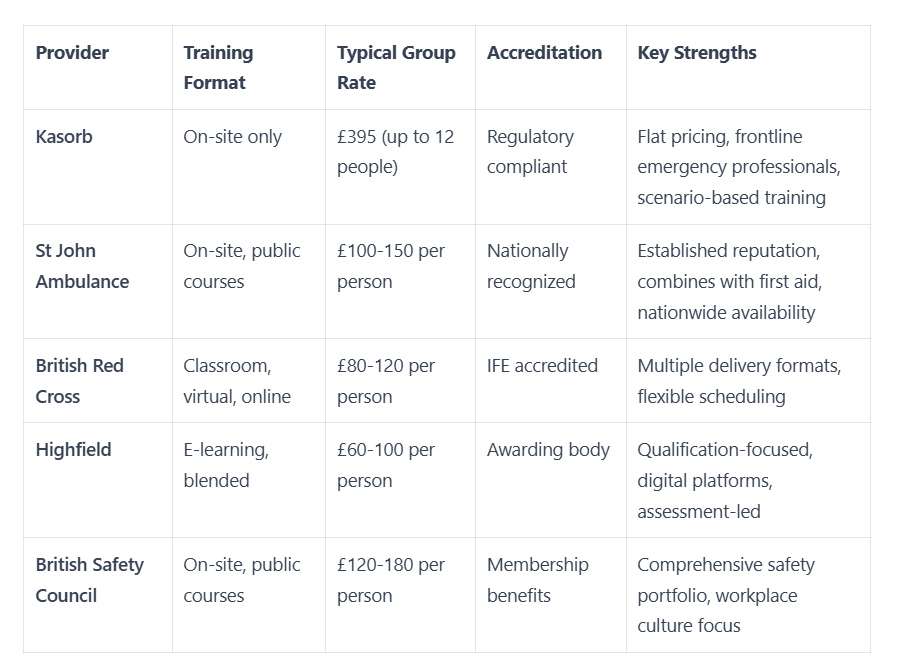
Here's how the UK's leading fire marshal training providers compare across the factors that matter most:
Kasorb Fire Marshal Training
Kasorb charges a flat £395 to train up to 12 staff members on-site, which makes budgeting straightforward and keeps per-person costs low. The trainers are paramedics, ER nurses, and NHS staff who've managed real emergencies and understand how people respond under pressure. Sessions focus heavily on practical, scenario-based learning tailored to your workplace—you get hands-on fire extinguisher practice and evacuation drills using your actual building layout. All certification and compliance documentation comes included, and training typically happens within one to two weeks of booking.
St John Ambulance
St John Ambulance runs half-day fire marshal courses both at their training centers and on-site at customer premises across the UK. Their reputation in first aid training extends to fire safety, and they can combine fire marshal training with first aid certification if you want both. Pricing typically runs £100-150 per person, which works fine for individuals or small teams but gets expensive for larger groups compared to flat-rate providers.
British Red Cross
British Red Cross offers fire marshal training in multiple formats—classroom sessions, virtual instructor-led courses, and online self-paced modules. Their courses carry IFE accreditation and cover all the core fire marshal competencies, though virtual and online formats naturally limit hands-on practice. This flexibility works well for organizations with dispersed teams or those who prefer remote learning, typically at £80-120 per person.
Highfield
Highfield delivers fire marshal training through e-learning platforms and blended learning that combines online theory with practical assessments. Their strength is providing formal qualifications and digital systems that track staff progress and compliance centrally. This assessment-focused approach suits organizations that prioritize documented qualifications and prefer digital platforms, though it feels less engaging than instructor-led practical training.
British Safety Council
British Safety Council positions fire marshal training within their broader health and safety portfolio, emphasizing workplace safety culture beyond just ticking compliance boxes. They offer both on-site and public courses, with membership benefits for organizations using them for multiple training needs. Pricing typically ranges from £120-180 per person, reflecting their comprehensive approach and established position in occupational safety.
Essential Fire Marshal Course Content
Any comprehensive fire marshal course covers five core areas that prepare staff to fulfill their legal duties and respond during fire emergencies.
Fire Safety Legislation
Fire marshals learn about the Regulatory Reform (Fire Safety) Order 2005, which places legal responsibility on employers to assess and manage fire risks. Understanding this legislation helps fire marshals recognize their role within the organization's compliance framework and communicate effectively with management about fire safety improvements. The training explains who the "responsible person" is, what duties they hold, and how fire marshals support these legal obligations.
Fire Risk Assessment
The five-step fire risk assessment process forms the foundation of fire prevention: identify fire hazards, identify people at risk, evaluate and reduce risks, record findings, and review regularly. Fire marshals learn to spot common hazards during routine workplace checks—blocked escape routes, faulty electrical equipment, or improper storage of flammable materials. While fire marshals typically don't conduct formal risk assessments themselves, understanding this process helps them contribute observations and implement control measures effectively.
Emergency Evacuation Procedures
During an evacuation, fire marshals raise the alarm, guide occupants to assembly points via safe routes, check designated areas to confirm no one got left behind, and account for all staff at the assembly point. They act as the link between building occupants and emergency services, providing information about the fire's location, any missing persons, and building-specific hazards. Training covers how to remain calm, give clear instructions, and assist people with mobility challenges or those unfamiliar with the building.
Fire Extinguisher Training
Fire marshals learn to identify the four main extinguisher types and understand when using an extinguisher makes sense versus evacuating immediately:
- Water (red label): For solid combustibles like wood, paper, and textiles
- Foam (cream label): For liquid fires like petrol or oil
- CO2 (black label): For electrical fires and sensitive equipment
- Powder (blue label): For multiple fire types but creates mess and reduces visibility
Hands-on practice with live fire extinguishers builds the muscle memory and confidence to operate them effectively under pressure. That said, training emphasizes that personal safety always comes first—fire marshals only tackle small fires when it's safe to do so and the fire brigade has been called.
Communication During Emergencies
Clear, calm communication prevents panic and keeps evacuations efficient. Fire marshals practice giving direct instructions, managing groups of people, and conveying critical information to emergency services without confusion. The training covers common communication challenges during emergencies—people freezing, not taking alarms seriously, or becoming disoriented—and techniques for maintaining authority and clarity when stress levels spike.
Fire Marshal vs Fire Warden Training Differences
Fire marshal and fire warden are interchangeable terms in the UK—they refer to the same role with identical responsibilities and training requirements. Some organizations use "fire warden" for basic roles while reserving "fire marshal" for staff with additional responsibilities, but this distinction isn't standardized across the industry. When you're booking training, you'll find providers use both terms to describe the same course content: identifying fire hazards, coordinating evacuations, and supporting fire safety management.
Training Delivery Methods Available
Fire marshal training comes in four main formats, each with distinct advantages and limitations.
On-Site Group Training
A qualified instructor travels to your workplace and trains up to 12 staff members simultaneously, tailoring content to your specific premises and fire safety arrangements. This format lets the trainer walk through your actual evacuation routes, identify your building's unique hazards, and run practical exercises using your fire safety equipment. The flat-rate pricing structure (typically £350-600 for the full group) makes on-site training the most cost-effective option when training multiple staff, while eliminating travel time and keeping the learning immediately applicable to your workplace.
Public Classroom Courses
Open courses run on scheduled dates at training centers, where individuals from different organizations attend together. This format works well for single staff members or very small teams who want certification, though the content remains generic rather than workplace-specific. Per-person costs typically range from £80-150, which gets expensive when training larger groups, and staff lose productive time traveling to and from the venue.
Virtual Instructor-Led Training
Live online sessions delivered via video conferencing platforms let staff learn from qualified instructors without leaving their location. Virtual training covers the theoretical components effectively and offers scheduling flexibility, but it can't replicate hands-on fire extinguisher practice or physical evacuation drills. This limitation means virtually trained fire marshals may lack the practical confidence they'll want during actual emergencies, though virtual training can work as a refresher for previously trained staff.
Online E-Learning Modules
Self-paced digital courses let staff complete fire marshal training independently, working through modules at times that suit their schedules. These courses typically cost £30-60 per person and cover the theoretical knowledge comprehensively, but they completely lack the practical hands-on elements that build real competence. E-learning works best as a supplement to practical training or for staff in very low-risk environments where hands-on skills are less critical.
Fire Marshal Training Costs UK
Understanding typical pricing structures helps you budget appropriately and compare the real value different providers offer:
- On-site group training: Flat rates of £350-600 train up to 12 people (£30-50 per person when training full groups)
- Public classroom courses: Per-person fees of £80-150 suit individuals but get expensive for multiple staff
- Virtual instructor-led: Typically £60-100 per person, offering mid-range pricing with theory-only coverage
- Online e-learning: Generally £30-60 per person for self-paced modules, lacking essential practical components
On-site group training delivers the best value when training multiple staff because you're paying for the trainer's time rather than per head. A £395 session training 12 people costs just £33 per person, compared to £100+ per person for public courses, while also providing workplace-specific training and eliminating travel costs. The price always includes certification, course materials, and compliance documentation—watch for providers who charge extra for certificates or administrative fees.
How Long Is Fire Marshal Training Valid
Fire marshal certification typically remains valid for 12 months in the UK, after which staff complete refresher training to maintain their competence and keep certification current. Annual refresher training keeps fire marshals updated on any changes to fire safety legislation, maintains confidence in their practical skills, and refreshes their knowledge of emergency procedures. Some high-risk workplaces or specific insurance policies require more frequent refreshers—every six months, for example—depending on fire risk assessment outcomes.
Refresher courses typically run 2-3 hours rather than the full half-day required for initial training, focusing on practicing skills and updating knowledge rather than teaching from scratch. Organizations often schedule refresher training annually as part of their compliance calendar, though it's worth training new fire marshals or running refreshers whenever there are significant workplace changes like building renovations or new fire safety equipment.
Choosing The Right Fire Marshal Training Provider
Selecting a fire marshal training provider means evaluating several factors to confirm you get effective training that meets your compliance requirements and delivers real value.
1. Assess Your Industry Requirements
Different workplaces face different fire risks. Manufacturing facilities deal with flammable materials and machinery, healthcare settings manage vulnerable people with mobility challenges, and office environments typically face lower risks but require efficient evacuation of large numbers. Identify your specific fire risks and determine whether you want specialized training that addresses industry-specific scenarios or standard fire marshal coverage that applies to most workplaces.
2. Compare Group Training Rates
Calculate the actual per-person cost when training multiple staff members, factoring in what's included in the quoted price. A £395 flat rate for 12 people (£33 per person) delivers far better value than £100 per person rates, especially when the flat-rate provider includes all certification and materials. Check whether the price covers practical equipment like fire extinguishers for hands-on training, post-training support for compliance questions, and whether there are hidden fees for certificates or documentation.
3. Verify Trainer Qualifications
Ask about trainers' professional backgrounds and real-world experience—have they responded to actual fire emergencies, or do they only have teaching qualifications? Former firefighters, paramedics, and emergency response professionals bring credibility and practical insight that engages learners and builds confidence. Also consider their teaching ability: subject matter expertise matters, but so does the skill to deliver engaging training that keeps staff interested and locks in knowledge retention.
4. Check Customer Reviews And Testimonials
Research what other organizations say about their training experience, looking specifically for feedback from businesses similar to yours in size and industry. Independent review platforms often reveal more than testimonials on a provider's own website, highlighting both strengths and potential concerns. Look for comments about trainer quality, practical relevance of the training, responsiveness of customer service, and whether the training genuinely prepared staff for their fire marshal duties.
Why UK Businesses Choose Kasorb For Fire Marshal Training
Organizations across the UK choose Kasorb because the training prioritizes real-world preparedness, delivered by professionals who've managed actual emergencies rather than just taught about them. The flat group rate of £395 for up to 12 people makes budgeting straightforward and delivers strong value when training multiple staff, while on-site delivery means every session addresses your specific workplace risks, equipment, and evacuation procedures.
Kasorb's trainers—paramedics, ER nurses, and NHS staff—bring frontline emergency experience that translates into engaging, credible training where staff learn from real scenarios and proven techniques. The hands-on approach includes live fire extinguisher practice, evacuation drills, and scenario-based exercises that build genuine confidence rather than just theoretical knowledge. All compliance documentation, certification, and risk assessment support comes included, removing administrative burden from your team while confirming you meet regulatory requirements.
Ready to train your fire marshals with practical sessions led by emergency response professionals? Book your on-site fire marshal training and get your team certified within days.
Frequently Asked Questions About Fire Marshal Training
How many fire marshals does my business need?
UK guidance recommends at least one fire marshal per floor or distinct area of your building, with sufficient coverage to confirm a trained fire marshal is present during all working hours including shift patterns and holiday periods. Larger premises or higher-risk environments typically require more fire marshals to manage evacuation effectively—a busy retail store wants more coverage than a small office, for example.
Can fire marshal training be combined with first aid training?
Many training providers including Kasorb offer combined sessions that cover both fire marshal duties and first aid skills in a single day, which proves efficient for organizations wanting multiple compliance certifications for the same staff members. Combined training reduces time away from work and often costs less than booking two separate sessions, while confirming your team can respond to the most common workplace emergencies.
Is practical fire extinguisher training included in fire marshal courses?
Quality fire marshal training includes hands-on fire extinguisher practice where participants actually discharge extinguishers on controlled fires, building the muscle memory and confidence they'll want during real emergencies. However, online-only courses and some virtual training sessions lack this essential practical component, leaving fire marshals with theoretical knowledge but no hands-on experience.
How quickly can on-site fire marshal training be arranged?
Most on-site fire marshal training providers schedule sessions within one to two weeks of booking, depending on their trainer availability and your preferred dates. Some providers offer faster arrangements for urgent compliance requirements—covering staff absences or addressing immediate regulatory concerns—though this may incur premium pricing or limit date options.


Book a free 15-min consult call with us. We’ll help you get your mandatory training done right.