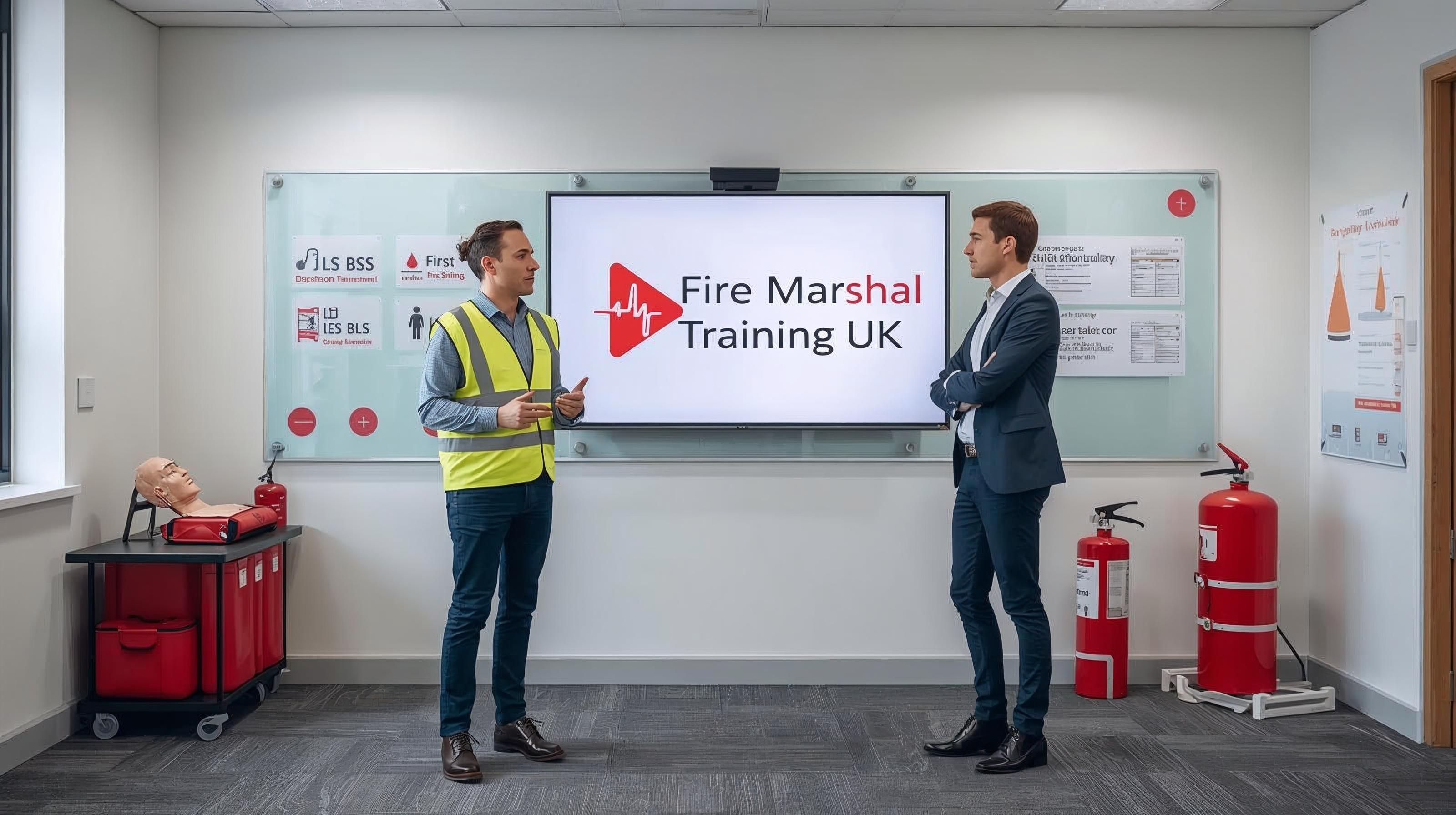
Best Paediatric First Aid Training Providers in the UK: Complete Guide


When a child chokes or stops breathing, the adult in the room has seconds, not minutes, to act. Paediatric first aid training gives childcare staff, teachers and activity leaders the practical skills to respond, from infant CPR to managing a severe allergic reaction. This guide explains what the training covers, what OFSTED and the EYFS actually require, the difference between the two main courses, and how to choose a provider whose certificate will stand up at inspection.
What is paediatric first aid training, and who needs it?
Paediatric first aid training teaches you to respond to medical emergencies in babies and children, whose bodies behave differently from adults: narrower airways, different vital signs, and distinct patterns of illness and injury. It is a legal requirement for early years childcare settings, which must have someone holding a current full paediatric first aid certificate on the premises whenever children are present.
The training matters because paediatric emergencies are not simply scaled-down adult ones. Infant CPR uses different hand positioning, compression depth and compression-to-breath technique; choking management differs for a baby; and conditions such as meningitis, febrile seizures and anaphylaxis present in ways carers need to recognise fast. Who typically needs it:
- Early years childcare providers (childminders, nursery staff): required for OFSTED registration under the EYFS framework.
- Teachers and school staff: commonly trained as part of their duty of care.
- Sports coaches and activity leaders working with children.
- Parents and grandparents: not legally required, but many train for the confidence it brings.
What do OFSTED and the EYFS require?
The EYFS statutory framework requires that at least one person with a current full paediatric first aid (PFA) certificate is on the premises and available at all times when children are present, and that they accompany children on outings. Staff who gained a Level 2 or Level 3 childcare qualification on or after 30 June 2016 must also hold a PFA certificate to be counted in staff-to-child ratios.
A few practical points follow from this. The requirement is continuous: cover for sickness, annual leave and trips all need a certified first aider, so most settings train more than the bare minimum of one person. Certificates are valid for three years and must be renewed before they expire, and a setting's first aid needs assessment, taking account of the number of children, staff and the layout of the premises, should determine how many trained staff you actually need.
The 12-hour and 6-hour courses: which do you need?
The full 12-hour Paediatric First Aid (PFA) course meets the EYFS requirement for early years settings. The 6-hour Emergency Paediatric First Aid (EPFA) course covers core life-saving skills and suits support staff, activity leaders or the voluntary childcare register, but does not on its own satisfy the full EYFS requirement for early years providers.
Full PFA — 12 hours, over 2 days
- Meets the full EYFS requirement: yes.
- Covers core life-saving skills (CPR, choking, AED): yes.
- Covers illnesses, fractures, burns and environmental emergencies: yes.
- Best suited to: lead early years practitioners and childminders.
- Certificate validity: 3 years.
Emergency PFA — 6 hours, 1 day
- Meets the full EYFS requirement: no — insufficient on its own for early years.
- Covers core life-saving skills (CPR, choking, AED): yes.
- Covers illnesses, fractures, burns and environmental emergencies: limited.
- Best suited to: support staff, coaches, the voluntary register, and top-up training.
- Certificate validity: 3 years.
Many settings use a sensible blend: lead practitioners hold the full 12-hour qualification, while the rest of the team take the 6-hour course so everyone has core skills. If you run an early years setting and need to satisfy the "one qualified person on-site" rule, the 12-hour full course is the one to book.
Can it be done online?
Not entirely. The practical skills, infant CPR, choking management, using an AED, have to be assessed in person, so a fully online certificate does not meet EYFS requirements. Blended courses are accepted: you complete the theory online at your own pace, then attend a face-to-face practical session. Completed in full, a blended course carries the same certification as classroom training.
What a paediatric first aid course covers
A good course is built around the emergencies children actually present with:
- Assessing an emergency: primary and secondary survey adapted for young patients, deciding what is life-threatening and when to call 999.
- Infant and child CPR: the different techniques for babies under one and for children, practised on manikins, plus AED use including paediatric pads.
- Choking: back blows and abdominal thrusts for children, and the modified technique for infants, and telling complete from partial airway obstruction.
- Burns and scalds: the 20-minute cool-running-water rule, what needs hospital care, and dressing to prevent infection.
- Bleeding and shock: direct pressure and dressings, and recognising that children can go into shock faster than adults.
- Common childhood conditions: anaphylaxis and auto-injector use, asthma, seizures and recognising the early signs of serious illness.
How to choose a paediatric first aid provider
Check four things: that the certificate is recognised for your needs, that the trainers are genuinely experienced, that the course is hands-on rather than lecture-only, and that the format and logistics fit your setting. For an OFSTED-registered early years setting, the certificate should come from an Ofqual-regulated awarding organisation or an approved trade body, so confirm the accreditation route before you book.
1. The right certification for your setting
This is the one point worth getting exactly right. If you are an OFSTED-registered early years setting, your certificate needs to come from an Ofqual-regulated awarding organisation (or an approved trade body such as the First Aid Industry Body) for it to be accepted at inspection. Not every first aid course carries that, so ask the provider directly and tell them you need the OFSTED-compliant version. Settings that are not bound by EYFS, some sports or activity providers, for example, may not need the regulated route, but if in doubt, choose it.
2. Trainers with real experience
Instructors who are current or former paramedics, A&E nurses or other healthcare professionals bring frontline experience that a script cannot. It shows in the scenarios they run and the questions they can answer.
3. Hands-on, not just watching
The skills are physical, so the most effective training involves extensive hands-on practice on manikins, not watching a demonstration. Smaller groups mean more practice time per person. Ask how many people are trained per session.
4. Format and logistics
Decide between attending a public course and having a trainer come to you. On-site group training lets your whole team learn together, in your own setting, using your actual layout and equipment, which is where they will really respond to an emergency. Reading reviews from other childcare settings is a good final check.
How Kasorb delivers paediatric first aid
Kasorb delivers paediatric first aid on-site at your setting, with experienced healthcare-professional trainers, a flat group rate covering up to 12 people, and both the full 12-hour and the 6-hour Emergency courses. Where you need an OFSTED-compliant certificate, we deliver the Ofqual-regulated version through Qualsafe; we also offer a non-accredited option for settings that do not require it.
The on-site model suits childcare settings well. Bringing the trainer to you means the whole team trains together, without travel, using your own rooms and equipment, and small groups mean everyone gets real hands-on practice rather than watching from the back. Our trainers are paramedics and nurses who bring frontline experience into the room, and we tailor scenarios to the risks in your actual environment.
On certification, we will always help you book the right course for your situation. If you are an OFSTED-registered early years provider, you will need the Ofqual-regulated full PFA, which we deliver via Qualsafe. If your setting does not fall under EYFS, the non-accredited course may be all you need. If you are unsure which applies, ask us and we will point you to the correct one.
How much does paediatric first aid training cost?
Cost depends on the course (the full 12-hour costs more than the 6-hour), the format (blended can reduce venue costs), and whether you book individual places or an on-site group. Individual classroom places commonly sit around £100 to £150 per person; on-site group training at a flat rate is usually better value for a whole team, and the three-year certificate spreads the cost across years.
The biggest saving for a team is group on-site delivery: a single flat rate for up to a set number of people, rather than paying per head and covering travel. When you are training several staff, that typically brings the per-person cost down substantially compared with sending people to public courses one at a time.
Frequently asked questions
How long does paediatric first aid certification last?
Three years from completion. You requalify before it expires to stay compliant, because once a certificate lapses the holder can no longer be counted as a qualified paediatric first aider.
What is the difference between the 12-hour and 6-hour course?
The full 12-hour PFA meets the EYFS requirement for early years settings; the 6-hour Emergency PFA covers core life-saving skills and suits support staff or the voluntary register but does not satisfy the full EYFS requirement alone.
Can paediatric first aid training be done fully online?
No. The practical skills must be assessed in person. Blended courses combine online theory with a mandatory face-to-face practical session and, completed in full, carry the same certification as classroom training.
What accreditation should the course have for OFSTED?
For an OFSTED-registered early years setting, the certificate should come from an Ofqual-regulated awarding organisation or an approved trade body such as the First Aid Industry Body. Confirm the route before booking, and tell your provider you need the OFSTED-compliant version.
Is there a difference between paediatric and pediatric first aid?
No, it is the same training. Paediatric is the British spelling, pediatric the American one. UK courses use paediatric first aid.
Key takeaways
- EYFS requires at least one person with a current full paediatric first aid certificate on the premises whenever children are present.
- The full 12-hour PFA meets the early years requirement; the 6-hour Emergency PFA suits support staff and the voluntary register.
- For an OFSTED-registered setting, the certificate must come from an Ofqual-regulated awarding organisation or an approved trade body, so confirm the accreditation route before booking.
- Training cannot be completed fully online; blended courses include a mandatory practical session.
- Certificates last three years and must be renewed before they expire.
- Kasorb delivers both courses on-site with healthcare-professional trainers, and the Ofqual-regulated (Qualsafe) version where OFSTED-compliant certification is needed.


Book a free 15-min consult call with us. We’ll help you get your mandatory training done right.