UK Diabetes Education Programs: Training and Certification Options


Over 4.9 million people in the UK live with diabetes, and if your organisation supports any of them—whether in care homes, schools, or corporate settings—your staff need to know how to recognise and respond to diabetes-related emergencies. Yet many organisations struggle to identify which training programmes actually meet regulatory standards and equip teams with practical, usable skills rather than just theoretical knowledge.
This guide walks you through the UK's diabetes education landscape, from understanding what awareness training covers and who needs it, to evaluating providers, navigating accreditation requirements, and choosing between delivery formats that work for your team's schedule and learning needs.
What Is Diabetes Awareness Training?
Diabetes awareness training in the UK is available for healthcare professionals, caregivers, and school staff through online or in-person courses that cover types of diabetes, management strategies, and emergency response. The training equips staff to recognise symptoms, understand medication effects, and respond appropriately when supporting individuals living with diabetes. You might be wondering how this differs from clinical training—and the distinction matters quite a bit.
Awareness training focuses on recognition and response, while clinical management training involves hands-on procedures like administering insulin or performing blood glucose tests. If you work in a care home as a support worker, awareness training teaches you to spot warning signs and know when to call for help. A nurse completing management training, on the other hand, learns to check glucose levels, give medications, and adjust care plans directly.
Learning Outcomes for Staff
Participants walk away with four core competencies:
- Symptom recognition: Spotting early warning signs of low or high blood sugar before they escalate into emergencies
- Medication awareness: Understanding common diabetes medications and their effects without actually administering them
- Escalation protocols: Knowing when to call emergency services versus when to monitor the situation
- Blood glucose basics: Grasping fundamental concepts about testing and target ranges relevant to your support role
Difference Between Awareness and Management Levels
Here's where many people get confused. Awareness courses prepare you to recognise and respond, while management courses train you to perform clinical procedures. Think of it this way: awareness training teaches you what a hypo looks like and when to get help, whereas management training teaches you how to test blood sugar, interpret the numbers, and administer treatment yourself.
UK Regulations Requiring Diabetes Training
The Health and Social Care Act 2008 establishes that care providers demonstrate staff competency in supporting people with long-term conditions, including diabetes. Though the Act doesn't explicitly say "you need diabetes awareness training," it creates obligations that make the training practically essential.
CQC Fundamental Standards
The Care Quality Commission's Fundamental Standards require care providers to employ staff with appropriate qualifications and competence. During inspections, CQC assessors interview staff to verify they can recognise diabetes-related emergencies and know how to respond. Gaps in knowledge frequently contribute to compliance concerns or ratings downgrades—something no care provider wants to face.
Health and Social Care Act Competencies
Regulation 12 places a duty on registered providers to assess risks and mitigate them where reasonably practicable. For organisations supporting people with diabetes, this translates to ensuring staff understand diabetes-related risks like hypoglycaemia, hyperglycaemia, and foot complications. The Act also requires providers to maintain records showing how they've equipped staff with necessary skills.
NICE Guidelines and CPD Requirements
NICE guideline NG28 recommends that all health and social care staff working with people with type 2 diabetes receive education appropriate to their role. While technically guidelines rather than legal requirements, CQC inspectors reference NICE standards when evaluating care quality. Many professional bodies also require members to complete continuing professional development (CPD) in areas relevant to their practice, and diabetes awareness training typically qualifies for CPD hours.
Core Topics Covered in a Compliant Course
A comprehensive diabetes awareness programme addresses six essential learning areas that prepare staff to support people with diabetes safely and confidently.
Types 1 and 2 Diabetes Explained
Type 1 diabetes is an autoimmune condition where the pancreas produces little or no insulin, typically diagnosed in childhood or early adulthood and always requiring insulin therapy. Type 2 diabetes develops when the body becomes resistant to insulin or doesn't produce enough, usually appearing in adults and often managed initially through lifestyle changes and oral medications. Understanding the difference helps you appreciate why someone with type 1 diabetes faces different daily challenges than someone managing type 2 through diet alone.
Recognising Hypoglycaemia and Hyperglycaemia
Hypoglycaemia (blood sugar below 4mmol/L) can develop rapidly, causing confusion, sweating, trembling, and potentially loss of consciousness if untreated. Hyperglycaemia (persistently elevated blood sugar) develops more gradually, producing excessive thirst, frequent urination, fatigue, and blurred vision. You'll learn to distinguish between the two because they require different responses—hypos need immediate sugar intake, while hypers typically need medical review rather than emergency intervention.
Blood Glucose Monitoring Techniques
Though awareness-level participants don't perform testing themselves, you'll learn when monitoring becomes important and how to interpret readings in context. A reading of 3.2mmol/L before lunch signals an immediate concern requiring fast-acting carbohydrates. A reading of 15mmol/L after a large meal might simply indicate the need for closer monitoring rather than panic.
Emergency Response and Escalation
Training covers the "15-15 rule" for treating mild hypoglycaemia: give 15-20g of fast-acting carbohydrate, wait 15 minutes, then recheck blood glucose. If someone becomes unconscious or unable to swallow, you'll learn to place them in the recovery position and call 999 immediately rather than attempting to give food or drink. Clear escalation pathways also address when to contact on-call nurses and what information emergency responders need during handover.
Lifestyle Advice and Signposting
You'll gain basic knowledge about dietary principles—understanding that carbohydrates affect blood sugar more than proteins or fats, and that portion control matters as much as food choices. Rather than providing detailed nutritional counselling yourself, awareness training teaches you to recognise when someone might benefit from referral to diabetes specialist nurses, dietitians, or structured education programmes.
Delivery Formats: On-Site, Online or Blended
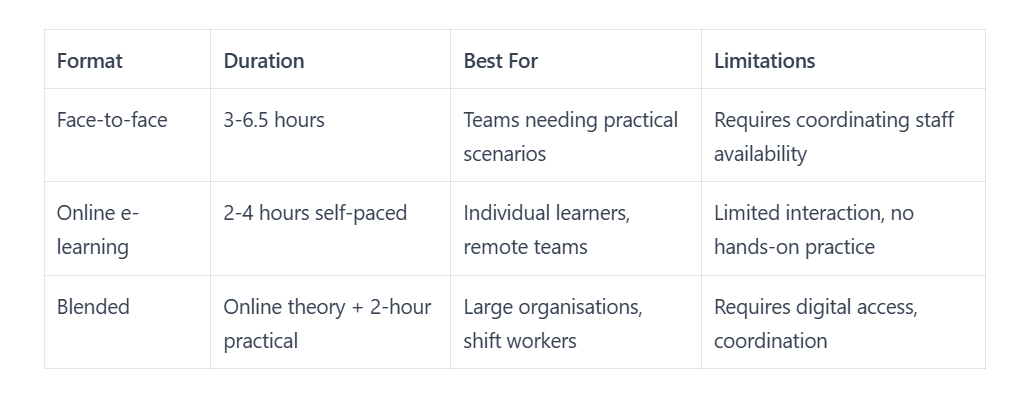
Training providers across the UK offer three main delivery approaches, each with distinct advantages depending on your organisation's situation.
Face-to-Face Interactive Workshops
On-site training brings experienced instructors—often paramedics, ER nurses, or diabetes specialist nurses—directly to your workplace for hands-on sessions. Participants work through realistic scenarios like "a resident seems confused at breakfast and is sweating heavily—what do you do?" The immediate Q&A opportunity particularly benefits staff who've encountered diabetes emergencies before and have lingering questions about whether they responded correctly.
Virtual Classroom and E-Learning Modules
Self-paced online courses allow learners to complete modules during quiet periods or between shifts, making them practical for 24-hour care settings where releasing multiple staff simultaneously proves difficult. Most platforms include videos, interactive quizzes, and downloadable resources, then issue digital certificates immediately upon passing the final assessment. However, online-only training provides limited opportunity to practice decision-making under pressure.
Blended Learning Pathways for Shift Workers
Blended programmes combine online theory modules with shorter face-to-face practical sessions. Staff complete foundational content independently, then attend a condensed workshop focusing on scenario practice and skills demonstration. This approach reduces time away from the floor while preserving the interactive elements that boost confidence and retention.
Who Should Attend Diabetes Awareness Sessions?
Regulatory expectations and best practice guidance identify three distinct groups who benefit from diabetes awareness training, though the depth of knowledge required varies by role.
Clinical Staff and Carers
Healthcare assistants, care workers, support workers, and registered nurses providing direct personal care form the primary audience for diabetes awareness training. These team members assist with meals, medication prompts, and personal care—activities where they're most likely to notice early warning signs of complications. Their proximity to residents or patients means they often serve as the first line of detection.
Non-Clinical Support Teams
Catering staff preparing meals for people with diabetes benefit from understanding carbohydrate counting basics and timing considerations around medication. Housekeeping teams who enter rooms regularly might notice signs of distress before clinical staff arrive for scheduled checks. Even reception and administrative staff gain value from awareness training because they handle emergency calls and communicate with family members who may have questions.
Managers and Compliance Leads
Care home managers, registered managers, and compliance officers need diabetes awareness knowledge to fulfil their regulatory obligations and support their teams effectively. They're responsible for developing care plans, conducting risk assessments, and demonstrating to CQC inspectors that staff possess appropriate competencies.
How Long Certification Lasts and How to Renew
Most diabetes awareness certificates remain valid for three years from the issue date, though some organisations adopt more frequent renewal cycles based on their risk assessments.
Typical Validity Periods
Training providers generally issue certificates valid for 36 months, aligning with the refresh cycle for many other mandatory compliance courses like safeguarding or infection control. However, some high-acuity settings—such as care homes where many residents have diabetes—choose annual updates to keep knowledge fresh. The certificate itself typically displays the completion date and expiry date, making it straightforward to track when renewals become due.
Refresher Timelines Recommended by CQC
CQC doesn't mandate specific renewal intervals for diabetes training, but inspectors expect providers to demonstrate that staff knowledge remains current. During inspections, assessors examine training matrices to verify that refresher training occurs at reasonable intervals—gaps longer than three years often prompt questions. Some providers schedule brief annual refreshers (60-90 minutes) between full courses to reinforce key concepts.
Recording CPD Hours for Revalidation
Registered nurses and some other healthcare professionals can claim diabetes awareness training toward their annual CPD requirements. A typical half-day course provides 3-4 CPD hours, which contribute to the minimum hours required for NMC revalidation or registration with other professional bodies. Participants need to retain certificates, keep reflective notes about how the learning applies to their practice, and record the activity in their professional portfolio.
Choosing an Accredited Provider in the UK
Selecting a training provider involves evaluating several factors beyond just price, particularly when your organisation's regulatory compliance depends on the quality and credibility of the training delivered.
Trainer Clinical Credentials
The most effective diabetes awareness training comes from instructors with direct frontline experience—paramedics who've responded to diabetes emergencies, ER nurses who've treated DKA (diabetic ketoacidosis), or diabetes specialist nurses who support people daily. When evaluating providers, ask about trainer backgrounds specifically—"certified instructor" tells you less than "practicing paramedic with 15 years NHS experience."
CPD and Endorsement Badges to Look For
Reputable providers hold accreditation from recognised bodies like CPD Certification Service, Skills for Care, or relevant professional organisations. However, accreditation alone doesn't guarantee quality—some providers display impressive logos while delivering outdated content or purely theoretical training that doesn't translate to workplace confidence.
Group Pricing and Nationwide Coverage
On-site training becomes significantly more cost-effective when providers offer flat group rates rather than per-person pricing. A £395 session for up to 12 delegates costs just £33 per person, compared to £60-80 per person for individual online courses. Also consider whether providers operate nationwide or only regionally, particularly if your organisation has multiple locations requiring consistent training.
Kasorb's Hands-On Diabetes Awareness Course at a Glance
Kasorb delivers diabetes awareness training that prioritises practical skills over passive learning, bringing experienced NHS clinicians directly to your workplace for interactive sessions.
What Makes Our Scenario-Based Training Different
Rather than lecture-style presentations, our sessions immerse participants in realistic scenarios they might actually encounter: "You're serving lunch when you notice a resident slurring their words and seeming disoriented—walk me through your response." Our trainers—practicing paramedics, ER nurses, and frontline NHS staff—guide teams through situations like this, highlighting subtle warning signs they might otherwise miss. This hands-on approach builds genuine confidence because participants practice decision-making in a supportive environment.
Flat-Rate Booking for Up to 12 Delegates
We charge a single group rate regardless of whether you're training 3 people or 12. This pricing structure particularly benefits smaller teams and encourages organisations to train everyone who interacts with people with diabetes, not just those with direct care responsibilities.
Instant Certificate Delivery and Compliance Records
Participants receive digital certificates immediately after completing the session. We also provide comprehensive attendance records, learning outcomes documentation, and trainer credentials—everything CQC inspectors request during compliance reviews.
Ready to book diabetes awareness training for your team? Schedule your session now or contact us to discuss your organisation's specific training needs.
FAQs About Diabetes Awareness Training
How quickly can diabetes awareness training be scheduled in the UK?
Most providers offer booking within two weeks, with some offering next-day emergency slots for urgent compliance needs. Kasorb typically accommodates requests within 5-7 working days, though availability varies by region and season.
Can online diabetes awareness modules alone satisfy CQC inspection requirements?
While online learning provides foundational knowledge, CQC inspectors increasingly expect evidence of practical competency demonstration through hands-on training. Inspectors often interview staff during visits to assess whether they can apply theoretical knowledge to real situations.
What documentation should organisations keep after staff complete diabetes awareness training?
Maintain certificates, attendance records, and competency assessments for at least three years to demonstrate ongoing compliance during inspections. Many organisations also keep brief notes about how training content was discussed in team meetings or applied to care plan updates.
Does diabetes awareness training include insulin administration techniques?
Standard awareness courses focus on recognition and response rather than clinical procedures. Staff who need to administer insulin typically require separate medication administration training and individual competency assessments before performing clinical tasks.
Can diabetes awareness training be combined with first aid certification sessions?
Many providers offer integrated programmes combining diabetes awareness with first aid, mental health awareness, or other mandatory compliance training. Combining courses reduces time away from operational duties and often costs less than booking separate sessions.


Book a free 15-min consult call with us. We’ll help you get your mandatory training done right.