Does BLS include first aid?
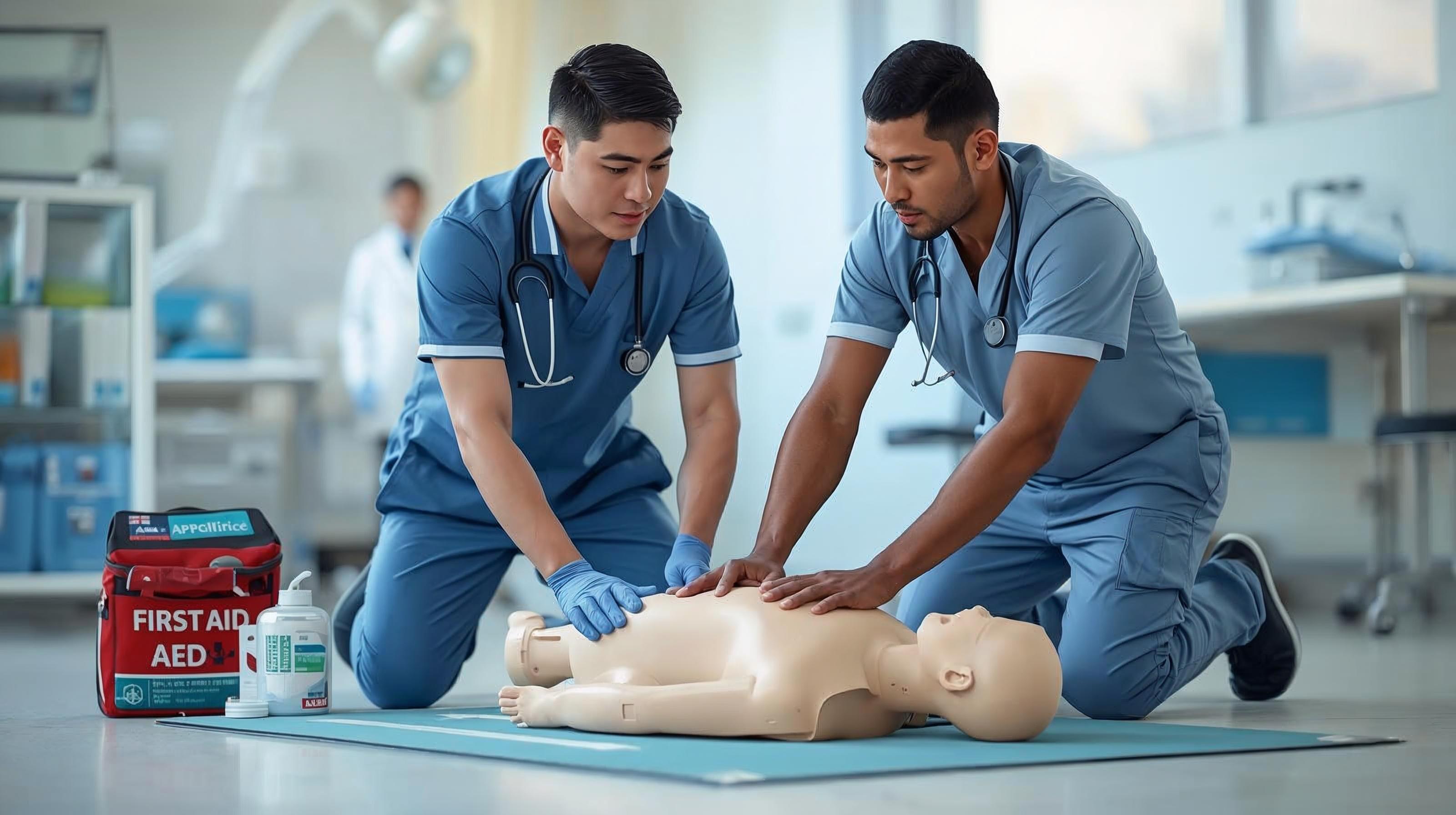

When someone collapses from cardiac arrest in your workplace, the difference between life and death often comes down to whether trained staff can start resuscitation immediately. Many organizations assume that Basic Life Support (BLS) certification covers all emergency response needs, including first aid—but that's not actually the case.
BLS and first aid are two distinct certifications designed for different types of emergencies. This article explains what BLS certification includes, how it differs from first aid training, and which certification your workplace actually needs to meet compliance requirements and protect your staff.
What Is BLS Certification?
Basic Life Support (BLS) certification is a specialized training program that teaches healthcare professionals and first responders how to respond to life-threatening emergencies. The course focuses specifically on situations where someone's heart has stopped beating or they've stopped breathing—the kind of emergencies where every second counts.
BLS training covers advanced cardiovascular and respiratory emergency techniques, including high-quality CPR, automated external defibrillator (AED) use, and team-based resuscitation protocols. Organizations like the Resuscitation Council UK recognize BLS certification and regularly update the guidelines based on the latest emergency care research.
The certification typically stays valid for two years. After that, healthcare professionals and first responders complete a renewal course to keep their credentials current and stay updated on best practices.
Does BLS Include First Aid Training?
No, standard BLS certification does not include first aid training. These are two completely separate courses with different goals and different scopes of practice.
While some skills overlap—like assessing whether a scene is safe before you approach or knowing when to call for emergency help—BLS zeroes in on life-threatening cardiac and respiratory emergencies. First aid, on the other hand, covers a much broader range of injuries and illnesses that aren't immediately life-threatening, like cuts, burns, fractures, and minor medical situations.
The confusion makes sense because both courses involve emergency response, but they serve different purposes in the chain of care. BLS is designed for those critical moments when someone's heart has stopped or they've stopped breathing and you're racing against time. First aid addresses conditions that require care but don't involve cardiac arrest—think sprained ankles, nosebleeds, or heat exhaustion.
Some training providers do offer combined courses that include both BLS and first aid components, but these are specifically marketed as combination programs. If you're looking into certification, it's worth checking the course curriculum carefully to confirm exactly what's included.
What Does BLS Training Actually Cover?
BLS training goes well beyond basic CPR. The course teaches the critical skills you'd use in cardiac and respiratory emergencies, with a strong emphasis on the techniques used in clinical and emergency settings.
CPR and Chest Compressions
BLS teaches high-quality CPR techniques for adults, children, and infants, with specific attention to proper compression depth, rate, and hand positioning. You'll learn to deliver compressions at a rate of 100-120 per minute—about the tempo of the Bee Gees' "Stayin' Alive"—with the right depth (at least 5 cm for adults).
The training emphasizes allowing full chest recoil between compressions and switching rescuers every two minutes to prevent fatigue. When you get tired, compression quality drops, which can make the difference between life and death.
Automated External Defibrillator (AED) Use
The course covers proper AED operation during cardiac emergencies, including when to deploy the device, how to apply electrode pads correctly, and how to safely deliver shocks. You'll learn to recognize shockable rhythms and understand why minimizing interruptions to chest compressions during defibrillation matters so much.
BLS training also addresses special considerations, like using AEDs on patients with implanted pacemakers or medication patches on their chest.
Rescue Breathing and Airway Management
BLS includes instruction on rescue breathing techniques, proper use of bag-valve masks, and advanced airway management methods. You'll learn how to deliver effective ventilations while keeping an airway open, recognize signs of airway obstruction, and perform techniques to relieve choking in both responsive and unresponsive patients.
The training covers both mouth-to-mask and bag-valve-mask ventilation, which are the standard methods used in healthcare settings.
Team-Based Resuscitation
One of the biggest distinctions of BLS certification is its emphasis on team dynamics and coordinated response during emergencies. In real-world clinical environments, cardiac emergencies rarely involve just one rescuer—you're typically working alongside other healthcare professionals.
You'll learn specific roles within a resuscitation team, effective communication protocols using closed-loop communication (where you repeat back instructions to confirm you heard them correctly), and how to rotate positions efficiently during prolonged resuscitation efforts. This team-based approach mirrors what actually happens in hospitals and emergency services.
Key Differences Between BLS and First Aid
BLS and first aid certification serve different purposes and target different audiences. While both are valuable emergency response skills, understanding the distinctions helps you determine which training is appropriate for your role.
Emergency Focus vs Comprehensive Care
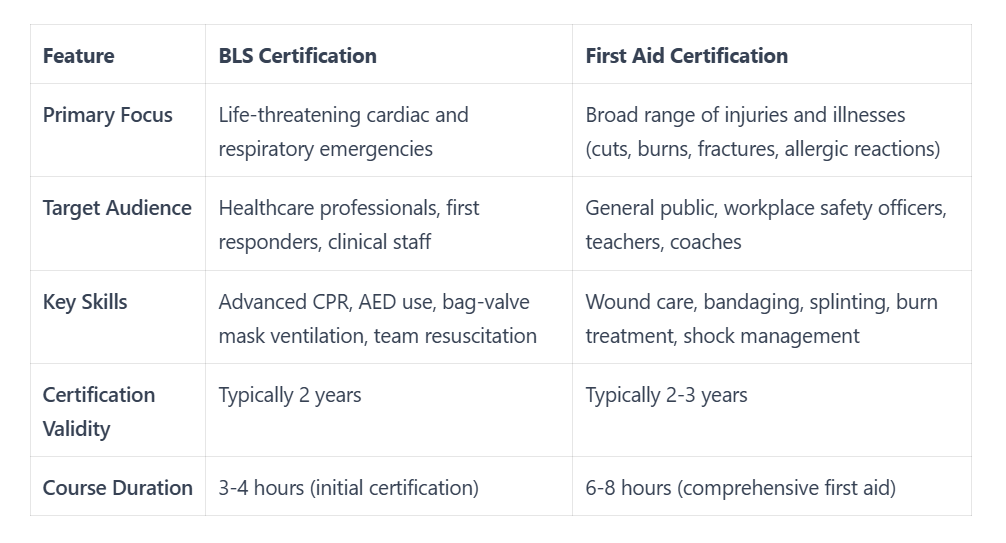
BLS certification concentrates on immediate life-threatening situations where someone's heart has stopped beating or they've stopped breathing effectively. The entire curriculum is built around cardiac arrest response and maintaining circulation and oxygenation until advanced medical help arrives.
First aid training covers a much wider spectrum of medical situations, including:
- Bleeding control and wound management
- Fracture stabilization and splinting
- Burn treatment
- Heat exhaustion and hypothermia
- Diabetic emergencies
- Seizure response
- Allergic reactions and anaphylaxis
These conditions require prompt attention but don't typically involve cardiac arrest or respiratory failure.
Professional vs Layperson Training
BLS is primarily designed for healthcare professionals, paramedics, nurses, doctors, and first responders who are likely to encounter cardiac emergencies in their work. The training assumes you'll be responding in clinical or emergency service environments where advanced equipment and team-based protocols are available.
First aid certification is suitable for anyone—office workers, teachers, parents, and community members who want to be prepared for common emergencies. The techniques taught in first aid courses are designed to be performed with minimal equipment and by individuals working alone or with limited support.
Certification Requirements and Duration
BLS certification typically requires more intensive hands-on practice and assessment. You'll demonstrate proficiency in high-quality CPR, AED use, and team-based scenarios, and your performance gets measured against specific metrics like compression depth and rate.
The initial course usually takes 3-4 hours, with renewal courses lasting about 2-3 hours every two years. First aid courses vary more widely in duration depending on the level of certification, ranging from basic 3-hour courses to comprehensive 2-day programs.
Who Needs BLS Provider Certification?
BLS certification is required or strongly recommended for professionals whose roles involve direct patient care or emergency response. Whether you need BLS certification depends on your job responsibilities, industry regulations, and the level of emergency response expected in your position.
Healthcare Professionals
Doctors, nurses, paramedics, emergency medical technicians, dentists, dental hygienists, pharmacists, and physician assistants typically require BLS certification as a condition of employment or professional licensure. Many healthcare facilities won't allow clinical staff to work with patients without current BLS credentials, as cardiac emergencies can occur in any care setting—not just emergency departments.
Emergency Response Teams
Firefighters, police officers, lifeguards, ski patrol members, and search and rescue personnel are often required to maintain BLS certification as part of their professional qualifications. These roles frequently involve first-on-scene response to medical emergencies where immediate life-saving intervention is critical before ambulance services arrive.
Care Home and Clinical Staff
Care home workers, hospital support staff, clinical assistants, and therapy providers who work with vulnerable populations benefit from BLS certification even when it's not strictly required. Elderly patients and those with complex medical conditions are at higher risk for cardiac events, making advanced life support skills particularly valuable in residential care settings.
When You Need Both BLS and First Aid Certification
Certain workplace environments benefit from having staff certified in both BLS and first aid. While BLS handles the most critical cardiac and respiratory emergencies, first aid skills enable staff to manage the full spectrum of workplace injuries and medical situations that arise more frequently.
Consider both certifications for settings such as:
- Care homes and residential facilities: Staff may encounter cardiac emergencies requiring BLS as well as falls, wounds, and chronic condition complications requiring first aid
- Schools and educational settings: Teachers and support staff benefit from first aid for playground injuries while having BLS available for cardiac events during sports or with staff members
- Sports and fitness facilities: Gyms, sports clubs, and recreation centers face both cardiac emergency risks during intense physical activity and common sports injuries requiring first aid
- Large office buildings: Workplace first aiders handle everyday incidents while BLS-trained staff can respond to cardiac events, which are more common in sedentary work environments
Many training providers offer combination courses or can deliver both certifications during a single on-site training session. This approach makes it efficient for organizations to equip their teams with comprehensive emergency response skills.
Choosing the Right Training for Your Workplace
Selecting appropriate emergency response training for your workplace starts with understanding your legal obligations and assessing your specific risks. UK employers have a legal duty under the Health and Safety (First-Aid) Regulations 1981 to provide adequate first aid provision, but the specific type of training required depends on your workplace risk assessment.
When deciding between BLS, first aid, or both, consider:
- Industry regulations: Healthcare and care sectors often mandate BLS certification, while other industries may only require first aid
- Workplace risk assessment: Higher-risk environments with physical labor, machinery, or hazardous materials typically need more comprehensive first aid coverage
- Staff roles and responsibilities: Clinical or care staff benefit from BLS, while designated workplace first aiders need comprehensive first aid certification
- Number of employees and shift patterns: Larger organizations or those operating 24/7 need sufficient coverage across all shifts
Kasorb offers on-site compliance training tailored to your workplace's specific risks, with courses delivered by experienced paramedics, ER nurses, and NHS staff who bring real-world emergency experience to the training room. Our flat group rate for up to 12 people makes it cost-effective to train multiple team members simultaneously.
Book your workplace compliance training with Kasorb today and give your team the skills they need to respond confidently to workplace emergencies.
FAQs About BLS and First Aid Certification
Can I take BLS certification if I'm not a healthcare professional?
Yes, anyone can enroll in BLS certification courses even if you're not working in healthcare or emergency services. While the training is designed with healthcare professionals in mind and uses clinical terminology and scenarios, non-medical professionals in high-risk environments—such as security personnel, fitness instructors, or industrial site managers—often choose BLS for the advanced life-saving skills it provides. However, if you're not in a healthcare role, you might find a combined CPR and first aid course more practical for everyday emergency response.
How long does BLS certification last compared to first aid certification?
BLS certification typically remains valid for two years from the date of issue, after which you'll complete a renewal course to maintain your credentials. First aid certification also generally lasts two to three years, though the specific validity period depends on your training provider and the level of certification you've obtained. Both certifications require periodic renewal to keep your skills current with the latest evidence-based guidelines and best practices.
Is online BLS certification valid in the UK?
Some BLS courses offer online or blended learning options where you complete the theoretical components online, but all legitimate BLS certifications require an in-person practical assessment where you demonstrate your skills to a qualified instructor. Fully online BLS certifications without hands-on assessment are not recognized by most UK employers or professional bodies, as competency in physical skills like CPR and AED use cannot be reliably assessed remotely. When choosing a training provider, verify that they offer in-person practical sessions and provide certification that meets UK regulatory standards.
What's the cost difference between BLS and first aid training?
BLS courses are often slightly more expensive than basic first aid training due to the advanced content, specialized equipment required, and longer duration of initial certification courses. However, pricing varies considerably between training providers and course formats. Combination courses that include both BLS and first aid may offer better value for organizations needing comprehensive emergency response coverage, as bundling the training often reduces the per-person cost compared to booking separate courses.


Book a free 15-min consult call with us. We’ll help you get your mandatory training done right.