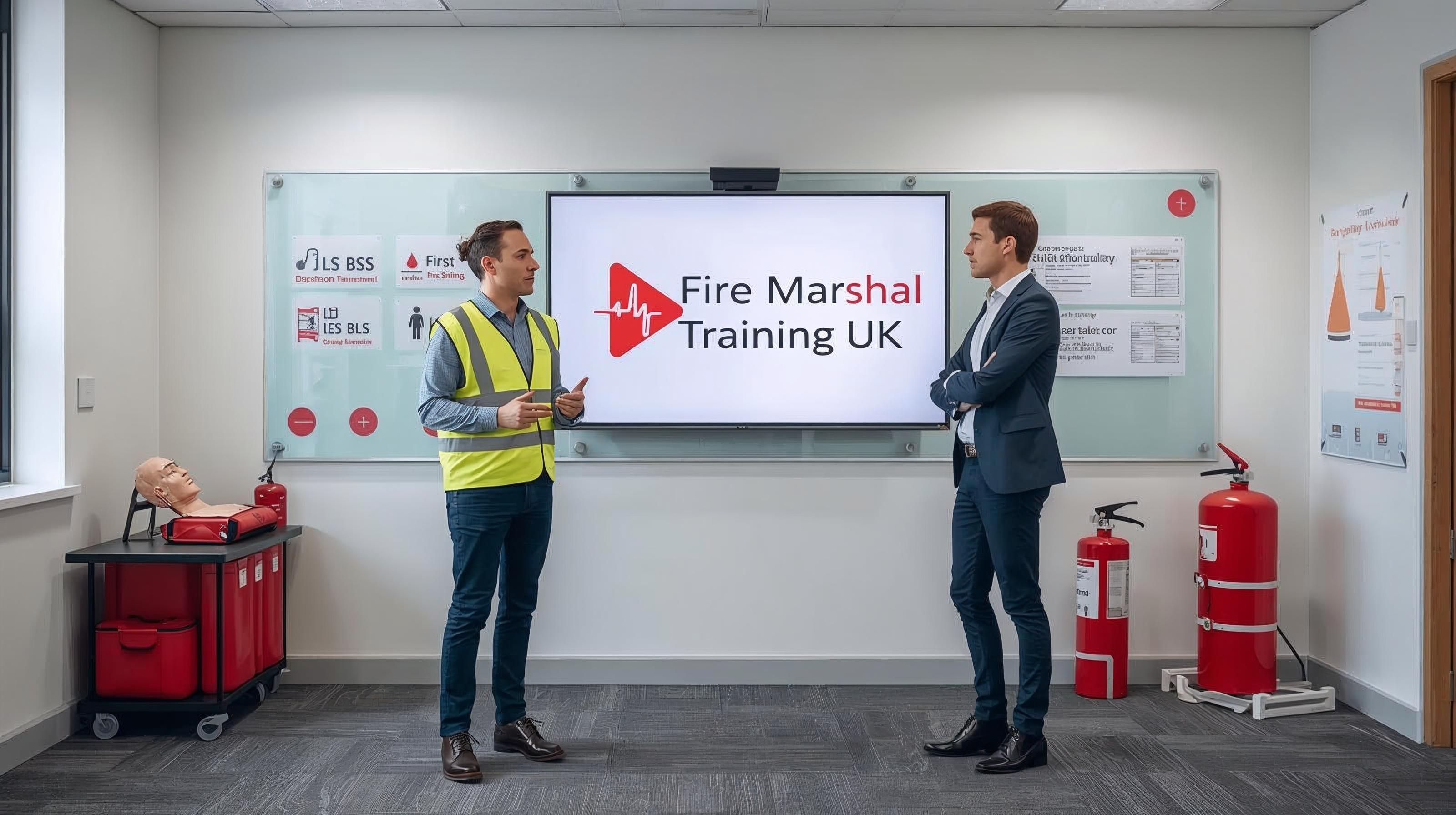
Fire Marshal Training: When to Use Real Extinguishers Safely


Fire marshal training doesn't legally require you to discharge real extinguishers or practice with live flames—competency can be demonstrated through simulators, instructor-led demonstrations, or controlled live-fire drills, depending on your workplace risk assessment. Both UK regulations and OSHA allow flexibility in training methods, as long as your fire marshals gain the practical skills and confidence they need to respond safely in actual emergencies.
This guide covers when real extinguisher discharge is appropriate, how simulators compare to live fire, who needs hands-on training, and how to run safe, compliant sessions that satisfy regulators and insurers.
Are Fire Marshals Legally Required to Discharge Real Extinguishers
No, fire marshals aren't legally required to discharge real extinguishers or practice with live fires during training in the UK. The Regulatory Reform (Fire Safety) Order 2005 requires training to be "suitable and sufficient" based on your workplace risk assessment, but it doesn't prescribe specific training methods. This means you can achieve competency through digital simulators, gas-powered training extinguishers, instructor-led demonstrations with empty units, or traditional live-fire exercises—as long as the method equips your fire marshals with the skills they need for the actual risks they might face on site.
Modern training systems provide realistic alternatives that satisfy regulatory expectations without igniting real flames. Electronic simulators replicate the weight, discharge sound, and nozzle kickback of real extinguishers while projecting digital flames that respond to correct technique. Gas-based trainers use controlled propane flames in purpose-built training units, offering a middle ground between full simulation and open-fire drills.
The key compliance question isn't whether you use real fire—it's whether your training demonstrates that fire marshals can recognize the type of fire, select the correct extinguisher, operate it confidently under pressure, and know when to evacuate instead of attempting to fight. Your risk assessment drives this decision. If your site handles flammable liquids, reactive chemicals, or high-value electrical equipment, you might justify more intensive hands-on training including live discharge to build the stress response and decision-making speed your team needs.
OSHA Fire Extinguisher Training Requirements vs UK Regulations
If you work for a multinational company or manage sites with both UK and US operations, understanding how OSHA and UK fire safety law intersect can help you design training that satisfies both frameworks. OSHA takes a more prescriptive approach, while UK regulations are performance-based, but both can be met with thoughtful, practical training programs.
OSHA Fire Extinguisher Training Requirements
OSHA standard 29 CFR 1910.157(g) requires that employees designated to use portable fire extinguishers receive hands-on training. However, OSHA explicitly states that you don't need to set real fires to meet this requirement. The hands-on element means trainees physically handle and discharge extinguishers—not that they extinguish actual burning materials.
Key OSHA expectations include education on fire hazards in the workplace, which extinguisher types correspond to which fire classes, and how to operate the specific models your site stocks. Trainees also need instruction on when to attempt extinguishment versus when to evacuate immediately. Annual refresher training is required, though the depth can be adjusted based on whether there have been changes to equipment, workplace hazards, or employee roles.
UK Regulatory Reform Fire Safety Order Guidance
UK law places the responsibility on the "responsible person" (typically the employer or building owner) to conduct a fire risk assessment and provide appropriate instruction and training. The Fire Safety Order doesn't specify training frequency, content, or methods—it simply requires that training is suitable and sufficient for the risks identified.
This performance-based approach means your training design flows directly from your risk assessment. If your assessment identifies that certain employees (fire marshals, wardens, or high-risk operators) may need to use extinguishers, you provide training that equips them to do so safely.
Bridging Gaps for Multinational Sites
Companies operating under both regimes can align their programs by focusing on competency outcomes rather than rigid methods. Provide theory sessions covering fire science, extinguisher types, and decision-making, then follow up with hands-on practice using real extinguishers (discharged into simulators or controlled environments).
This approach ticks OSHA's hands-on box while satisfying UK expectations that training is proportionate to risk. For higher-risk sites, you might add optional live-fire evolutions where the risk assessment supports it and you can implement robust safety controls.
Who Needs Hands-On Employee Fire Extinguisher Training
Not every employee requires the same depth of fire extinguisher training—your approach depends on roles, responsibilities, and the risks identified in your fire risk assessment. Defining categories clearly helps you allocate training resources effectively and avoid over-training low-risk staff or under-preparing people who might genuinely need to use an extinguisher.
- Fire marshals and wardens: Fire marshals require comprehensive hands-on training because they're expected to assess small fires, operate extinguishers, and coordinate evacuations. Their training covers fire behavior, extinguisher selection, PASS technique (Pull, Aim, Squeeze, Sweep), and scenario-based decision-making.
- High-risk operators: Employees working in laboratories with flammable solvents, manufacturing areas with hot work or combustible dust, commercial kitchens with deep-fat fryers, or fuel storage facilities face elevated ignition risks. They benefit from practical extinguisher training tailored to the specific fire classes they might encounter, plus scenario drills that rehearse their immediate actions before evacuation.
- General employees: Most office, retail, or administrative staff need awareness training rather than hands-on extinguisher practice. They learn to recognize alarms, identify exit routes, understand fire classes, and know when not to fight a fire.
- Lone or remote workers: Tailor training to the specific risks they face. A lone security officer in a warehouse with high-value stock might need practical extinguisher skills because help won't arrive quickly.
How Often Is Fire Extinguisher Training Required for Compliance
There's no single universal interval mandated by UK law—training frequency depends on your risk assessment, the roles employees perform, and any changes to your workplace, equipment, or processes. However, common practice and insurer expectations have established some widely accepted benchmarks.
Initial Training on Induction
New fire marshals and designated employees receive training as soon as they take on the role, ideally before they're expected to respond to any incident. This initial session covers theory (fire triangle, classes, extinguisher types), practical skills (PASS technique, nozzle control, safe approach distances), and decision-making (when to fight, when to evacuate, how to raise the alarm).
Annual and Refresher Intervals
Fire marshals, wardens, and designated users typically receive annual refresher training to maintain competency and update knowledge. This keeps skills sharp, reinforces decision-making under pressure, and provides an opportunity to cover any changes to site layout, equipment, or fire risks.
General staff awareness training is often refreshed every one to three years, depending on workplace risks and staff turnover. Lower-risk office environments might extend to three-year cycles, while higher-risk or high-turnover sites (such as hospitality or retail) often opt for annual or biennial refreshers.
High-Risk Workplace Exceptions
Certain environments justify more frequent and intensive training. Laboratories using flammable solvents, oxidizers, or reactive metals might conduct quarterly scenario drills and semiannual hands-on refreshers. Manufacturing sites with hot work, combustible dust, or large fuel loads often run biannual practical sessions. Commercial kitchens handling deep-fat fryers and Class F risks benefit from frequent, role-specific refreshers that include wet chemical extinguisher practice.
Live Fire vs Simulator: Which Method Fits Your Risk Assessment
Choosing between live-fire training and simulator-based sessions depends on your workplace hazards, site constraints, environmental policies, and the level of stress exposure your fire marshals need. Both methods can produce competent, confident trainees—your risk assessment and operational context determine which is most suitable and sufficient.
Benefits of Discharging Real Extinguishers
Live-fire training provides authentic sensory experience. Trainees feel the full weight of a charged extinguisher, experience the nozzle reaction and discharge pressure, hear the loud hiss or roar of the agent, and see actual flames respond (or fail to respond) to their technique. This realism builds confidence and reduces hesitation because trainees know they've successfully extinguished a real fire, not just a simulation.
The stress of approaching real flames—even controlled ones—prepares trainees for the freeze response that can occur during genuine emergencies. They learn to manage adrenaline, maintain situational awareness, and make quick decisions about whether the fire is within their capability or whether they need to evacuate immediately.
Advantages of Digital and Gas Simulators
Simulators offer repeatability and safety. Trainees can practice multiple times without consuming extinguisher media, allowing them to refine technique, correct mistakes, and build confidence through repetition. Modern systems provide realistic feedback—digital flames shrink or grow based on aim and sweep, and gas trainers produce real heat and flame behavior without the mess or environmental impact of burning fuel in open trays.
Cost-effectiveness is another major advantage. You avoid the expense of recharging or replacing extinguishers after every session, eliminate cleanup time, and reduce the need for spill containment, ventilation, and post-training servicing.
Environmental and Cost Factors
Live-fire training requires fuel (wood, propane, or specialized training liquids), containment trays, spill control measures, and thorough cleanup of foam, powder, or wet chemical residues. Depending on the agents used, you might need environmental permits, drainage protection, and waste disposal arrangements.
Simulators minimize concerns around cleanup, media disposal, and venue restrictions. You can run sessions year-round in almost any location. For organizations with sustainability commitments or tight budgets, simulators often provide the most practical path to competency.
Steps to Run a Safe Live-Fire Drill on Site
If your risk assessment supports live-fire training and you choose to proceed, follow a documented process with clear controls to protect participants, property, and the environment.
1. Conduct a Written Risk Assessment
Document all hazards, control measures, participant numbers, extinguisher types, ignition sources, weather and wind conditions (for outdoor drills), environmental controls, and emergency arrangements. Your risk assessment names a competent person in charge (typically the trainer), defines roles, and includes a method statement outlining the sequence of activities, safety briefings, and contingency plans if something goes wrong.
2. Select a Controlled Burn Area
Choose a location with a non-slip, non-combustible surface (concrete or tarmac), clear egress routes, adequate separation distances from buildings and combustibles, and barriers or cones to keep bystanders at a safe distance. Outdoor areas need wind assessment—avoid training in high winds that could spread flames or blow discharge agents back toward trainees.
3. Brief Participants on PASS and PPE
Explain the PASS technique in detail: Pull the safety pin, Aim the nozzle at the base of the flames (not the top), Squeeze the handle to discharge, and Sweep side to side while maintaining a safe distance. Demonstrate approach angles, testing the extinguisher horn before advancing, and maintaining awareness of exit routes.
4. Use Correct Extinguisher Class and Quantity
Match extinguishers to the fuel class you're burning. Use water or foam for Class A solid combustibles (wood, paper), foam or CO2 for Class B flammable liquids (propane, training liquids), CO2 or powder for electrical fires, and wet chemical for Class F cooking oil fires.
5. Debrief and Recycle Used Media
After the session, gather participants for a debrief. Discuss what went well, what felt challenging, and any lessons learned. Arrange for used extinguishers to be serviced or recharged immediately—don't leave partially discharged units on site where someone might rely on them in an actual emergency.
Choosing the Right Extinguisher Types for Training Sessions
Different extinguisher types suit different training scenarios, and your choice affects safety, cost, cleanup, and environmental impact.
- Water (Class A): Simple, safe, and effective on solid combustibles like wood and paper. Water extinguishers produce minimal residue, making cleanup straightforward. Avoid using water on electrical fires or flammable liquids.
- AFFF Foam (Class A and B): Effective on both solid combustibles and flammable liquids. Foam creates a barrier that suppresses vapor and cools the fire. However, foam can make surfaces slippery and requires careful runoff management to prevent environmental contamination.
- CO2 (Class B and electrical): Clean agent that leaves no residue, making it ideal for electrical fires and environments with sensitive equipment. CO2 discharge is loud and produces a cold cloud that can startle trainees. In confined spaces, CO2 poses an asphyxiation risk, so ensure excellent ventilation.
- Dry Powder (Class A, B, C; some for Class D metals): Highly effective across multiple fire classes but extremely messy. Powder creates visibility issues, irritates respiratory systems, and requires extensive cleanup.
- Wet Chemical (Class F): Specialized for cooking oil and fat fires in commercial kitchens. Wet chemical creates a soapy layer that cools and suppresses the fire.
Recording Competence: Certificates and Insurer Documentation
Robust training records satisfy regulators, insurers, and auditors while providing evidence that you've met your duty of care. Keep detailed documentation for each training session.
Your records include attendance logs with names, roles, signatures, and dates. Document the training syllabus—what topics were covered, which extinguisher types were demonstrated or discharged, and whether hands-on practice was live fire or simulated. Maintain evidence of trainer qualifications and competency.
Include your risk assessment, method statement, and any permits or notifications (such as alarm isolation, hot work permits, or environmental approvals for outdoor burns). For live-fire drills, record extinguisher types used, serial numbers, and post-use servicing dates.
Why Practical Drills Improve Retention and Confidence
Hands-on practice creates muscle memory for operations that need to happen quickly under stress. Pulling the safety pin, aiming the nozzle low, squeezing the handle, and sweeping side to side become automatic actions rather than steps you need to consciously recall while adrenaline is surging.
Rehearsing under controlled stress conditions—whether with real flames or realistic simulators—reduces cognitive overload during actual incidents. Trainees who've practiced making the fight-or-flee decision in a scenario drill are more likely to assess fire size, spread, and exit routes quickly and accurately when faced with a real fire.
Book On-Site Fire Marshal Training With Kasorb Today
Kasorb delivers practical, scenario-based fire marshal training tailored to your workplace risks and regulatory requirements. Our experienced trainers—including paramedics, ER nurses, and former emergency services professionals—bring frontline expertise to every session.
We offer flexible training options, from simulator-based drills to live-fire evolutions, depending on your risk assessment and site constraints. Our flat group rates for up to 12 people make compliance straightforward and cost-effective, and we provide all necessary certification and documentation to satisfy regulators and insurers. Book your on-site fire marshal training now.
FAQs About Using Real Extinguishers in Training
Is a water extinguisher safe to discharge indoors during training?
Water extinguishers are generally safe for indoor training on controlled Class A fires, provided you manage runoff, protect sensitive equipment, and ensure adequate drainage. Check that the floor surface can handle water without becoming slippery, and avoid areas near electrical panels, servers, or water-sensitive stock.
Can volunteer fire marshals refuse to fight real fires at work?
Yes, absolutely. Fire marshals are not firefighters, and they have no legal obligation to tackle a fire if they feel inadequately trained, if the situation exceeds their competency or available equipment, or if they judge the risk to be too great. Personal safety and evacuation always take priority.
Does remote or e-learning meet OSHA requirements for fire extinguisher training?
No. While online training can effectively cover theory—fire classes, extinguisher types, hazard recognition—it cannot satisfy OSHA's hands-on requirement. OSHA explicitly requires that designated employees physically operate extinguishers, which means pulling the pin, aiming, squeezing the handle, and sweeping the discharge.
How many trainees can share one extinguisher during a training session?
Each trainee needs an opportunity to practice the full PASS sequence meaningfully. One extinguisher can be shared if it has sufficient capacity for multiple short discharges or if you recharge or replace it between turns. For live-fire drills, plan enough extinguishers so every participant can discharge at least one unit fully.


Book a free 15-min consult call with us. We’ll help you get your mandatory training done right.