What Is Covered in a First Aid Training Course?

When someone collapses at work or chokes during lunch, the first few minutes determine whether they survive—and whether your team has the skills to help. Most workplace first aid courses cover far more than basic bandaging, equipping participants with life-saving techniques for cardiac arrests, severe bleeding, strokes, and dozens of other emergencies.
This guide walks you through the core skills taught in comprehensive first aid training, from CPR and defibrillator use to treating burns, managing medical emergencies, and responding to workplace-specific incidents. You'll discover what happens during practical training sessions, which certification levels suit different workplace needs, and how hands-on courses prepare you to act confidently when it matters most.
Core Emergency Response Skills Every First Aider Learns
A comprehensive first aid course teaches life-saving skills like CPR, using an AED, controlling bleeding, and treating injuries such as burns and fractures. You'll also learn how to assess emergencies, manage choking, provide care for medical situations like heart attacks, and know when to contact emergency services. The skills build on each other, starting with the most critical interventions that can save a life in the first few minutes.
Cardiopulmonary Resuscitation (CPR) and Chest Compressions
CPR training centers on the CAB protocol—Compressions, Airway, Breathing—which prioritizes chest compressions to keep blood circulating when someone's heart stops. You'll place your hands at the center of the chest, compress at least 5cm deep, and maintain a rate of 100-120 compressions per minute. The rhythm matches "Stayin' Alive" by the Bee Gees, which helps you keep the right pace when you're under pressure.
Bleeding Control and Wound Dressing Techniques
Severe bleeding can lead to death within minutes, so first aid courses spend considerable time on this skill. Direct pressure with a clean dressing stops most bleeding, while elevating the injured limb above heart level slows blood flow. For wounds that won't stop bleeding with pressure alone, you'll learn to use pressure points—specific spots where you can compress an artery against bone to reduce blood flow to the injury.
Choking Relief for Adults and Children
When someone can't breathe because food or an object blocks their airway, you'll recognize the universal choking sign—hands clutched at the throat. For conscious adults, you'll deliver five sharp back blows between the shoulder blades, then five abdominal thrusts just above the navel. The technique changes for unconscious casualties, infants under one year, and pregnant women, so courses walk you through each variation.
Recovery Position and Airway Management
An unconscious person who's still breathing faces a real risk of choking on their tongue or vomit. The recovery position—rolling them onto their side with their head tilted back slightly—keeps their airway open and allows fluids to drain from their mouth. You'll position their limbs to keep them stable while you wait for paramedics to arrive.
Medical Emergency Management Training
First aid courses prepare you to spot and respond to sudden medical emergencies where your early actions can dramatically improve someone's outcome. The training focuses on recognizing symptoms quickly and taking the right steps before professional help arrives.
Heart Attack and Cardiac Arrest Response
Heart attacks and cardiac arrests get confused often, but they're different emergencies. A heart attack happens when blood flow to the heart gets blocked—the person stays conscious but experiences chest pain, shortness of breath, and often pain spreading to their arm or jaw. You'll call 999 immediately, help them sit comfortably, and give them aspirin to chew if they're not allergic. Cardiac arrest means the heart has stopped beating entirely, which calls for immediate CPR and defibrillation.
Stroke Recognition Using FAST Protocol
The FAST protocol gives you a simple way to identify stroke symptoms in seconds. Face—does one side droop when they try to smile? Arms—can they raise both arms and keep them up? Speech—is their speech slurred or confused? Time—call 999 immediately if you spot any of these signs. Each minute without treatment increases the risk of permanent brain damage, so speed matters more than almost any other factor.
Seizure First Aid Management
During a seizure, your job centers on protecting the person from injury rather than trying to stop the seizure itself. You'll cushion their head with something soft, move dangerous objects out of reach, time how long the seizure lasts, and stay with them until they fully recover. First aid courses emphasize what not to do—never restrain the person or put anything in their mouth, as both actions cause more harm.
Diabetic Emergency Response
Low blood sugar (hypoglycaemia) causes confusion, sweating, trembling, and can lead to unconsciousness if untreated. When you spot these signs early, you'll give the person a sugary drink or glucose tablets if they're conscious and able to swallow. If they don't improve within 10-15 minutes or lose consciousness, you'll call emergency services right away.
Severe Allergic Reactions and Anaphylaxis Treatment
Anaphylaxis represents a life-threatening allergic reaction that can close someone's airway within minutes of exposure to a trigger. The warning signs include difficulty breathing, swelling of the face and throat, rapid pulse, and widespread skin reactions. You'll call 999 immediately while helping the person use their auto-injector (EpiPen) if they carry one, and you'll practice the injection technique on training devices during the course.
Injury Assessment and Treatment Techniques
Beyond medical emergencies, first aid training covers how to assess and treat physical injuries you're likely to encounter at work or in daily life. The practical focus helps you provide effective care while waiting for professional medical help.
Fracture and Sprain Stabilization
The RICE protocol—Rest, Ice, Compression, Elevation—guides your initial treatment for suspected fractures and sprains. You'll immobilize the injured area in the position you found it, apply cold packs to reduce swelling, and support the limb without trying to straighten or realign anything. Some injuries, particularly suspected spinal or pelvic fractures, get worse if you move the person, so training teaches you to recognize when keeping still matters most.
Burns and Scalds Treatment
Cooling a burn under running water for at least 20 minutes stops the burning process and reduces tissue damage—this simple action makes a significant difference in how well the burn heals. You'll remove jewelry and clothing near the burn before swelling starts, then cover the area with cling film or a sterile dressing. The course also covers common mistakes: never apply ice, butter, or creams to burns, as these worsen the injury.
Head and Spinal Injury Management
Head and spinal injuries require careful handling because incorrect movement can cause permanent paralysis or death. First aid training teaches you to keep the casualty still, support their head and neck in a neutral position, and watch for serious signs like clear fluid from the ears or nose, unequal pupils, or loss of consciousness. You'll always call emergency services for suspected head or spinal injuries rather than attempting to move the person.
Shock Recognition and Response
Medical shock occurs when the body's organs don't receive enough oxygen-rich blood, often following severe bleeding, burns, or trauma. The signs include pale, cold, clammy skin, rapid weak pulse, rapid breathing, and confusion or anxiety. You'll lay the casualty down with their legs elevated about 30cm if injuries allow, keep them warm with a blanket, and monitor their condition until paramedics arrive.
Workplace Emergency Scenarios and Applications
First aid courses connect skills to real situations you might face in your specific workplace, which makes the training immediately relevant. Office environments present unique challenges—colleagues might faint at their desks from dehydration, experience chest pain that signals a heart attack, or have allergic reactions to food in shared kitchen areas. You'll practice assessing these situations calmly and determining whether the casualty requires emergency services or can recover with basic first aid.
Industrial settings involve higher-risk scenarios like crush injuries from machinery, chemical splashes to the eyes or skin, and falls from height. First aid training for these environments emphasizes scene safety—making sure you don't become a casualty yourself—and recognizing when injuries require immediate hospital treatment.
Environmental Emergency Response Training
Environmental emergencies happen when exposure to extreme temperatures or harmful substances threatens someone's health. The training covers both recognition and treatment for these less common but serious situations.
Hypothermia and Cold-Related Injuries
Hypothermia develops when body temperature drops below 35°C, causing shivering, confusion, slurred speech, and eventually loss of consciousness. You'll move the person to a warm environment, remove wet clothing, and rewarm them gradually using blankets and warm drinks if they're conscious. Rapid rewarming methods like hot baths can cause dangerous heart rhythm problems, so the course teaches you to take a slow, steady approach.
Heat Exhaustion and Heat Stroke Management
Heat exhaustion and heat stroke exist on a spectrum, with heat stroke representing a medical emergency. Heat exhaustion causes heavy sweating, weakness, nausea, and headache, while heat stroke involves hot dry skin, confusion, seizures, and loss of consciousness. You'll move casualties to cool environments, remove excess clothing, cool them with water and fanning, and call emergency services for suspected heat stroke.
Poisoning and Chemical Exposure Response
Poisoning incidents require different responses depending on the substance and how it entered the body. First aid training teaches you to identify poisoning signs like vomiting, drowsiness, confusion, or burns around the mouth, then call the National Poisons Information Service or emergency services for guidance. For chemical splashes to the eyes, you'll irrigate continuously with clean water for at least 20 minutes while keeping the eyelid open.
Essential First Aid Equipment and Tools
Comprehensive courses build your confidence using the equipment you'll rely on during emergencies. You won't just learn what each tool does—you'll practice with it until the actions feel natural.
Automated External Defibrillator (AED) Operation
AEDs analyze heart rhythms and deliver electric shocks to restart hearts in cardiac arrest, and modern devices guide you through the process with clear voice instructions. You'll practice turning on the AED, attaching the pads to the casualty's bare chest, standing clear during analysis and shock delivery, and continuing CPR between shocks. Training removes the mystery around these devices and shows you how straightforward they are to use, even when you're stressed.
First Aid Kit Contents and Proper Usage
Understanding what's in your workplace first aid kit and how to use each item properly helps you respond effectively to various injuries. Typical kits contain sterile dressings in different sizes for wounds, triangular bandages for slings and support, disposable gloves to protect against infection, and face shields for rescue breaths. You'll practice selecting appropriate materials for different scenarios and maintaining hygiene throughout treatment.
Practical Hands-On Training vs Theoretical Knowledge
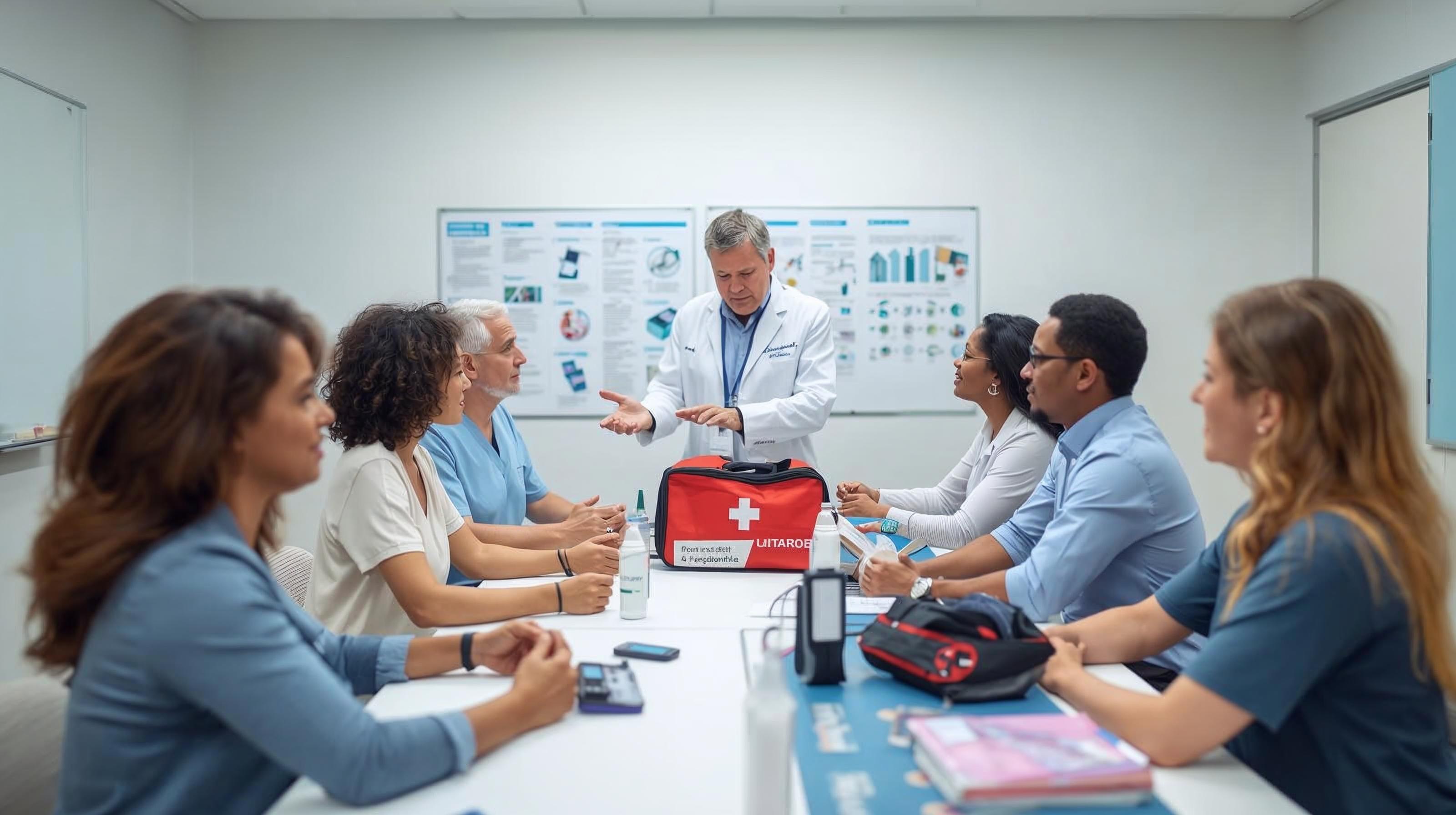
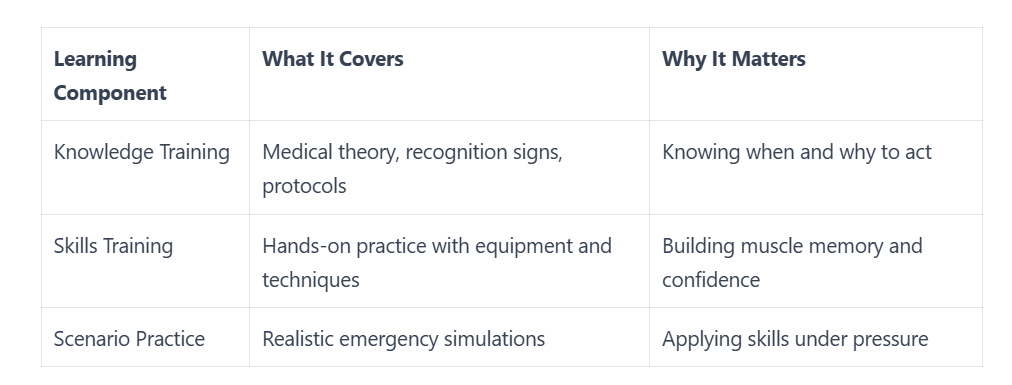
Comprehensive first aid courses combine classroom learning with extensive practical sessions because reading about techniques doesn't prepare you to perform them under pressure. You'll spend significant time practicing on training manikins, applying bandages to fellow participants, operating AED trainers, and responding to realistic emergency scenarios.
Kasorb's courses use experienced paramedics and ER nurses as instructors, bringing real-world context that textbook-trained teachers can't provide. These professionals share insights from actual emergencies they've attended, explain what works in practice versus theory, and answer questions based on years of frontline experience.
UK First Aid Certification and Compliance Requirements
UK workplace first aid training follows Health and Safety Executive (HSE) standards, which set minimum requirements for course content, duration, and assessment. The HSE doesn't approve individual training providers but defines the standards that courses follow to meet legal requirements.
First Aid at Work certification remains valid for three years, after which you'll complete a two-day requalification course to renew your qualification and update your knowledge with any new protocols. Annual refresher training, while not legally required, helps you maintain skills and confidence between formal requalifications.
Different workplace settings require different levels of first aid provision:
- Emergency First Aid at Work: Single-day course covering basic life-saving skills like CPR, bleeding control, and choking—suitable for low-risk workplaces
- First Aid at Work: Three-day comprehensive course with broader injury and illness coverage—required for higher-risk environments or larger workforces
- Paediatric First Aid: Specialized training for childcare settings, covering child and infant-specific techniques
- Mental Health First Aid: Supporting psychological wellbeing alongside physical first aid—increasingly recognized as valuable workplace training
Transform Your Team Into Confident First Responders
Comprehensive first aid courses equip your team with life-saving skills across emergency response, medical situations, injury treatment, and workplace-specific scenarios. Proper training builds the confidence to act decisively when seconds matter, transforming worried bystanders into capable first responders.
Kasorb delivers regulator-approved training with experienced healthcare professionals who focus on practical, workplace-relevant skills rather than just theoretical knowledge. Our flat group rates for up to twelve people make compliance straightforward and cost-effective, with courses delivered on-site at times that suit your operations. Book Training Instantly to schedule first aid training tailored to your specific workplace risks.
FAQs About First Aid Training Courses
How long is first aid certification valid in the UK?
First Aid at Work certification remains valid for three years, after which you'll complete a two-day requalification course to maintain your competency and meet HSE requirements for workplace first aiders.
What is the difference between emergency first aid and comprehensive first aid courses?
Emergency First Aid at Work is a one-day course covering basic life-saving skills like CPR and bleeding control, while comprehensive First Aid at Work spans three days and includes broader injury management, medical emergencies, and workplace-specific scenarios.
Can first aid training be customized for specific workplace risks?
Yes, comprehensive first aid courses can incorporate scenarios and skills relevant to your industry, such as chemical exposure procedures for laboratories or manual handling injury management for warehouses and logistics operations.
How many employees require first aid training in my workplace?
The number of trained first aiders depends on your workplace size, shift patterns, and risk assessment, with HSE guidance recommending at least one first aider per fifty employees in low-risk environments and more in higher-risk settings.
Do I require prior medical knowledge to take a first aid course?
No prior medical knowledge or experience is required—comprehensive first aid courses teach everything from basic principles through to advanced techniques, making them accessible to anyone regardless of their background or education level.


Book a free 15-min consult call with us. We’ll help you get your mandatory training done right.