The Critical Role of First Aid in Emergency Cases
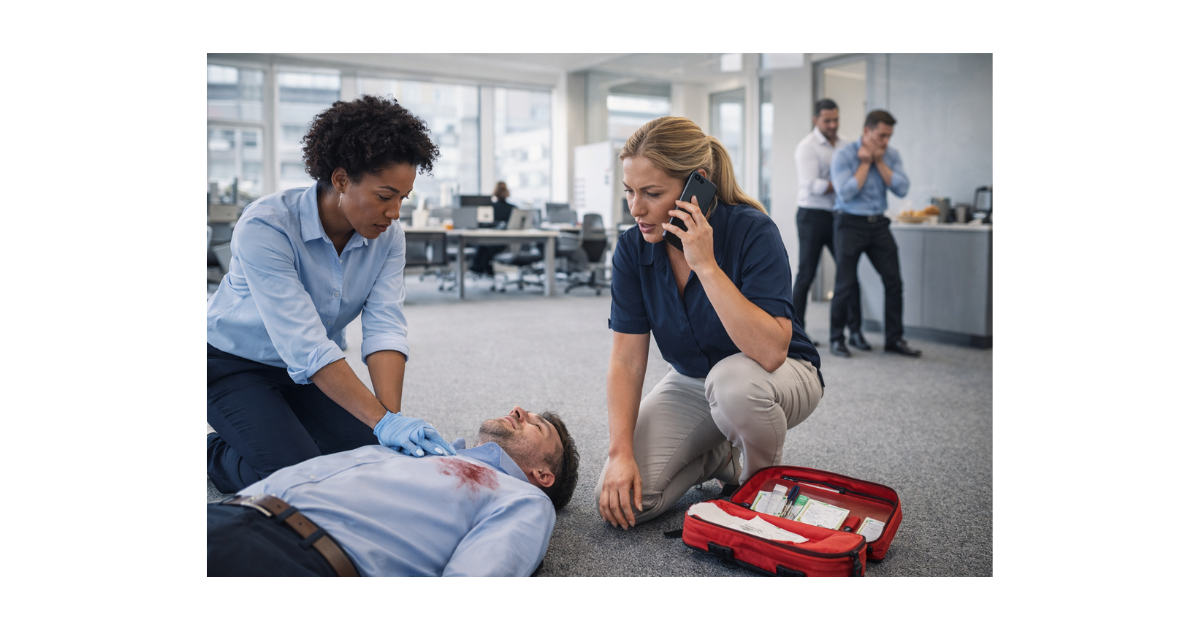

When someone collapses at work, starts choking in the cafeteria, or suffers a severe injury on-site, the first few minutes determine whether they survive, recover fully, or face permanent consequences. Most workplace emergencies happen faster than ambulances can arrive, creating a critical gap that only trained bystanders can fill.
This article explains how first aid saves lives in time-critical situations, which core skills every workplace needs, and how proper training transforms hesitation into confident, effective emergency response.
What Is Basic First Aid in Emergency Situations?
First aid is immediate care you provide to someone who's injured or suddenly ill before professional medical help arrives. It saves lives, prevents conditions from worsening, and promotes recovery by stabilizing the person until paramedics take over. The care can include stopping severe bleeding, performing CPR, clearing a blocked airway, or treating burns—actions that bridge the gap between when an emergency happens and when advanced medical care becomes available.
Understanding Emergency First Aid Fundamentals
Basic first aid isn't medical treatment in the way doctors provide it. Instead, it's essential stabilization that anyone can learn to perform, even without years of medical training. You don't need a nursing degree to recognize when someone has stopped breathing or to apply direct pressure to a bleeding wound.
The "golden hour" refers to the first 60 minutes after a traumatic injury when medical intervention has the greatest impact on survival. However, many life-threatening emergencies require action within seconds or a few minutes, not an hour. This is why bystander first aid becomes absolutely critical—waiting for an ambulance simply isn't an option in certain situations.
When Seconds Count in Critical Situations
Certain emergencies deteriorate so rapidly that even a brief delay dramatically reduces survival chances. Cardiac arrest causes brain damage within 4-6 minutes without oxygen, severe arterial bleeding can lead to death within minutes, choking cuts off the airway completely, and anaphylactic shock can close someone's throat in under five minutes.
In the UK, average ambulance response times range from 7-18 minutes for the most urgent calls in urban areas, and potentially much longer in rural regions. Even in the best scenario, those 7-10 minutes without intervention can mean the difference between life and death. First aid fills this gap by maintaining vital functions until paramedics arrive with advanced equipment.
Core Purposes of First Aid Response
Every first aid action serves one of three fundamental purposes:
- Preserve life: Keep the person alive by maintaining breathing and circulation through techniques like CPR or controlling catastrophic bleeding
- Prevent deterioration: Stop a bad situation from becoming worse by immobilizing injuries, preventing shock, or keeping airways clear
- Promote recovery: Begin the healing process early and reduce the risk of complications through proper wound care, burn treatment, and patient positioning
Properly cleaning a wound reduces infection risk, cooling a burn limits tissue damage, and keeping an injured person calm helps maintain stable blood pressure. These aren't just comfort measures—they're interventions that genuinely improve long-term outcomes.
Why First Aid Saves Lives in Critical Moments
The difference between someone surviving a medical emergency often comes down to whether a bystander knew what to do in those first critical minutes. First aid doesn't just buy time—it actively prevents death by maintaining the body's essential functions when they've been disrupted by injury or illness.
Cardiac Arrest and CPR Intervention
When someone's heart stops beating, blood stops flowing to their brain and other vital organs. Without oxygen, brain cells begin dying within 4-6 minutes. CPR—chest compressions combined with rescue breaths—manually pumps blood through the body, delivering oxygen to the brain and keeping cells alive until a defibrillator can restart the heart.
By performing chest compressions at the correct depth and rate, you're essentially doing the heart's job for it, maintaining about 30% of normal blood flow. That's enough to prevent brain death and give the person a fighting chance when paramedics arrive with a defibrillator.
Even if you're not confident about rescue breaths, hands-only CPR (continuous chest compressions) is still highly effective. The key is starting immediately and continuing without long interruptions—every second of blood flow matters.
Severe Bleeding and Hemorrhage Control
The average adult body contains about 5 liters of blood, and losing just 1.5-2 liters can trigger life-threatening shock. Severe arterial bleeding—the kind that spurts with each heartbeat—can cause someone to lose that much blood in just a few minutes.
Direct pressure applied firmly to the wound is the most effective way to stop bleeding. The pressure allows blood to clot naturally while compressing damaged vessels. If direct pressure alone doesn't control the bleeding, you can elevate the injured area above the heart (when safe to do so) to reduce blood flow to the wound.
For catastrophic limb injuries where bleeding cannot be controlled any other way, a properly applied tourniquet can be the difference between life and death by completely stopping blood flow to the injured limb. The goal isn't to provide perfect medical care—it's to keep enough blood in the person's body until paramedics can provide advanced interventions.
Airway Obstruction Management
Complete airway obstruction from choking causes death within minutes because it prevents any air from reaching the lungs. Unlike cardiac arrest, where CPR can maintain minimal circulation, a blocked airway means zero oxygen is getting into the bloodstream.
Back blows and abdominal thrusts (the Heimlich maneuver) work by creating sudden pressure changes that can dislodge the obstruction. You deliver five sharp back blows between the shoulder blades first, then five abdominal thrusts if the blockage persists, alternating between the two until the object comes out or the person becomes unconscious.
If they lose consciousness, you begin CPR immediately—the chest compressions may dislodge the object, and you check the mouth before giving rescue breaths. Someone who's choking can't wait for an ambulance—they need intervention within the first minute or two.
Preventing Shock and Deterioration
Shock is a life-threatening condition where the circulatory system fails to deliver enough oxygen-rich blood to the body's organs and tissues. It commonly follows severe injuries, major blood loss, severe allergic reactions, or heart problems, and it can kill even when the initial injury itself wasn't immediately fatal.
The signs of shock include pale, cold, clammy skin, rapid but weak pulse, rapid breathing, confusion or anxiety, and weakness. By laying the person down, elevating their legs (if no spinal injury is suspected), keeping them warm with blankets, and providing reassurance, you help maintain blood pressure and reduce the body's stress response.
Recognizing shock early is just as important as treating it. Someone might seem relatively stable after an injury, but if you notice warning signs developing, you know their condition is deteriorating and they need immediate medical attention—even if the injury itself doesn't look severe.
How First Aid Prevents Emergencies From Escalating
Beyond saving lives in immediately life-threatening situations, first aid plays an equally important role in preventing injuries from becoming worse. The actions you take in the first minutes after an accident can determine whether someone makes a full recovery or suffers permanent disability.
Stabilizing Injured Persons
Suspected spinal injuries require extreme caution because any movement of the head, neck, or back can cause bone fragments to sever the spinal cord, resulting in permanent paralysis. If someone has fallen from height, been in a vehicle collision, or suffered a diving injury, you assume spinal injury until proven otherwise. Your job is to keep their head, neck, and spine in a straight line and prevent any twisting or bending movements while waiting for paramedics.
Broken bones need stabilization to prevent the sharp edges from cutting through blood vessels, nerves, or skin. A simple closed fracture can become a compound fracture (where bone pierces the skin) if the injured area moves too much, dramatically increasing infection risk and complicating treatment.
Head injuries require careful monitoring because someone can appear fine initially but then deteriorate rapidly as bleeding or swelling develops inside the skull. You watch for changes in consciousness level, confusion, repeated vomiting, or unequal pupil sizes—all signs that the injury is more serious than it first appeared.
Reducing Risk of Secondary Injuries
Moving an injured person incorrectly can cause additional harm that's sometimes worse than the original injury. For example, dragging someone with a fractured pelvis can cause massive internal bleeding, or rolling someone with a spinal injury can cause paralysis. Unless there's immediate danger like fire or rising water, you generally keep casualties still and bring help to them.
Scene safety assessment prevents you from becoming a casualty yourself, which would only make the situation worse. Before rushing to help, you take a few seconds to check for ongoing dangers—live electrical wires, traffic, unstable structures, or hazardous chemicals.
For unconscious casualties who are breathing, the recovery position prevents a critical but often overlooked danger: aspiration. When someone is unconscious and lying on their back, they can't protect their own airway—if they vomit, blood pools in their mouth, or their tongue falls back, they can choke. The recovery position keeps the airway clear by allowing fluids to drain from the mouth.
Maintaining Vital Functions Until Help Arrives
First aid isn't a one-time action—it's continuous monitoring and care until you can hand over to paramedics. You regularly check that the person is still breathing, their pulse remains present, and they're responding to you. If their condition changes, you adapt your care accordingly, starting CPR if they stop breathing or treating them for shock if signs develop.
Keeping airways clear means watching for vomit, blood, or other fluids that could block breathing, and being ready to turn the person's head to the side (if safe to do so) or clear the mouth if needed. Temperature regulation matters more than many people realize—injured or ill people are vulnerable to hypothermia even in moderate temperatures because shock and blood loss impair the body's ability to maintain warmth.
Essential First Aid Skills Every Workplace Needs
While comprehensive first aid training covers dozens of techniques, certain core skills form the foundation of effective emergency response. These are the capabilities that every workplace benefits from having among their trained staff members.
Primary Assessment and Scene Safety
The DR ABC approach gives you a systematic way to assess any emergency: Danger (check for hazards), Response (is the person conscious?), Airway (is it clear?), Breathing (are they breathing normally?), and Circulation (do they have a pulse and serious bleeding?). This sequence addresses the most life-threatening issues first.
Scene safety always comes first because you can't help anyone if you become injured yourself. You quickly scan for traffic, fire, electrical hazards, structural instability, or aggressive people before approaching.
Calling for emergency services happens early—often while you're beginning care or immediately after your initial assessment. You provide the dispatcher with your location, what happened, how many people are injured, and what injuries you can see.
Wound Care and Infection Prevention
Proper wound cleaning removes dirt, debris, and bacteria that could cause infection. You rinse the wound with clean running water—not antiseptics, which can damage tissue—and gently remove any visible dirt or debris. For minor wounds, this simple cleaning dramatically reduces infection risk.
Sterile dressing application means covering the wound with a clean, preferably sterile, non-stick pad and securing it with a bandage or tape. The dressing protects the wound from contamination, absorbs any bleeding, and creates the right environment for healing.
Some wounds need professional medical attention rather than just first aid:
- Deep cuts that gape open
- Puncture wounds from dirty objects
- Wounds with embedded objects
- Animal or human bites
- Any wound that won't stop bleeding after 10 minutes of direct pressure
Burns and Chemical Exposure Treatment
Immediate cooling with running water is the single most important first aid action for thermal burns. You hold the burned area under cool (not cold) running water for at least 10-20 minutes, which stops the burning process, reduces pain, and limits tissue damage. Burns continue damaging tissue even after the heat source is removed—cooling stops that progression.
Chemical burns require flushing with large amounts of water while removing contaminated clothing—but carefully, because you don't want to spread the chemical to unaffected areas. You brush off any dry chemical powder before flushing with water, since adding water to some dry chemicals can cause a reaction.
Electrical burns present unique hazards because the visible skin damage often doesn't reflect the internal injury. Electricity follows the path of least resistance through the body, potentially damaging muscles, nerves, and organs along the way. You never touch someone who's still in contact with an electrical source—you ensure power is off first.
Musculoskeletal Injury Management
The RICE protocol—Rest, Ice, Compression, Elevation—effectively manages sprains, strains, and minor soft tissue injuries. You help the person rest the injured area to prevent further damage, apply ice wrapped in a cloth for 15-20 minutes to reduce swelling and pain, use an elastic bandage for gentle compression, and elevate the injury above heart level when possible.
Splinting suspected fractures means immobilizing the injured area in the position you found it, supporting the joints above and below the injury. You can use commercial splints, rolled newspapers or magazines, or even a pillow. The goal isn't to create a perfect splint but to provide enough support that the person can be transported without the broken bone moving.
Building Team Confidence to Respond in Emergencies
Technical knowledge alone doesn't create effective first aiders—confidence and willingness to act are equally important. Understanding why people hesitate and how to overcome those barriers transforms theoretical knowledge into real-world response capability.
Overcoming Bystander Hesitation
The "bystander effect" describes a well-documented phenomenon where people are less likely to help in an emergency when others are present, assuming someone else will take action. Everyone waits for someone else to step forward, and tragically, sometimes no one does.
Training transforms this hesitation into decisive action by giving you a clear mental script to follow. When you've practiced the DR ABC sequence dozens of times, your brain knows exactly what to do first, second, and third—you don't have to think through the process from scratch while panicking.
Legal protections also reduce hesitation. In the UK, Good Samaritan principles protect people who provide first aid in good faith, meaning you can't be sued for trying to help unless you act with gross negligence.
Practical Scenario Training Benefits
Hands-on practice with manikins builds muscle memory that you simply can't develop from reading or watching videos. Your hands learn the correct depth and rate for chest compressions, the right angle for abdominal thrusts, and the proper technique for bandaging wounds.
Realistic scenario training simulates the emotional and practical challenges of real emergencies—working in awkward positions, dealing with distractions, making decisions under pressure, and communicating with bystanders. Kasorb's training courses led by paramedics and ER nurses bring authentic scenarios from their frontline experience, so you're practicing responses to situations that actually happen in workplaces.
Repetition reduces panic by making the unfamiliar familiar. The first time you practice CPR on a manikin feels awkward and uncertain. By the tenth time, it feels routine. When you encounter a real cardiac arrest, the situation itself is shocking but the response feels practiced and manageable.
Creating Emergency Response Leaders
Trained staff naturally become workplace safety champions because they've developed a heightened awareness of potential hazards and emergency preparedness. They notice when first aid kits need restocking, when access to emergency equipment is blocked, or when new employees haven't received safety briefings.
The ripple effect of first aid training extends beyond the trained individuals themselves. When colleagues see someone confidently handle a minor workplace injury, it demystifies first aid and inspires others to seek training. People realize that first aid isn't complicated medical expertise reserved for healthcare professionals—it's practical skills that ordinary people can learn and use effectively.
Transform Your Team Into Confident First Responders
First aid knowledge transforms ordinary employees into potential lifesavers who can make the difference between tragedy and recovery when emergencies strike. Workplace emergencies are unpredictable by nature—you can't schedule cardiac arrests for convenient times or ensure that injuries only happen when help is immediately available.
Professional, hands-on training builds real competence, not just certification. Anyone can read a first aid manual or watch online videos, but that theoretical knowledge evaporates under the pressure of an actual emergency. Training with experienced instructors who've worked real emergencies, practicing on proper equipment, and working through realistic scenarios creates the muscle memory and confidence that translates into effective action when it matters.
Ready to build genuine first aid capability in your workplace? Kasorb delivers on-site first aid training led by paramedics, ER nurses, and NHS professionals who bring frontline emergency experience to every session. Our courses are tailored to your specific workplace risks, delivered at your location, and priced with flat group rates that make comprehensive team training affordable. Book your training instantly and give your team the skills and confidence to respond effectively when emergencies happen.
FAQs About First Aid in Emergency Cases
How often must workplace first aid training be renewed in the UK?
First aid at work certificates are valid for three years, after which employees complete a requalification course to maintain their certification. Regular refresher training between certifications helps maintain skills and confidence, with many organizations providing annual updates or quarterly practice sessions.
What is the difference between appointed persons and trained first aiders?
Appointed persons manage first aid equipment and call emergency services but are not trained to provide medical intervention, while trained first aiders hold formal qualifications and can perform CPR, wound care, and other emergency procedures. Workplaces determine which they need based on risk assessment.
Can UK employees be required to become workplace first aiders?
Employers cannot force employees to become first aiders, as it remains a voluntary role, but they are legally required to ensure adequate first aid coverage through willing, trained staff. Many employees volunteer once they understand the training involved and the legal protections provided.
Which workplace injuries most commonly require immediate first aid?
Cuts and lacerations, burns, sprains and strains, and falls are the most frequent workplace injuries requiring first aid intervention. More serious incidents like cardiac events, severe bleeding, or chemical exposure are less common but require immediate, skilled response.
What are the purposes of first aid in workplace emergencies?
The purposes of first aid are to preserve life, prevent the casualty's condition from worsening, and promote recovery by providing immediate care until professional medical help arrives. First aid also reduces pain, prevents infection, and provides reassurance during stressful situations.


Book a free 15-min consult call with us. We’ll help you get your mandatory training done right.