Why Real World Scenarios Transform Safety Training Effectiveness
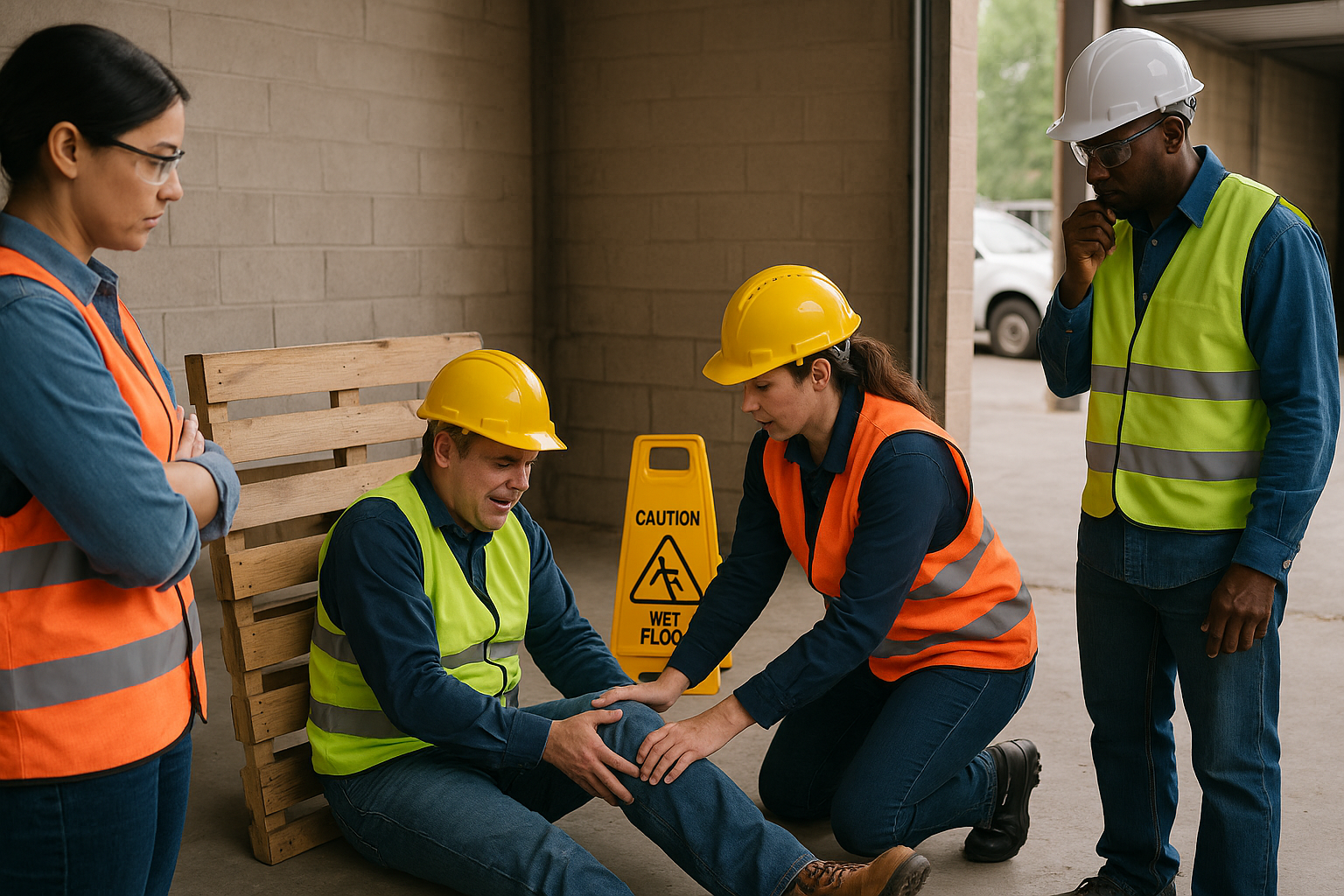

Staff who complete traditional safety training often freeze during actual emergencies, unable to recall the procedures they learned just weeks earlier. The problem isn't lack of attention—it's that passive learning creates weak memories that evaporate under pressure.
Scenario-based training solves this by letting your team practice emergency responses in realistic simulations that build muscle memory and confidence. This article explores how real-world scenarios improve knowledge retention, accelerate decision-making, and reduce workplace incidents, along with practical methods for implementing this approach in your organization.
What Are Real World Scenarios in Safety Training
Real-world scenarios in safety training are simulations that recreate actual workplace situations, hazards, and emergencies your staff might face on the job. Instead of reading through a manual about fire safety procedures, your team physically practices evacuating a building, locating extinguishers, and making decisions under pressure. This approach—called scenario-based learning—turns passive information absorption into active skill development.
The difference between traditional and scenario-based training is straightforward. Traditional courses typically involve an instructor presenting slides about safety protocols while participants take notes and perhaps answer quiz questions at the end. Scenario-based learning flips this model: participants become active decision-makers who face realistic problems, experience the consequences of their choices in a controlled environment, and build muscle memory for emergency response.
When a warehouse operative practices responding to a forklift collision scenario rather than just reading about proper incident reporting, they're far more likely to remember the correct steps when an actual incident occurs. The hands-on experience creates stronger memories than any lecture can.
Why Scenario-Based Learning Outperforms Traditional Safety Courses
The superiority of scenario-based training comes down to how human memory actually works. When you practice a physical skill or make decisions under simulated pressure, your brain creates stronger neural pathways than when you simply read or hear about the same information. This is why you can still ride a bicycle years after learning, even though you'd struggle to recite the technical principles of balance and momentum—your body remembers what it has practiced.
Realistic simulations also create emotional engagement that lecture-based courses cannot match. When a participant's heart rate increases during a realistic chemical spill scenario, their brain registers the experience as significant and worthy of long-term storage. Traditional training rarely triggers this physiological response, which is one reason why staff often forget safety procedures within weeks of completing standard courses.
The psychological principle at work here is experiential learning—the idea that we learn most effectively by doing rather than observing. Consider how this plays out in practice:
- Active participation: Staff make real-time decisions under pressure rather than passively absorbing information
- Contextual learning: Skills are practiced in familiar workplace settings, making them easier to recall when needed
- Immediate feedback: Mistakes can be corrected instantly in a safe environment, reinforcing proper techniques
Five Proven Benefits for Engagement Retention and Incident Reduction
1. Higher Knowledge Retention
Staff who practice responding to emergencies through hands-on scenarios retain information far longer than those who complete traditional courses. When your team physically performs CPR compressions on a training mannequin, their hands remember the correct depth and rhythm in ways that watching a video demonstration simply cannot replicate.
This retention advantage becomes particularly valuable during actual emergencies when there's no time to consult a manual. If a staff member has repeatedly practiced the steps for using an AED through realistic scenarios, those actions become almost automatic under pressure. The procedure transforms from theoretical knowledge ("I think I remember how to do this") to instinctive response ("My hands know exactly what to do").
2. Faster Decision Making Under Pressure
Emergencies don't wait for people to think through their options carefully. Scenario-based training builds the confidence and mental frameworks that enable rapid decision-making when seconds matter. Each time participants work through a realistic simulation, they're essentially rehearsing for the real event, reducing the panic response that often freezes people during actual crises.
Repeated scenario practice also helps staff recognize patterns and warning signs more quickly. A facilities manager who has worked through multiple fire evacuation scenarios will immediately spot blocked exit routes or malfunctioning alarm systems during routine inspections—problems they might have overlooked after only theoretical training.
3. Stronger Team Communication
Many workplace emergencies require coordinated responses from multiple team members. Scenario-based training reveals communication breakdowns before they occur in real situations. When your reception team practices lockdown procedures together, they discover whether their walkie-talkie system actually works under stress, whether everyone understands the alert codes, and who naturally takes charge during confusion.
Group scenarios also build trust among team members. Staff who have practiced emergency responses together develop confidence in each other's abilities and establish communication shortcuts that prove invaluable during actual incidents.
4. Increased Regulatory Compliance Confidence
Understanding HSE regulations on paper is one thing; knowing how to apply them in your specific workplace is another entirely. Scenario-based training bridges this gap by showing staff exactly how compliance requirements translate into practical actions. When a laboratory technician practices proper chemical spill response procedures in their actual workspace, they learn not just what the regulations require but why those requirements exist and how to implement them effectively.
This practical understanding also makes compliance documentation more meaningful. Staff who have worked through realistic scenarios can provide detailed, accurate accounts of their training experiences, creating better records for CQC inspections and HSE audits.
5. Improved Safety Culture and Buy-In
Traditional safety training often feels like a box-ticking exercise that staff endure rather than value. Scenario-based approaches change this dynamic entirely. When training sessions are engaging, relevant, and clearly connected to actual workplace risks, staff participation shifts from reluctant compliance to genuine investment.
This cultural shift extends beyond the training room. Staff who have experienced high-quality scenario-based training become more likely to speak up about safety concerns, report near-misses, and encourage colleagues to follow proper procedures. They've seen firsthand how small oversights can escalate into serious incidents.
Popular Delivery Methods for Realistic Workplace Training
Organizations have several options for implementing scenario-based safety training, each with distinct advantages depending on your specific workplace environment.
Live Role-Play Simulations
Face-to-face scenarios facilitated by experienced instructors remain the gold standard for safety training. In live sessions, trainers play various roles—injured colleagues, panicked visitors, emergency responders—while participants work through realistic situations. This method excels for interpersonal skills like de-escalation, emergency communication, and team coordination.
Tabletop Emergency Drills
Discussion-based scenarios use floor plans, hypothetical situations, and guided conversation to work through emergency responses. While less physically immersive than role-play, tabletop exercises work well for large groups and complex scenarios involving multiple departments or locations.
Virtual Reality Walkthroughs
Immersive digital environments allow staff to practice responses to dangerous situations that would be impossible or prohibitively expensive to recreate safely. VR scenarios work particularly well for high-risk industries like construction, where participants can experience working at height or near heavy machinery without actual danger.
Interactive Digital Case Studies
Computer-based scenarios with branching decision trees offer flexibility for remote teams or self-paced learning. Participants read through realistic situations and make choices that lead to different outcomes, receiving immediate feedback on their decisions.
Gamified Micro-Scenarios
Short, game-like challenges can be completed during breaks or downtime, making them ideal for ongoing skill reinforcement. Though not comprehensive enough to replace full training courses, micro-scenarios help maintain awareness between formal training sessions.
Steps to Design Scenarios Aligned With Your Site Risks
Creating effective scenario-based training requires careful planning that reflects your actual workplace hazards and challenges.
1. Identify High-Risk Tasks and Hazards
Start by conducting thorough workplace risk assessments to pinpoint the most common or dangerous situations your staff encounter. Review your incident logs, near-miss reports, and HSE inspection findings to identify patterns. A hospital will focus scenarios on patient handling and infection control, while a manufacturing facility might prioritize machinery operation and chemical safety.
2. Define Clear Learning Outcomes
Establish specific, measurable skills and knowledge staff will gain from each scenario exercise. Vague objectives like "improve fire safety awareness" make it impossible to assess training effectiveness. Instead, define concrete outcomes: "Staff will demonstrate the ability to operate three types of fire extinguishers, evacuate the building using secondary routes, and conduct a headcount within five minutes."
3. Script Situations Reflecting Daily Challenges
Base your scenarios on actual incidents or near-misses from your workplace or industry. Real events provide authenticity that participants immediately recognize and take seriously. If your warehouse experienced a forklift collision last year, create a scenario exploring the decision points that led to that incident and how staff could have prevented it.
4. Select Appropriate Delivery Format
Choose the training method that best suits your scenario complexity, group size, and available resources. Physical emergency response skills require hands-on practice with live instructors, while decision-making frameworks might work well in digital formats.
5. Debrief and Capture Lessons Learned
Plan structured discussion sessions immediately following each scenario to reinforce key learning points and address confusion. Debriefs often provide more learning value than the scenarios themselves, as participants reflect on their decisions, hear alternative approaches, and connect their experiences to workplace procedures.
Measuring Effectiveness and Demonstrating Compliance
Proving that your scenario-based training actually improves safety outcomes requires systematic tracking and documentation.
Incident Rate Tracking
Monitor workplace accidents, near-misses, and safety violations before and after implementing scenario-based training. While many factors influence incident rates, significant improvements following training rollout provide strong evidence of effectiveness. Track both frequency and severity of incidents, as well as more subtle indicators like increased near-miss reporting.
Knowledge Checks and Skills Assessments
Use practical demonstrations rather than written tests to verify competency after scenario training. If staff have learned manual handling techniques, observe them lifting and moving actual loads. Practical assessments provide far more reliable evidence of capability than multiple-choice quizzes.
Behaviour Observation Audits
Watch staff apply learned skills during normal work activities to confirm knowledge transfer from training to daily operations. Managers and safety officers can conduct brief, informal observations—does the team actually use the communication protocols they practiced? Are staff spotting hazards they previously overlooked?
Digital Recordkeeping for HSE and CQC
Maintain comprehensive training documentation that meets regulatory requirements and demonstrates your commitment to staff safety. Records include attendance registers, learning outcomes achieved, assessment results, trainer qualifications, and scenario descriptions.
Keeping Psychological Safety Intact During High-Stress Drills
Realistic scenarios can create anxiety if not managed carefully, particularly when simulating traumatic events or emergencies.
Pre-Briefing Expectations
Clearly explain scenario objectives and remind participants that exercises are practice opportunities, not performance evaluations. Staff benefit from understanding that making mistakes during training is not just acceptable but valuable—errors in controlled environments prevent errors during real emergencies.
Safe-Word or Time-Out Protocols
Establish clear methods for participants to pause scenarios if they become overwhelmed or uncomfortable. Simple systems like raising a hand and saying "pause" give staff control over their experience without requiring them to explain their reasons publicly.
Post-Scenario Emotional Debrief
Provide space for staff to process any stress or concerns raised during realistic simulations. Some scenarios—particularly those involving medical emergencies or violence—can trigger unexpected emotional responses. Brief group discussions acknowledging that scenarios felt intense and allowing participants to share their reactions help everyone process the experience constructively.
When to Partner With On-Site Experts Like Kasorb
Many organizations find that partnering with professional training providers delivers better outcomes than attempting to develop scenario-based training internally. Experienced providers bring specialized knowledge, regulatory expertise, and the practical experience that makes scenarios truly realistic.
Kasorb's trainers include paramedics, ER nurses, and NHS staff who have responded to actual emergencies. When they facilitate scenarios, participants learn from people who have performed these skills under real pressure, not just studied them in textbooks. Professional providers also handle the complex logistics of scenario-based training:
- Expert facilitation: Trained professionals guide realistic scenarios while maintaining psychological safety
- Regulatory compliance: Training meets all HSE, CQC, and industry-specific requirements
- Customized content: Scenarios reflect your specific workplace risks and operational context
- Comprehensive documentation: Complete certification and record-keeping that satisfies inspectors
Kasorb's flat-rate pricing for up to 12 people makes professional training accessible, particularly when compared to the staff time required to develop and deliver quality scenarios internally. Book your scenario-based safety training and give your team the practical skills they can use in actual emergencies.
FAQs About Scenario-Based Safety Training
How much does scenario-based safety training typically cost in the UK?
Costs vary depending on group size, scenario complexity, and whether you use internal resources or external providers. Many organizations find that group rates offer better value than individual certifications, particularly when you factor in the superior retention and engagement that scenario-based approaches deliver.
Can remote or hybrid teams participate effectively in scenario-based training?
While in-person scenarios generally provide the most effective learning experiences, digital simulations and virtual reality options can deliver meaningful practice for distributed teams. However, certain skills—particularly physical emergency response techniques like CPR or manual handling—require face-to-face instruction.
How often should workplace safety scenarios be refreshed for compliance?
Most regulatory bodies require annual refresher training as a minimum, but scenarios warrant updates whenever workplace processes, equipment, or risks change significantly. If you've moved to a new facility, introduced new machinery, or experienced an incident that revealed training gaps, refresh your scenarios immediately rather than waiting for the annual cycle.
What qualifications should scenario-based safety training facilitators possess?
Look for instructors who combine educational credentials with substantial real-world emergency response experience. The most effective scenario facilitators have performed these skills under actual pressure and can share insights that purely academic instructors cannot. Verify that trainers hold current certifications in the subjects they teach and that their qualifications satisfy your industry's regulatory requirements.


Book a free 15-min consult call with us. We’ll help you get your mandatory training done right.