Benedict's Law: an allergy safety checklist for schools
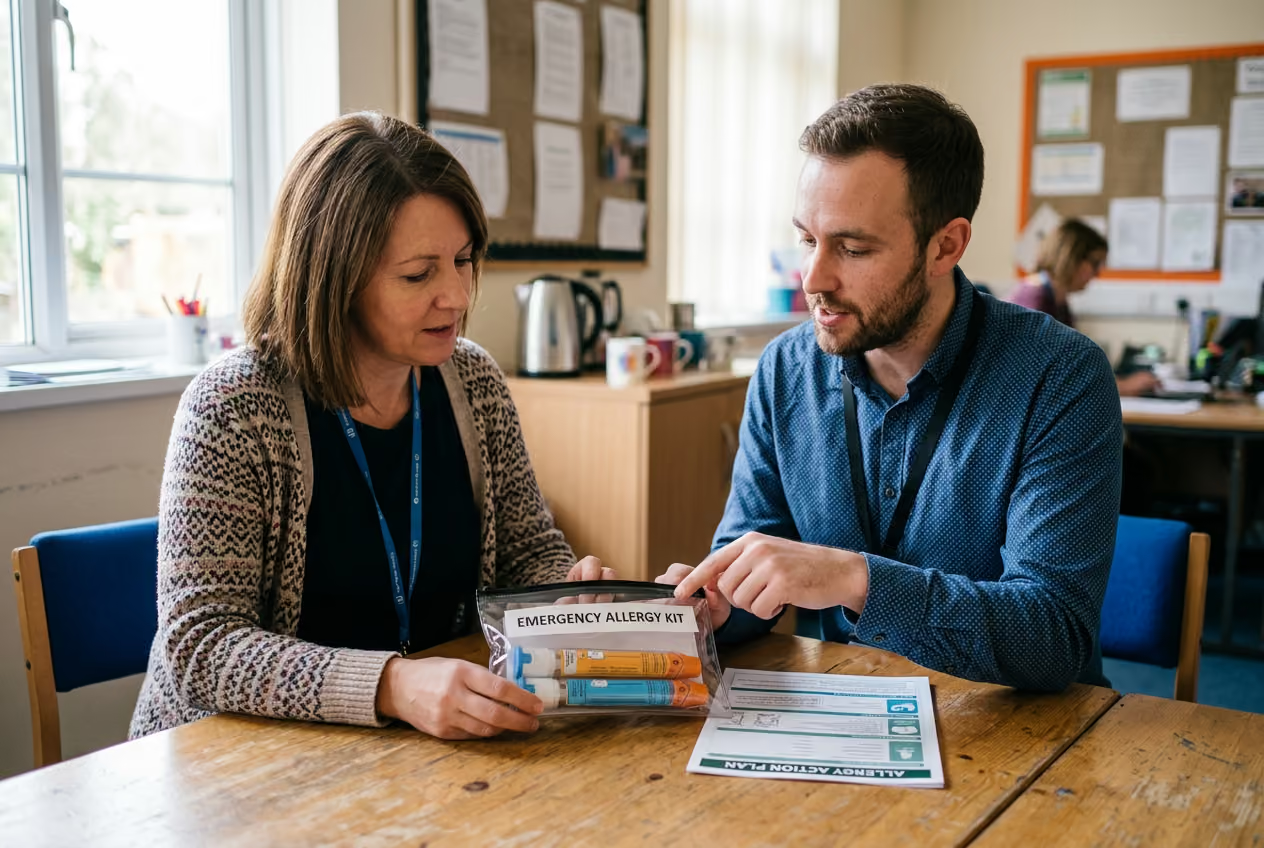

Benedict Blythe was five when he died after an allergic reaction at school in 2021. The campaign in his name has changed how schools in England manage allergies: on 6 July 2026 the Department for Education published the final statutory guidance, Allergy safety in schools, that puts it into practice.
Who it applies to
The guidance covers maintained schools (including special schools), pupil referral units, and academies, including free schools and alternative provision academies. It isn't yet a statutory requirement for independent schools, including independent special schools, or for non-maintained special schools, but the DfE intends to bring in equivalent requirements through their regulatory standards. Early years settings and colleges will find it useful too.
What's required now, and what's coming
- From 1 September 2026: the schools it covers must have regard to the guidance. That means following it unless there's a clear, justifiable reason not to.
- What the guidance expects: a published allergy safety policy, reviewed at least once a year; spare adrenaline auto-injectors; allergy awareness training at least once a year for all staff on site while pupils are there; and a named senior leader responsible for allergy safety.
- Coming through regulations: the Children's Wellbeing and Schools Act 2026 requires schools to have an allergy safety policy, and the government intends to make spare auto-injectors, staff training and a named senior leader specific legal duties through forthcoming regulations.
So the guidance applies from this school year, and specific legal duties are on their way. Most schools are getting ahead of them now.
Your checklist
- Publish your allergy safety policy on your website. A named senior leader should be responsible for it, and it should be reviewed at least annually. The DfE provides a template.
- Identify pupils with allergies and put an Individual Healthcare Plan in place for each pupil who needs one.
- Check your spare adrenaline auto-injectors. Stock, doses and expiry dates, and make sure every member of staff knows where they're kept.
- Train all staff, not just first aiders. The guidance says first aid training on its own isn't enough: staff need allergy and anaphylaxis training at least once a year. That includes lunchtime and kitchen staff, the office, site staff, and breakfast and after-school club staff. Everyone should be able to recognise anaphylaxis and give an auto-injector.
- Rehearse the emergency plan. Who calls 999, who fetches the pen, and when to give a second dose (the NHS advises a second auto-injector if symptoms haven't improved after 5 minutes). Record each drill.
- Plan for trips and off-site activities. Risk assess each trip for pupils at risk of anaphylaxis. Their adrenaline device, their healthcare plan and a member of staff trained to give adrenaline need to go too.
- Keep records. Pupils with allergies, training dates, incidents and near misses, and what you learned from them, reviewed each year.
Online or in the room?
An online module can cover the theory. What staff need most is to have held a trainer pen and practised using it, because in a real emergency there's no time to work out how it works. Our guide to eLearning, in-person and live virtual training compares the formats.
How Kasorb can help
Our trainer comes to your school and runs a three-hour anaphylaxis session. Every member of staff practises with training auto-injectors, and the session covers recognising reactions, giving adrenaline, and CPR. It's £495+VAT for the day, for up to 12 staff per session. Two sessions can run on the same day, so up to 24 staff are trained in one visit, which works well on an INSET day. Certificates are emailed the next day.
See on-site anaphylaxis training
If you have nursery or reception classes, the EYFS also requires paediatric first aid cover. See paediatric first aid training and our guide to paediatric first aid training in the UK. For a whole-staff course that covers adults and children, see Emergency First Aid at Work and Emergency Paediatric First Aid.
This article summarises the DfE guidance; it isn't legal advice. Read the full guidance, Allergy safety in schools, on GOV.UK.
On-site training for your whole team at one flat rate. See what's covered, prices and how to book.
See the course

Not sure which course your team needs? Tell us about your setting and we'll confirm within 48 hours.