Negative Pressure Wound Therapy (VAC): A Care Team Guide
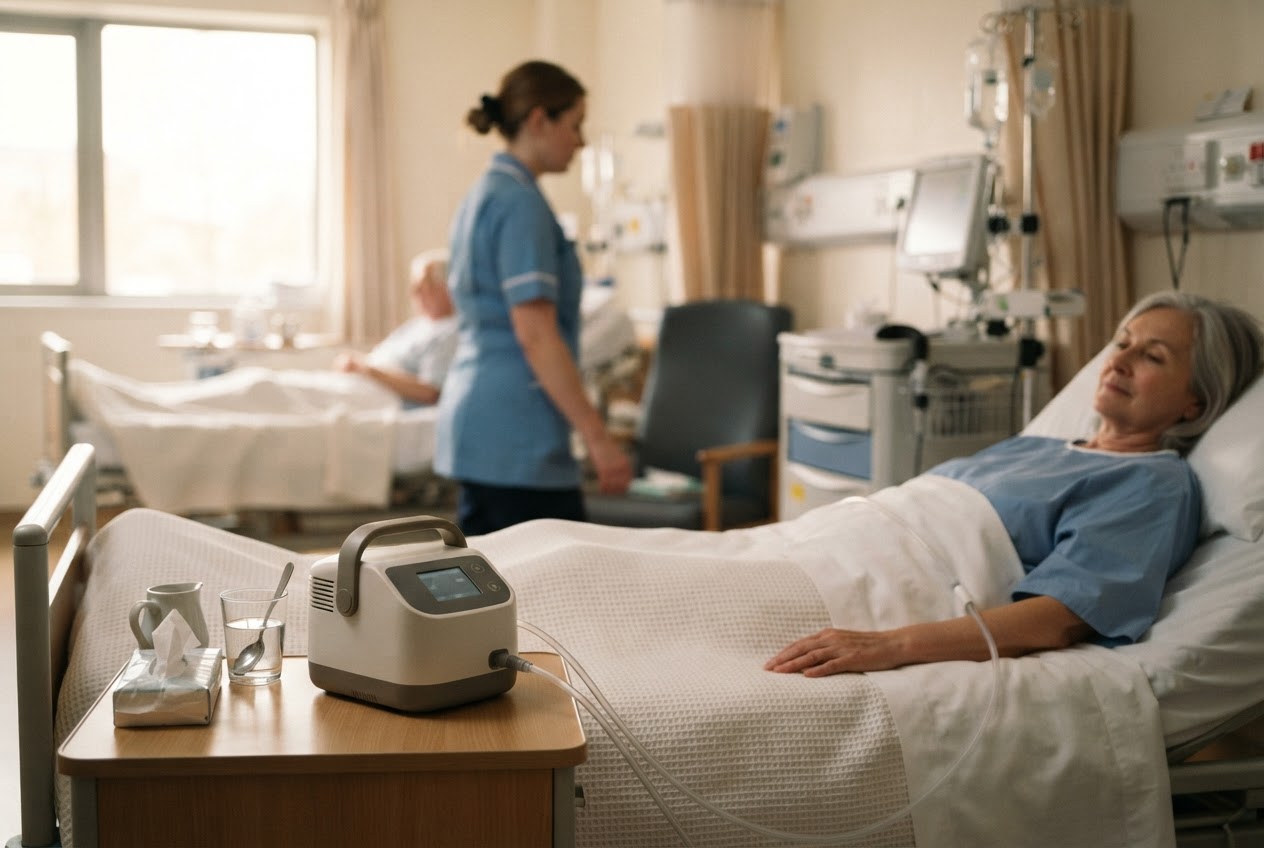

Negative pressure wound therapy (NPWT), often called VAC therapy, is a wound treatment that uses a sealed dressing connected to a small pump. The pump applies gentle, controlled suction, drawing fluid away from the wound into a canister and helping the wound edges come together. It's prescribed for certain hard-to-heal and surgical wounds, and the staff looking after it need training.
This guide is written at awareness level for managers and nurses in care and community settings. The device's instructions, your local policy and the person's care plan always come first.
What "VAC" means
VAC stands for vacuum-assisted closure. It's the name of one well-known brand of NPWT system, and, a bit like Hoover, it has become the word many staff use for any NPWT device.
How negative pressure wound therapy works
A foam or gauze dressing is placed in or over the wound and sealed with an adhesive film. Tubing connects the dressing to a pump, which removes air to create suction, either continuously or in cycles. NHS patient leaflets say the suction helps to:
- draw excess fluid out of the wound and into a canister
- help the blood supply to the wound
- keep the surrounding skin dry
- draw the wound edges together
- protect the wound from bacteria
Some systems are larger units with a canister; smaller single-use systems are often used on closed surgical incisions. The settings are prescribed by the clinician who starts the therapy, and shouldn't be changed without their direction.
Wounds it's used for
Manufacturers' instructions list chronic wounds and ulcers that are slow to heal, acute and traumatic wounds, surgical wounds that have opened up (dehisced), partial-thickness burns, skin grafts, and closed surgical incisions that keep draining.
In England, NICE's guideline on diabetic foot problems (NG19) says to consider NPWT after surgical debridement of a diabetic foot ulcer, on the advice of the multidisciplinary foot care service. The decision follows a full assessment of the person and their wound.
When NPWT shouldn't be used
Manufacturers' instructions and NHS protocols list contraindications (situations where NPWT shouldn't be used), including:
- cancer (malignancy) in the wound
- untreated osteomyelitis (bone infection)
- fistulas that are non-enteric or haven't been explored
- dead tissue with eschar (a hard, dry crust) on the wound bed
- dressing placed directly over exposed blood vessels, organs, nerves or anastomotic sites
Precautions, where NPWT may still be used with extra care, include active bleeding, wounds where bleeding is hard to stop, and anticoagulant or antiplatelet medicines. If someone on NPWT starts a new blood thinner, make sure the clinician responsible for the therapy knows.
Living with a portable NPWT pump
Many people go home, or back to their care home, with NPWT running on a portable pump. The practical points your team will meet on shift:
- The pump stays on. Liverpool University Hospitals' leaflet recommends it runs 24 hours a day, because the wound won't get the full benefit otherwise.
- Two hours is the limit. If therapy has been off for more than two hours, the dressing needs removing and reapplying. A manufacturer's instructions and Leeds Teaching Hospitals' guidance agree on this. Know who you'd call, day and night.
- Baths and showers. Leeds advises avoiding them during NPWT, because the pump would be disconnected for too long and must stay dry. Ask the nurse whether a shower can be timed with a dressing change.
- Tubing. Keep it free of kinks, and stop the person lying on it, which can make skin sore.
Dressing changes: who does them and how often
Applying and changing NPWT dressings is a clinical task for registered nurses or other clinicians trained on the specific device. NHS Greater Glasgow and Clyde's NPWT protocol, for example, expects everyone who prescribes, applies or monitors NPWT to complete the supplier's training programme. Your policy should say who does what, including the aseptic technique required.
How often the dressing is changed depends on the device, the dressing and the wound. One manufacturer's foam dressings are changed every 48 to 72 hours, and more often if the wound is infected. Some single-use systems can stay on for up to seven days. The prescribing clinician sets the plan, and it belongs in the care plan.
Care staff can still help, where your policy allows. The Glasgow protocol's discharge checklist expects people at home, or their carers, to be able to change a canister and patch a broken seal with extra drape once shown how. Spotting a lifting edge early saves a lot of 3am alarms.
Alarms and what they usually mean
Every device is different, so keep the manufacturer's quick guide with the pump. In general terms, Leeds Teaching Hospitals' NPWT guidance lists these common alarms:
- Canister full or blockage: the canister needs changing, or the tubing is kinked or blocked.
- Leak or low vacuum: the dressing has lost its seal, often at an edge or around the tubing. Contact the nurse or doctor responsible.
- Low battery: plug the pump into the mains.
- Inactive: the pump has been left paused or on standby (after 15 minutes, on the device Leeds describes).
If an alarm keeps coming back, the dressing may need redoing: a job for the nurse, not a reason to switch the pump off. Suppliers often run a 24-hour helpline (the Leeds and Liverpool leaflets both list one); the number should be in the discharge paperwork.
Complications and when to escalate
Heavy bleeding is an emergency. If bright red blood appears in the tubing or canister, or the canister fills with blood straight away, manufacturer and NHS guidance agree:
- Stop the pump.
- Leave the dressing in place. Don't remove it.
- Lie the person flat and press firmly over the area (Leeds suggests a folded towel).
- Call 999 in the community, or get immediate medical help in hospital.
Tell the nurse about a few specks of blood. Report these promptly too (from the Leeds and King's College Hospital leaflets):
- the wound looking redder than usual, or a new smell
- new or increasing pain, or swelling around the dressing
- a big change in the colour or amount of fluid, such as clear fluid turning cloudy
- a fever, or the person feeling generally unwell
These can be signs of infection, which needs prompt escalation. Our guide to NEWS2 and RESTORE2 explains how care homes spot and report deterioration.
What to record
Record the prescribed settings, dressing and canister changes (and what the fluid looked like), every alarm and what you did, any time the pump was off and for how long, and how comfortable the person is.
How Kasorb can help
Kasorb's VAC and negative pressure wound therapy training is for registered nurses caring for people on NPWT, including community and nursing home teams. It covers how NPWT works and when it's used (and when it shouldn't be), preparing the wound, applying and changing dressings, device settings, alarms and troubleshooting, complications and when to escalate, and documentation. Staff practise dressing changes and troubleshooting under the trainer's observation, alongside the manufacturer's instructions for your device. Your trainer has used these skills for real.
It runs on site anywhere in the UK, for up to 10 staff at one flat rate for the group, and certificates are emailed the next day. Your own supervised sign-off against your policies completes the process. For care staff, see our wound care and pressure ulcer prevention training.
FAQs
What is a VAC dressing?
It's the foam or gauze dressing, sealed with adhesive film, used in negative pressure wound therapy, with tubing linking it to a suction pump. VAC stands for vacuum-assisted closure, the name of one well-known brand, but many staff use it for any NPWT system.
How long can a VAC pump be switched off?
Generally no more than two hours. A manufacturer's instructions and NHS patient guidance both say that if therapy has been off for longer than that, the dressing needs removing and reapplying by a trained nurse. Always check the instructions for the specific device and the person's care plan.
How often is a VAC dressing changed?
It depends on the device and the wound. One manufacturer's foam dressings are changed every 48 to 72 hours, more often if infected, while some single-use systems stay on for up to seven days. The prescribing clinician sets the schedule.
What should you do if a VAC dressing bleeds?
Treat bright red blood in the tubing or canister as an emergency. Stop the pump, leave the dressing in place, lie the person flat, press firmly over the area and call 999 in the community, or get immediate medical help in hospital. Report a few specks of blood to the nurse responsible.
Can you shower with negative pressure wound therapy?
Leeds Teaching Hospitals' NHS guidance advises avoiding baths and showers during NPWT, because the pump would be disconnected for too long and must stay dry. Ask the nurse whether a shower can be timed with a dressing change.
On-site training for your whole team at one flat rate. See what's covered, prices and how to book.
See the course

Not sure which course your team needs? Tell us about your setting and we'll confirm within 48 hours.