LifeVac in Care Homes: How It Works and What RCUK Says

LifeVac is a non-powered suction device for choking: a plastic plunger with a one-way valve and a face mask. It's designed to be used only after standard choking first aid, back blows and abdominal thrusts, has been tried and hasn't worked. Resuscitation Council UK makes no recommendation for or against suction-based airway clearance devices, and puts the established steps first.
If your service keeps one, or someone has suggested buying one, this guide covers how these devices are designed to be used, where they sit in the choking steps, what the evidence position is, and what you need in place around them.
What LifeVac is
LifeVac belongs to a group of products called suction-based airway clearance devices, usually sold as anti-choking devices. The manufacturer describes it as a plastic plunger with a one-way valve and a face mask that attaches to it, supplied with different mask sizes for adults and children.
In March 2024 the MHRA, which regulates medical devices in the UK, said it knew of only two brands of anti-choking device with a valid UKCA or CE mark that were registered with it, and LifeVac was one of them. Registration with the regulator is about the product. It isn't a clinical recommendation, and it doesn't change what resuscitation guidance says.
How an anti-choking device is designed to work
The mask goes over the person's nose and mouth. Pressing the plunger down pushes air out through a vent, away from the person. Pulling it back quickly creates suction intended to draw the obstruction up and out. The valve is designed to stop air being pushed into the airway, and nothing goes inside the mouth.
The key point for a care setting is the order. The MHRA describes the registered devices as intended for use after basic life support protocols have been attempted and failed. The manufacturer's own instructions also say to follow the current choking protocol first. A device is meant to come after the standard steps, never instead of them.
This is awareness, not a how-to. Staff need hands-on practice on your actual device, under your policy, before they're expected to use one.
Where it sits in the RCUK choking steps
Resuscitation Council UK's 2025 first aid guidelines set out an escalating approach for an adult who is choking:
- Suspect choking if someone is suddenly unable to speak or cough, particularly while eating. Ask them, "Are you choking?"
- Encourage them to cough.
- If they can't cough or the cough isn't working, give up to five back blows.
- If back blows don't work, give up to five abdominal thrusts.
- If it still hasn't cleared, call 999 and keep alternating five back blows with five abdominal thrusts.
- If they become unresponsive, start CPR and make sure 999 has been called.
On shift, with more than one of you there, someone should be calling 999 while the first person keeps going. RCUK also says never to use blind finger sweeps, and that anyone treated with abdominal thrusts should be checked by a healthcare practitioner afterwards, because injuries can happen. For children the steps are similar; for babies under one, chest thrusts replace abdominal thrusts.
These steps can start immediately and need no equipment. That's the reason RCUK gives for putting them first. If a device is kept, your policy decides where it fits, but nothing in it should delay these steps.
What Resuscitation Council UK says about the evidence
RCUK's position statement on suction-based airway clearance devices was first published in January 2018 and most recently updated in July 2026, after the 2025 international (ILCOR) evidence consensus and the European Resuscitation Council's 2025 first aid guidelines. In summary:
- ILCOR noted the devices are becoming more common, that there are currently no treatment recommendations on their use, and that an updated systematic review is needed.
- Until that review is published, RCUK makes no recommendation for or against their use.
- RCUK continues to put the established treatments first for adults and children.
- It welcomes high-quality research into the devices' safety, effectiveness and possible harms, and will review its position when an updated ILCOR review appears.
So the honest position is neutral: not recommended, not ruled out. If you've seen older material saying RCUK didn't support these devices, check the date against the current statement.
If your service keeps one: what to put in place
Buying a device is the easy part. These are the things that decide whether it helps or gets in the way.
- A written policy. Say where the device fits (after the RCUK steps), who may use it, where it's kept, and who it isn't suitable for, using the manufacturer's instructions.
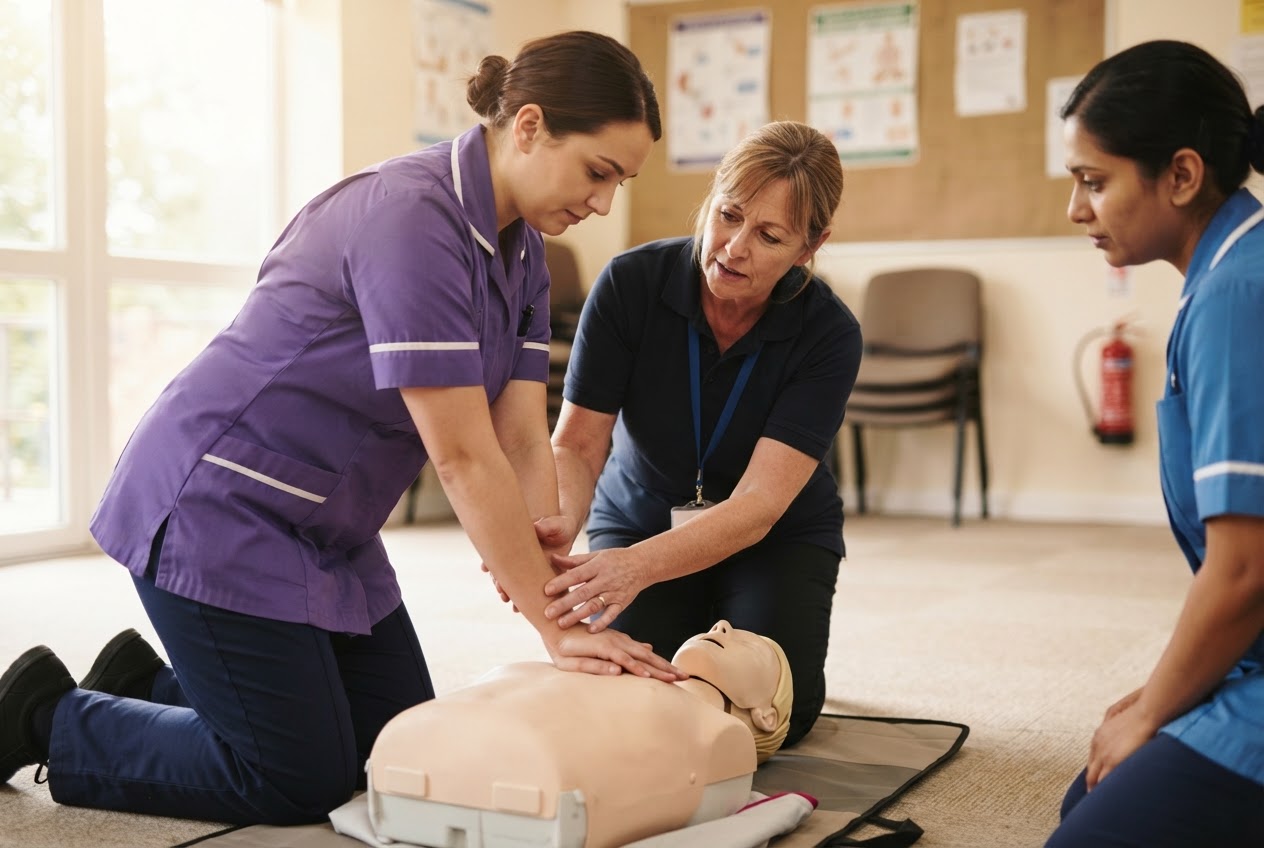
- Training in the right order. Staff need in-date basic life support training first, then hands-on practice with your own device. A device nobody has practised with is a box on a shelf.
- Prevention in care plans. Coughing or choking when eating or drinking can be a sign of swallowing difficulties (dysphagia). Follow the speech and language therapist's guidance on food and drink textures and mealtime support. Our guide to dysphagia training covers this, and dysphagia awareness training helps carers and kitchen staff get it right.
- Check it's genuine. The MHRA's 2024 safety alert warns that counterfeit and unbranded copies, sold online through marketplaces and drop-shipping websites, may fail to work or push an obstruction further down the airway. Compare your device with the alert's images, buy from reputable sellers, and contact the manufacturer if you're unsure. Don't use a suspected counterfeit, and dispose of it rather than sending it back to the seller.
- Location and checks. Keep it where meals happen, with the right mask sizes, and add it to your routine equipment checks. Replace parts after use as the manufacturer's instructions say.
- Records and reporting. Record every choking incident: what happened, what was done and in what order, and who checked the person afterwards. If a device fails, report it to the manufacturer and to the MHRA through the Yellow Card scheme in England and Wales (Scotland and Northern Ireland have their own incident reporting routes). Follow your normal incident process and any notifications your regulator requires.
- Review after every incident. Ask whether the steps were followed in order, whether anything caused delay, and whether the policy or training needs to change.
How Kasorb can help
Our Choking and LifeVac training teaches staff to recognise choking and follow the Resuscitation Council UK steps first, coughing, back blows and abdominal thrusts, then how your LifeVac is used under your policy, and what to do if every attempt fails: CPR. It covers how choking happens, common causes and reducing the risk, and who can use the device under your policy, with hands-on practice.
It runs on site in two hours on your own device, and up to three sessions can run in one day for one rate. Your trainer observes each person practising the choking steps and using your LifeVac. Staff need in-date basic life support before they attend. Certificates are emailed the next day and are valid for one year. It isn't a regulated qualification.
FAQs
How does LifeVac work?
A face mask goes over the person's nose and mouth. Pressing the plunger pushes air out through a vent, away from the person, and pulling it back quickly creates suction intended to draw the blockage out. A one-way valve is designed to stop air going into the airway. Nothing is put inside the mouth.
Does Resuscitation Council UK recommend LifeVac?
No. Its current position, updated in July 2026, is that it makes no recommendation for or against suction-based airway clearance devices while an updated international evidence review is awaited. It continues to put coughing, back blows, abdominal thrusts and CPR first, because these can start straight away with no equipment.
When should an anti-choking device be used?
Only after the standard choking steps have been tried and haven't worked. The MHRA describes the registered devices as intended for use after basic life support protocols have been attempted and failed, and the manufacturer's instructions say the same. Your own policy should say exactly where the device fits.
Can care staff use LifeVac on residents?
That's a decision for your organisation, written into a policy. If you keep one, decide who may use it, make sure those staff have in-date basic life support training and hands-on practice with your own device, and check the manufacturer's instructions for who the device isn't suitable for.
How can I tell if our LifeVac is genuine?
Compare it with the images in the MHRA's March 2024 safety alert on counterfeit anti-choking devices, and check where it was bought. If you're unsure, contact the manufacturer, which can check serial numbers. Don't keep or use a device you suspect is counterfeit.
On-site training for your whole team at one flat rate. See what's covered, prices and how to book.
See the course

Book a free 15-min consult call with us. We’ll help you get your mandatory training done right.