Manual Handling Train the Trainer: Is It Right for You?
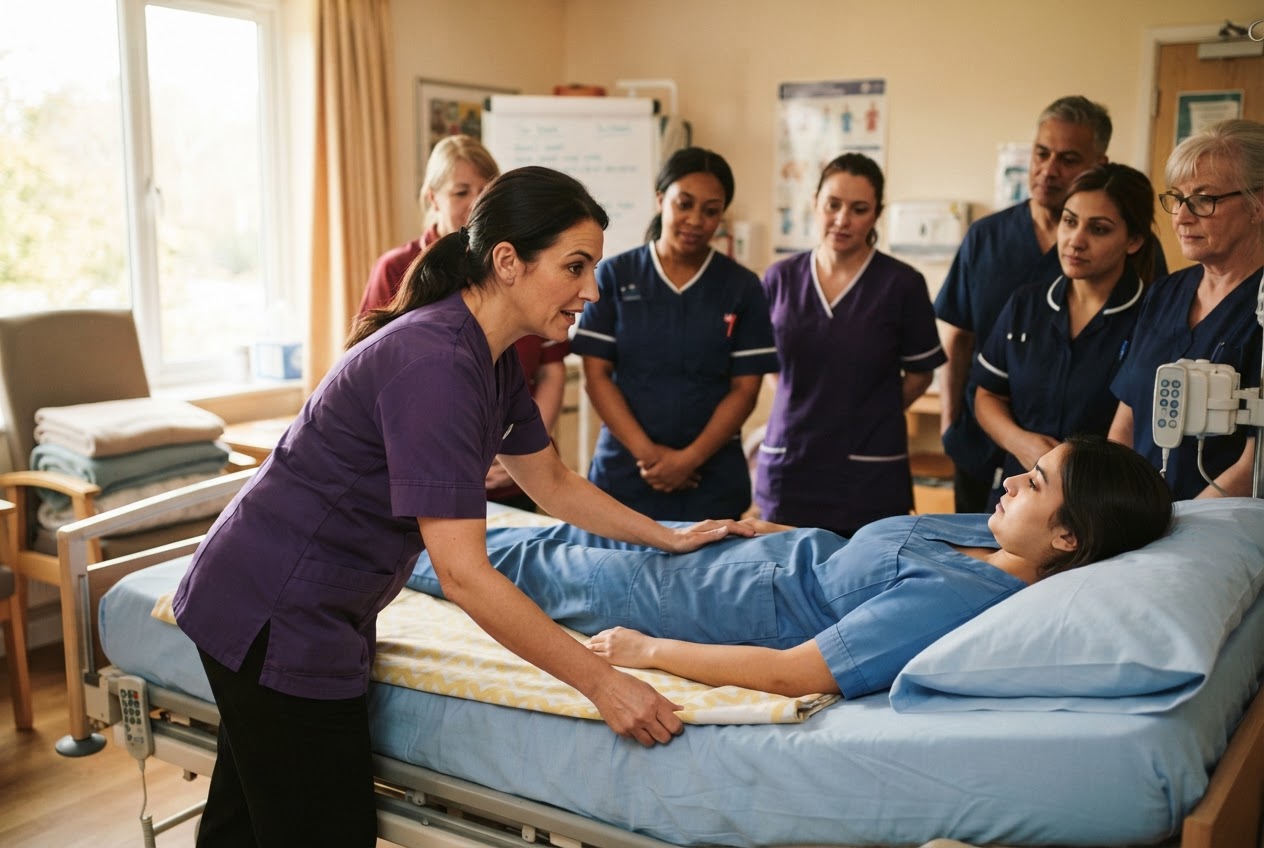

Manual handling train the trainer courses prepare experienced staff to deliver moving and handling training inside your own organisation. It makes sense when you have a steady flow of new starters, your own hoists and slings, and someone with the skills and protected time to teach. The law requires adequate training, not a particular trainer qualification, so the real question is whether in-house delivery suits your service.
What the law requires
In England, Scotland and Wales, the Manual Handling Operations Regulations 1992 set the core duty. Northern Ireland has its own equivalents of the regulations in this section. Under regulation 4, you must, so far as is reasonably practicable:
- Avoid hazardous manual handling.
- Assess any you can't avoid.
- Reduce the risk of injury to the lowest level reasonably practicable.
When you judge the risk, the regulations tell you to take account of each person's knowledge and training. The training duty itself sits in regulation 13 of the Management of Health and Safety at Work Regulations 1999: staff must get adequate health and safety training when they start and when they're exposed to new or increased risks, such as new equipment or a new system of work. It should be repeated periodically where appropriate and take place in working hours.
Neither set of regulations names a trainer qualification. What they ask for is training that's adequate for the work people actually do. That's where in-house trainers can be strong, as long as they're properly prepared and kept up to date.
What good moving and handling training looks like
HSE's guidance on manual handling training is clear that training is not enough on its own: the task itself should be made as safe as reasonably practicable first. It says training should be relevant to the work and cover:
- manual handling risk factors and how injuries happen
- how to use mechanical aids
- safe handling, including good handling technique
- the systems of work for each person's tasks and environment
- practical work, so the trainer can spot anything unsafe and put it right
HSE also says employers should monitor and review procedures to make sure staff understand and apply them. In a care setting, that means training on the hoists, slings, slide sheets and standing aids your team use every day, linked to the moving and handling plans of the people they support. A session in a hotel conference room with someone else's hoist only goes so far.
For moving people, the standard UK reference is The Guide to the Handling of People, now in its seventh edition and published by the charity BackCare. Your in-house course should reflect current guidance like this, plus your own policies.
What an in-house moving and handling trainer does
The role is usually part of someone's job rather than all of it. A typical in-house trainer:
- runs induction moving and handling for new starters before they handle people unsupervised
- delivers refreshers to your agreed cycle
- teaches staff on your own equipment, in your own rooms and corridors
- observes practice on shift and corrects habits before they become injuries
- keeps training records and flags gaps to the manager
- introduces new equipment when it arrives, so staff aren't left guessing
- feeds back when a person's needs change and their plan may need reviewing
The last three points are where in-house trainers earn their keep. They're there on a Tuesday afternoon when a new sit-to-stand aid is delivered, or when night staff are struggling with a particular transfer.
In-house trainers vs external trainers: pros and cons
Advantages of training your own trainers
- Flexibility: new starters can be trained in their first week, not when the next external date comes round.
- Relevance: training is built around your equipment, environment and policies.
- Ongoing coaching: the trainer sees practice day to day, not once a year.
- Cost over time: for larger services with frequent starters, delivering in-house can work out cheaper.
Disadvantages and risks
- Protected time: if your trainer is always pulled back onto the rota, training slips.
- Single point of failure: one trainer leaving can leave you with no programme. Two is safer.
- Drift: without refreshers and outside contact, in-house practice can quietly move away from current guidance.
- Familiarity: it can be harder to challenge colleagues you work alongside every day.
- Your responsibility: you own the course content, the records and the quality.
Some services mix the two: in-house trainers for induction and day-to-day coaching, with external training for refreshers, specialist equipment or a fresh pair of eyes. Our guide to moving and handling training in the UK explains the different courses and when each fits.
Who makes a good in-house trainer?
Pick people your team already respect on the floor. Good candidates are experienced care staff, team leaders or clinical leads who:
- handle people safely and consistently, and can explain why
- hold an in-date moving and positioning of people certificate themselves
- are confident speaking to a group and correcting colleagues kindly
- can be given protected time to plan, deliver and record training
If your trainer will only teach handling of objects, for example for kitchen, laundry or maintenance staff, the relevant background is manual handling of loads rather than people. Our manual handling training covers objects, and moving and positioning people covers people.
Keeping in-house trainers up to date
Training a trainer is the start, not the finish. Build in:
- Regular refreshers for the trainer, not just the staff they teach.
- A trainer portfolio recording sessions delivered, feedback and their own development.
- Observation: have a senior colleague sit in on sessions, especially in the first months.
- Updates when guidance, policies or equipment change.
- Review of incidents and near misses, so the training responds to what's actually happening.
How Kasorb can help
Kasorb's moving and handling train the trainer course equips experienced staff to deliver moving and handling training in-house. It runs over three days at your workplace, for up to 8 trainees: two days of training, then an observed day where each trainee teaches a real session they've planned.
Days 1 and 2 cover the theory and practice of manual handling training, risk assessment principles (including TILE and dynamic risk assessment), the anatomy of the spine, learning styles, and setting up and delivering theory and practical sessions. On day 3, each trainee delivers a 15-minute micro-teach, observed and assessed by our trainer, including assessing staff on your own equipment. Trainees also learn to build their own trainer portfolio.
We provide templates and the skills to build a course around your own requirements and policies, not a ready-made course to deliver. Trainees receive a Kasorb certificate of completion valid for three years, with an annual refresher recommended; a two-day refresher is available. Certificates are emailed the day after day 3. It isn't a regulated trainer qualification.
This guide summarises the law and guidance; it isn't legal advice.
FAQs
Do manual handling trainers need a qualification?
The Manual Handling Operations Regulations 1992 and the Management of Health and Safety at Work Regulations 1999 don't name a specific trainer qualification. They require adequate training for the work staff do. In practice, your trainer needs solid handling experience, current knowledge, teaching skills and their own in-date training.
How long does a manual handling train the trainer course take?
It varies by provider. Kasorb's moving and handling train the trainer course runs over three days at your workplace: two days of training, then an observed teaching day. A two-day refresher is available to keep trainers current.
How often should in-house manual handling trainers refresh?
There's no single legal interval. The law says training should be repeated periodically where appropriate and when risks change, such as new equipment. Kasorb recommends an annual refresher for trainers, and its trainer certificate is valid for three years.
Can an in-house trainer teach moving and handling of people?
Yes, if they're experienced in handling people, hold an in-date moving and positioning of people certificate, and train staff on the equipment and plans they actually use. Trainers who'll only teach handling of objects need an in-date manual handling certificate instead.
Is train the trainer cheaper than booking external training?
It can be for larger services with frequent new starters, because induction and refreshers can be delivered in-house. The hidden cost is time: your trainer needs protected hours to plan, deliver and record training, and their own refreshers. Smaller services often find external training simpler.
On-site training for your whole team at one flat rate. See what's covered, prices and how to book.
See the course

Not sure which course your team needs? Tell us about your setting and we'll confirm within 48 hours.