Naloxone Training in the UK: Guidance and Best Practice
.png)

Opioid overdoses kill more than 2,000 people each year in the UK, yet naloxone—a medication that reverses overdose in minutes—remains unfamiliar to many workplaces that could benefit from having it on hand. The gap between naloxone's life-saving potential and its actual availability in non-medical settings represents a missed opportunity for organisations employing staff who might encounter overdose situations.
This guide covers what naloxone does, who needs training, UK legal requirements for workplace programmes, and how to choose training that builds genuine competency rather than just ticking a compliance box.
What Is Naloxone and How It Reverses Opioid Overdose
Naloxone is an opioid antagonist medication that temporarily reverses the life-threatening effects of an opioid overdose. When someone overdoses on opioids like heroin, fentanyl, or prescription painkillers, these drugs bind to opioid receptors in the brain and suppress breathing. Naloxone works by displacing opioids from these receptors and restoring normal respiratory function within 2-5 minutes.
In the UK, you'll find naloxone available under brand names including Nyxoid (nasal spray) and Prenoxad (pre-filled injection). The medication doesn't harm someone who hasn't taken opioids, which makes it safe to administer when you're uncertain whether an overdose involves opioids. However, naloxone only works on opioid overdoses—it won't reverse overdoses from other substances like cocaine, benzodiazepines, or alcohol.
The effects of naloxone typically last 30-90 minutes, which is shorter than many opioids remain active in the body. This means someone can slip back into overdose after naloxone wears off, making emergency services essential even after successful administration.
UK Legal Framework for Naloxone Supply and Training
UK legislation allows naloxone to be supplied and administered without a prescription under specific conditions, making it accessible to workplaces and community organisations. Understanding these legal provisions helps employers implement naloxone programmes confidently while meeting their duty of care obligations.
1. Schedule 19 Exemption Explained
The Human Medicines Regulations 2012 includes provisions that permit anyone to administer naloxone in an emergency to save a life, even without medical training. They also allow certain organisations—including drug treatment services, homeless shelters, and prisons—to supply naloxone kits to individuals at risk of witnessing an overdose.
While the exemption provides broad legal protection, organisations typically implement training programmes to verify staff can recognise overdoses and use naloxone devices correctly. The exemption doesn't require formal certification, though documented training demonstrates due diligence if questions about workplace safety procedures arise.
2. Patient Group Direction and Prescription Rules
Healthcare settings often supply naloxone through Patient Group Directions (PGDs), which are written instructions that allow healthcare professionals to supply medicines to groups of patients without individual prescriptions. PGDs require authorisation from a doctor or pharmacist and outline who can supply naloxone, to whom, and under what circumstances.
Outside healthcare settings, organisations can obtain naloxone through partnerships with local drug and alcohol services or by having a healthcare professional write a prescription for workplace emergency kits.
3. Employer Liability and Insurance Considerations
Employers have a legal duty of care to protect staff from reasonably foreseeable risks, which includes providing naloxone training in environments where opioid overdose is a potential hazard. Proper training and documentation create a clear record that your organisation has taken reasonable steps to safeguard employees.
Most employer liability insurance policies cover trained staff administering naloxone in good faith during an emergency, though confirming coverage with your insurer is worthwhile. Maintaining training certificates and attendance records strengthens your position if any liability questions arise, demonstrating that staff acted within their competency and training scope.
Who Needs Naloxone Training in the Workplace
Healthcare facilities, substance misuse services, and mental health settings represent the most obvious environments requiring naloxone training, but the need extends further than many organisations initially recognise. Facilities management teams working in public spaces, housing associations supporting vulnerable tenants, and emergency services all encounter situations where naloxone knowledge could save a life.
A workplace risk assessment provides the clearest picture of whether your organisation would benefit from naloxone training. Consider whether staff might encounter unconscious individuals, work with populations experiencing substance use issues, or operate in areas where drug use occurs.
What Professional Naloxone Training Covers
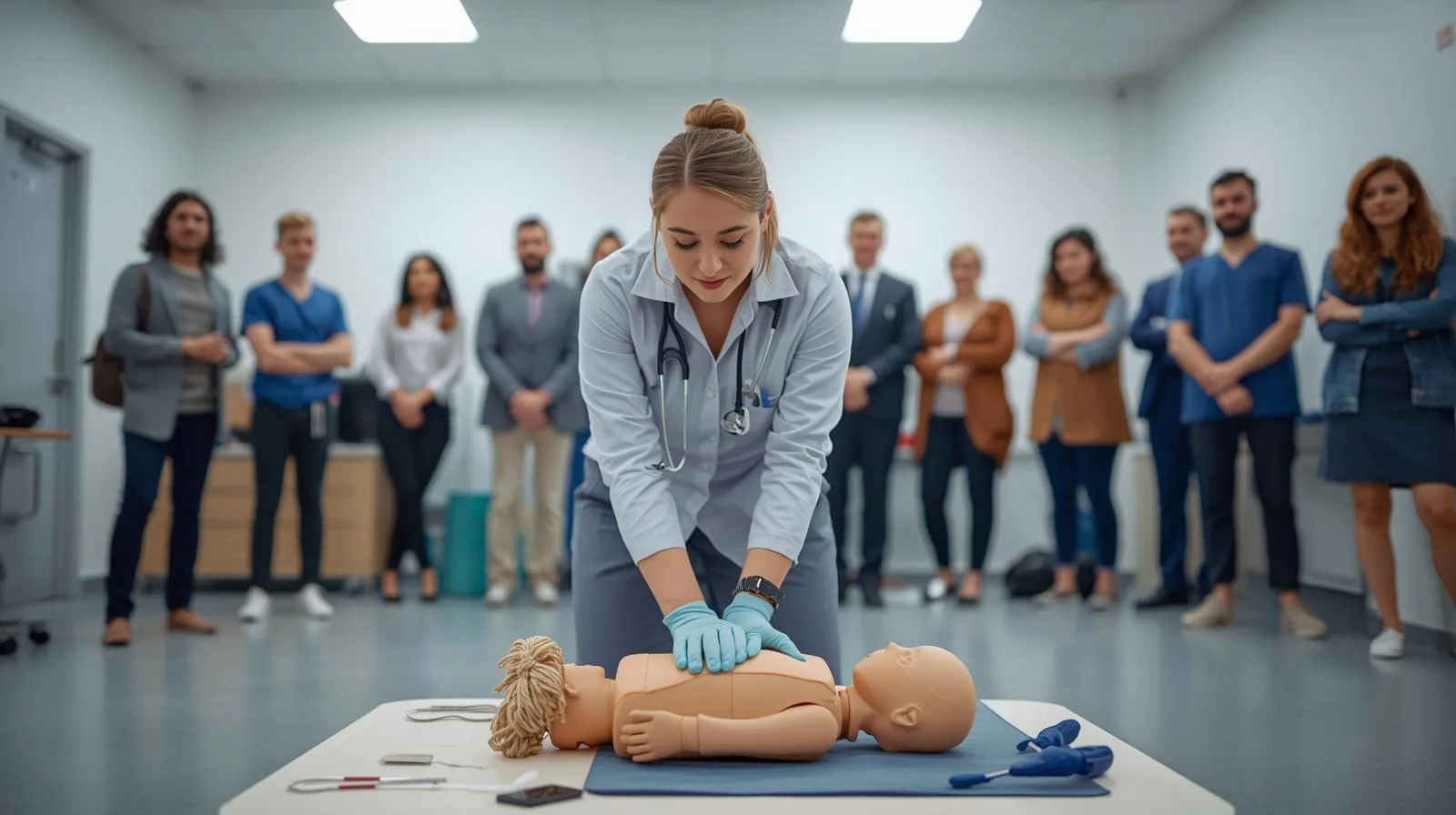
Professional naloxone training goes beyond simply learning to use a device—it builds competency in recognising, responding to, and managing opioid overdose emergencies. Training typically runs between 90 minutes and half a day, depending on whether it includes additional life support skills.
Core Learning Outcomes
Participants learn to identify the signs of opioid overdose, which differ from other medical emergencies and substance-related incidents. The training covers naloxone's mechanism of action, legal responsibilities under UK law, and the critical importance of calling emergency services even after successful naloxone administration.
You'll also learn naloxone's limitations, including why it doesn't work on non-opioid overdoses and how re-sedation can occur as the medication wears off. Courses explain the Good Samaritan principle that protects people who administer naloxone in good faith, even if they're not healthcare professionals.
Device Practice
The most valuable component of naloxone training is getting familiar with the devices themselves. Intranasal spray devices require assembly before use—a simple process that can feel complicated during a high-stress emergency if you've never seen it done.
Intramuscular injections involve specific techniques for site selection and needle insertion that benefit from rehearsal. Face-to-face training allows hands-on practice with training devices; live remote training can demonstrate each step clearly and talk learners through it, though it can't replace physically handling the device.
Scenario-Based Assessments
Realistic overdose scenarios allow participants to apply their knowledge in simulated emergencies that mirror real-world conditions. The scenarios typically involve finding an unresponsive person, assessing their condition, deciding whether naloxone is appropriate, and performing the full response sequence including calling 999.
Instructors observe how participants work through decision points and provide immediate feedback. This assessment approach reveals whether someone can actually perform under pressure, not just recall information on a written test.
Training Formats Compared: On-Site, Remote and Online
Different training formats suit different organisational needs, though not all approaches provide equivalent skill development—particularly for hands-on procedures like naloxone administration.
On-Site Group Sessions
Face-to-face training delivers the most complete learning experience because participants can ask questions specific to their workplace, practise with training devices, and receive personalised feedback. Group sessions also create opportunities for team discussion about how naloxone protocols fit into existing emergency procedures.
Live Remote Training
Live remote training, delivered by a trainer in real time rather than as a recorded module, works well for teams spread across several sites. Participants cover the same recognition, legal and response content, can ask questions as they go, and see each device demonstrated step by step. It can't include hands-on practice with the devices themselves.
Kasorb's standalone naloxone course is delivered as live remote training. Naloxone is also covered within some of our first aid and life support courses, which we deliver on site.
Self-Paced E-Learning Modules
Purely online naloxone courses provide theoretical knowledge about overdose recognition and naloxone's mechanism of action, but they can't replicate the experience of assembling a nasal spray or performing an injection. While e-learning offers convenience and lower costs, staff completing online-only training may lack confidence when facing an actual emergency.
Step-By-Step Guide to Recognising and Responding to Opioid Overdose
Knowing the correct sequence of actions during an overdose emergency helps you respond effectively when every second counts. This protocol applies whether you're using intranasal or intramuscular naloxone.
1. Assess Responsiveness and Breathing
Approach the person and check for consciousness by speaking loudly and gently shaking their shoulders. Look for signs of opioid overdose: very slow or absent breathing, blue or grey lips and fingernails, pinpoint pupils, and inability to wake.
If the person is unresponsive and not breathing normally, you're facing a medical emergency that requires immediate action. Don't waste time trying to determine what substance they've taken—if you suspect opioids might be involved, proceed with naloxone administration.
2. Call 999 and Prepare Naloxone
Calling emergency services is your first priority, even before administering naloxone. Tell the operator you're dealing with a suspected opioid overdose and that you're about to give naloxone—this information helps them dispatch the appropriate response.
While on the phone or immediately after, retrieve your naloxone kit and check the expiry date. Though expired naloxone is better than no naloxone, using in-date medication gives maximum effectiveness.
3. Administer Intranasal Spray
For Nyxoid nasal spray, remove the device from its packaging and hold it with your thumb on the plunger and two fingers on the nozzle. Tilt the person's head back slightly, insert the nozzle into one nostril, and press the plunger firmly to release the spray.
The entire 1.8mg dose releases in a single spray. If the person doesn't respond within 2-3 minutes, give a second dose in the other nostril if available.
4. Administer Intramuscular Injection
If using Prenoxad pre-filled injection, remove the cap and inject into the outer thigh muscle, even through clothing if necessary. Hold the syringe like a dart and insert the needle at a 90-degree angle, then press the plunger steadily to deliver the full dose.
The thigh provides the safest injection site for non-medical responders because it's a large muscle with minimal risk of hitting nerves or blood vessels.
5. Monitor and Provide Basic Life Support
After giving naloxone, place the person in the recovery position if they're breathing but unconscious. If they're not breathing, begin CPR with chest compressions and rescue breaths if you're trained to do so.
Naloxone typically works within 2-5 minutes, but the person may remain drowsy or confused even after breathing restarts. Stay with them until paramedics arrive, and be prepared to give additional naloxone doses if they stop breathing again—some opioids last longer than naloxone's effects.
Certification, CPD and Compliance Documentation
Naloxone training typically provides a certificate valid for one to three years, depending on the training provider and your organisation's policies. Kasorb's naloxone certificate is valid for three years.
Any structured training can count towards your CPD records — what matters is that the learning is documented. Kasorb issues a certificate of completion stating the date, content and duration, which healthcare and social care professionals can add to their CPD log. Our course is not independently CPD accredited; if your professional body specifically requires accredited CPD, check that before booking.
Keep copies of all training certificates and attendance records as part of your organisation's compliance documentation—the records demonstrate due diligence if health and safety inspectors or insurance assessors review your emergency response procedures.
Annual refresher training helps maintain competency and updates staff on any changes to protocols or available naloxone products.
Costs, Group Sizes and Booking Options
Naloxone training costs vary widely depending on format, group size, and whether the training includes additional first aid content. Online courses typically cost £20-40 per person, while face-to-face training ranges from £50-150 per person for individual bookings.
Group bookings usually offer better value than paying per person. Get in touch about naloxone training for your team and we'll recommend the right format for your setting.
Storing, Maintaining and Replacing Naloxone Kits
Proper storage and maintenance keep your naloxone kits effective when you need them. Unlike some emergency medications, naloxone is relatively stable and straightforward to store, though a few key practices protect your investment and guarantee reliability.
Recommended Storage Conditions
Store naloxone kits at room temperature between 15-25°C, away from direct sunlight and moisture. Most workplaces keep kits alongside first aid supplies in clearly marked, easily accessible locations—you want people to find naloxone quickly during an emergency without having to search through cupboards or locked cabinets.
Balance accessibility with security by placing kits in areas that staff can reach immediately but that aren't vulnerable to theft or tampering.
Expiry Checks and Stock Rotation
Naloxone typically has a shelf life of 18-36 months from manufacture. Assign someone to check expiry dates quarterly and order replacements at least three months before kits expire—this buffer prevents gaps in coverage if supply delays occur.
Create a simple log sheet attached to or near your naloxone storage location where staff record each inspection date and the kit's expiry date.
Post-Use Reporting and Restock
After administering naloxone, replace the kit immediately—even if you only used one dose from a multi-dose kit. Many local drug and alcohol services provide free replacement naloxone to organisations that have used their supplies during genuine emergencies, though you'll need to complete an incident report form.
Document every naloxone administration with basic details: date, time, location, outcome, and whether emergency services attended.
Further Resources and Support Links
Several UK organisations provide additional naloxone resources, clinical guidance, and support for workplace programmes:
- Release offers legal advice and harm reduction resources at www.release.org.uk
- SMMGP (Substance Misuse Management in General Practice) provides clinical guidelines at www.smmgp.org.uk
- The Office for Health Improvement and Disparities publishes national naloxone guidance for England, having taken over this work from Public Health England
Local drug and alcohol services often provide free naloxone kits, training, and ongoing support to community organisations—contact your local authority's public health team to identify commissioned services in your area.
Empower Your Team to Save Lives With Kasorb Training
Naloxone training equips your staff with life-saving skills that extend far beyond workplace boundaries—people who learn to recognise and respond to opioid overdoses carry that knowledge into their communities, potentially saving lives in any setting. At Kasorb, our trainers have used these skills for real, and bring that experience into every session.
Our standalone naloxone course runs as live remote training, and naloxone is also covered within some of our on-site first aid and life support courses. Get in touch about naloxone training and we'll help you choose the right option for your team.
FAQs About Naloxone Training In The UK
Can volunteers carry naloxone without formal healthcare roles?
Yes, UK legislation allows trained volunteers to carry and administer naloxone. Proper training and organisational protocols are essential, though the law doesn't require formal healthcare qualifications to use naloxone during emergencies.
How often does naloxone training need refreshing?
Most organisations recommend annual refresher training to maintain competency and update knowledge. Some high-risk environments may require more frequent updates, particularly if staff turnover is high or if new naloxone products become available.
Does naloxone cause side effects that staff monitor?
Naloxone can trigger withdrawal symptoms in opioid-dependent individuals, including agitation, nausea, rapid heart rate, and sweating. The effects are temporary and far less dangerous than continued overdose—the person may be uncomfortable but they're breathing, which is the primary goal.
Can naloxone kits be stored in vehicles or outdoor sites?
Naloxone works best when stored between 15-25°C and protected from extreme temperatures. Vehicle storage requires temperature monitoring, especially during summer months when car interiors can exceed 40°C—consider insulated storage containers or rotating kits between vehicles and climate-controlled locations seasonally.


Book a free 15-min consult call with us. We’ll help you get your mandatory training done right.