Oppositional Defiant Disorder: A Guide for Care Staff
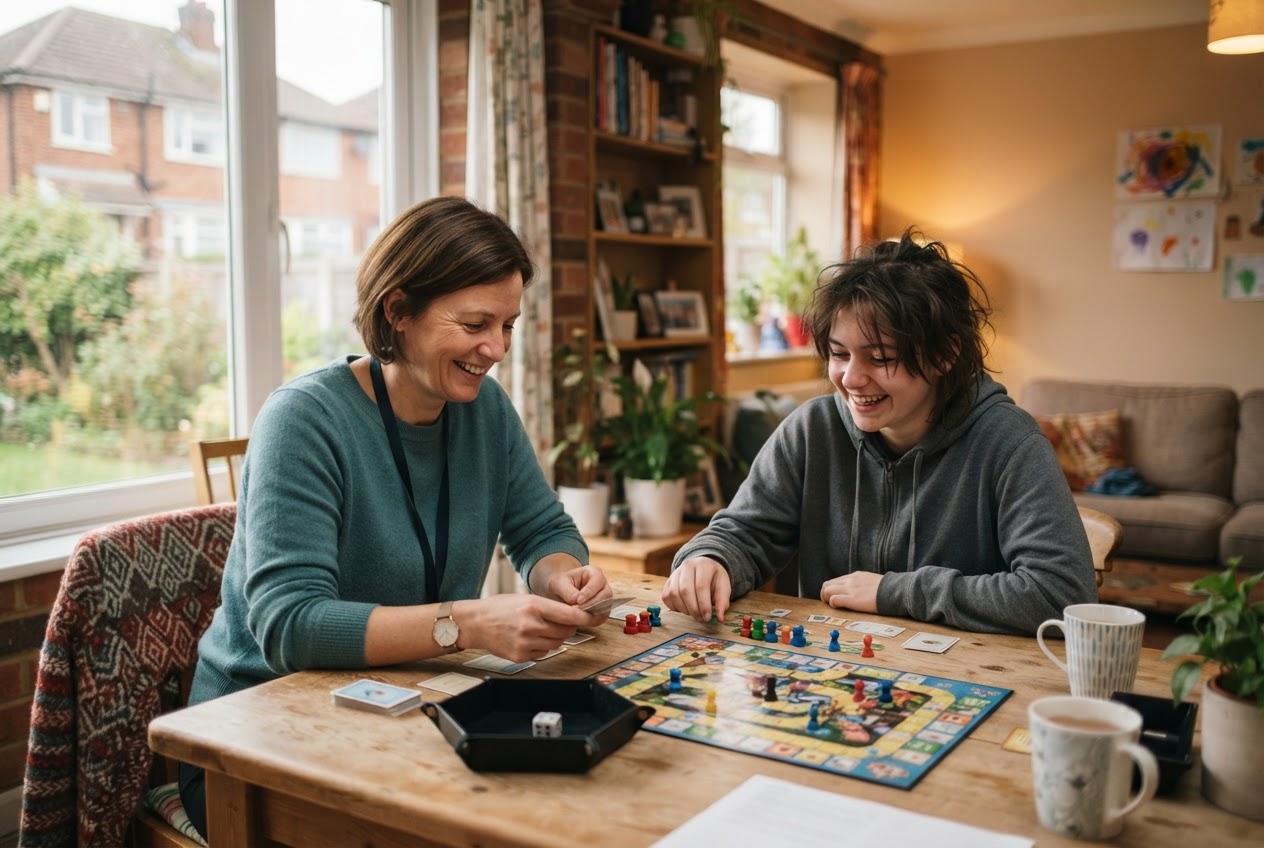

Oppositional defiant disorder (ODD) is a behavioural condition in which a child shows a persistent pattern of angry or irritable mood, arguing and defiance towards adults, or spitefulness, lasting at least six months and going well beyond what is usual for their age. It is diagnosed by specialists, and NICE recommends parent and carer programmes as a main form of support.
Below: what ODD looks like, how it differs from ordinary defiance and conduct disorder, and what staff in children's homes, fostering teams and schools can do on a difficult shift.
What ODD is, in plain words
Many clinicians use the American Psychiatric Association's diagnostic manual, DSM-5-TR. It groups eight signs into three areas. A child needs at least four of them, seen with at least one person who isn't a brother or sister, for at least six months:
- Angry or irritable mood: often loses their temper, is often touchy or easily annoyed, and is often angry and resentful.
- Arguing and defiance: often argues with adults in authority, refuses requests or rules, deliberately annoys people, and blames others for their own mistakes or behaviour.
- Spitefulness: has been spiteful or vindictive at least twice in the last six months.
Frequency matters. For children under five, the behaviour should be present on most days; from five upwards, at least once a week. The behaviour must cause real problems for the child or those around them, and can't only appear during another condition, such as depression.
Severity is described by where it shows up. Mild means one setting (for example, only at home), moderate means two, and severe means three or more, such as home, school and with friends. A summary of the criteria is available in the StatPearls chapter on ODD from the US National Library of Medicine, which also cites a prevalence of around 3.3% from DSM-5-TR.
ODD or ordinary defiance?
Every child argues, refuses and slams a door now and then. The difference with ODD is the pattern: it is frequent, it lasts months, it shows up with more than one adult, and it gets in the way of family life, school and friendships.
Context matters too. A child who has just moved placement, lost contact with a parent or started a new school may be defiant for very good reasons. That is a response to what is happening to them, not necessarily a disorder, and one reason diagnosis belongs with a specialist assessment, usually through child and adolescent mental health services, and not with staff on the floor.
ODD and conduct disorder: what's the difference?
Both involve conflict with adults and rules, and NICE covers them in the same guideline. The difference is severity. ODD is mainly about mood, arguing and defiance. Conduct disorder involves more serious behaviour, such as aggression towards people or animals, damaging property, stealing and serious rule-breaking.
ODD doesn't always lead to conduct disorder. Not every child with ODD goes on to develop conduct disorder, and not every child with conduct disorder had ODD first. ODD does raise the risk of later anxiety, low mood and substance use, so early, steady support matters.
Links with ADHD and trauma
ODD rarely travels alone. An NHS leaflet for parents from Essex Partnership University NHS Foundation Trust notes that ODD is seen in up to half of children and young people with ADHD. A child who is impulsive or can't hold an instruction in mind can look defiant when they are actually struggling to follow. If ADHD is part of the picture, our ADHD awareness training helps staff tell the two apart.
Trauma is the other big link. Research summarised in StatPearls lists exposure to abuse and family instability, such as separation, bereavement or fostering, among the risk factors. Children hurt by adults often expect adults to be unsafe, and defiance can be a way of staying in control. Trauma itself can also cause irritability and oppositional behaviour that looks like ODD. See our guides to trauma-informed practice and therapeutic parenting and PACE.
Other things can sit behind behaviour that looks defiant: a language or learning difficulty, anxiety, autism, or simply being tired and hungry.
What NICE recommends
NICE and the Social Care Institute for Excellence published guidance on antisocial behaviour and conduct disorders in children and young people (CG158) in March 2013. It applies in England and Wales and explicitly includes children at risk of, or diagnosed with, ODD. The main points are:
- Parent and carer programmes come first. For children aged 3 to 11, parents and carers should be offered group or individual training programmes.
- Older children: child-focused programmes are recommended for some 9 to 14 year olds, and for young people aged 11 to 17 with conduct disorder, multimodal support that involves their parents or carers.
- Medicines are not the routine answer. NICE's quality standard on antisocial behaviour and conduct disorders says medicines should not be offered for the routine management of behaviour problems. Treating a coexisting condition such as ADHD is a separate matter for the child's prescriber.
For a children's home or fostering team, the adults around the child are part of the support, not just the people managing the fallout.
Practical strategies for staff
None of this replaces the child's care plan or clinical advice, but these habits help on most shifts:
- Keep boundaries few, clear and consistent. A child who gets a different answer from every adult learns that arguing works. Agree house rules as a team and hold them the same way, days and nights.
- Avoid the power struggle. You don't have to win every exchange. Say what needs to happen, allow a little time, and step away from the audience.
- Offer real choices. "Shower before or after tea?" gives a child some control without giving up the expectation.
- Notice the good, specifically: "You came off the console when I asked, thanks" beats "good boy".
- Stay calm and keep your voice low. Escalating with the child rarely ends well. Our behaviour that challenges and de-escalation training covers this in practice.
- Repair afterwards. Once things are calm, come back to the child. The relationship is what makes next time easier.
- Record what you see: what happened before, during and after. Patterns across shifts help the clinical team.
Look after each other too. A child who argues with everything is tiring to work with, and supported staff stay steadier.
How Kasorb can help
Our oppositional defiant disorder training is a full day for up to 12 staff, at your premises anywhere in the UK or live online. It covers what ODD is and how it's diagnosed, how it presents at different ages, links with ADHD, trauma and attachment difficulties, what can sit behind defiant behaviour, consistent boundaries and routines, de-escalation and avoiding power struggles, working with families, schools and other professionals, and looking after staff wellbeing.
Learning is assessed through case studies, discussion and questions. Your trainer has used these skills for real and keeps the day practical. It's awareness training: it doesn't train anyone to diagnose ODD. The course is quoted for your team at one price for the group, and each person receives a Kasorb certificate of completion, valid for two years, emailed the next day.
FAQs
What are the symptoms of oppositional defiant disorder?
The main signs are frequent temper loss, being touchy or easily annoyed, anger and resentment, arguing with adults, refusing requests or rules, deliberately annoying people, blaming others, and spitefulness. For a diagnosis, at least four signs must last six months or more and cause real problems at home, school or with friends.
What is the difference between ODD and conduct disorder?
ODD is mainly about irritable mood, arguing and defiance towards adults. Conduct disorder is more serious and involves aggression towards people or animals, damaging property, stealing or serious rule-breaking. Not every child with ODD goes on to develop conduct disorder, and NICE covers both in the same guideline.
Is ODD the same as ADHD?
No, they are separate conditions, but they often occur together. An NHS leaflet for parents notes that ODD is seen in up to half of children with ADHD. Impulsivity and poor attention can look like defiance, so a specialist assessment is needed to work out what is driving a child's behaviour.
Can trauma cause ODD?
Trauma and adversity, such as abuse and family instability, including separation or fostering, are recognised risk factors. Trauma can also cause irritability and oppositional behaviour that looks like ODD. Only a specialist assessment can tell the two apart, which is why staff should describe behaviour rather than label it.
How do you deal with a child with ODD?
Keep rules few, clear and consistent across the team, avoid power struggles, offer genuine choices, praise specific good behaviour, stay calm, and repair the relationship afterwards. NICE recommends parent and carer programmes as a main form of support, so follow the child's care plan and work closely with their clinical team.
On-site training for your whole team at one flat rate. See what's covered, prices and how to book.
See the course

Not sure which course your team needs? Tell us about your setting and we'll confirm within 48 hours.