Pica Disorder: Causes, Risks and Support in Care

Pica disorder is when someone repeatedly eats things that aren't food and have no nutritional value, such as soil, paper, stones, fabric or ice. It's diagnosed when the behaviour lasts at least a month, isn't expected for the person's developmental stage and isn't a cultural practice. It's linked with learning disability, autism, pregnancy and iron deficiency.
What counts as pica
Most toddlers put things in their mouths, so pica isn't diagnosed in very young children. The American Psychiatric Association's DSM-5 criteria, as summarised by StatPearls, come down to four points, in our own words:
- The person eats non-food substances with no nutritional value, over at least a month.
- It isn't in keeping with their developmental level (DSM-5 suggests a minimum age of two).
- It isn't part of a cultural or socially accepted practice.
- If it happens alongside another condition, such as a learning disability or pregnancy, it's serious enough to need clinical attention in its own right.
What people eat varies widely: soil, chalk, paper, hair, fabric, cigarette ends, plastic, paint flakes or ice.
Who it affects
Pica can start in childhood or adulthood. It's linked with:
- Learning disability: the Challenging Behaviour Foundation says the more severe someone's learning disability, the more likely pica is. It cites research finding that up to a quarter of children and adults with a learning disability show pica behaviour.
- Autism and other developmental conditions.
- Pregnancy.
- Iron or zinc deficiency. The NHS lists "wanting to eat non-food items, such as paper or ice (pica)" as a symptom of iron deficiency anaemia.
So "pica in adults" isn't unusual in learning disability and autism services, and it's worth asking about at assessment.
Why it happens
The causes aren't well understood. The Challenging Behaviour Foundation describes several possible reasons, and often more than one applies:
- Sensory feedback: the taste, texture or crunch feels good. Research cited by the Foundation suggests this is the most common reason in people with learning disabilities.
- Attention: eating something unsafe reliably brings a member of staff running.
- Getting something: an item, a drink or a favourite activity.
- Escape: getting out of a task or situation the person dislikes.
- Pain, hunger or an unmet need the person can't put into words, including dental pain.
- Not telling edible and non-edible things apart.
The risks
Some objects pass through without harm, but pica can be life threatening. Risks include choking, blockages in the gut, constipation, vomiting, infections, poisoning, damage to teeth and gums, and surgery. StatPearls adds lead poisoning (for example from old paint) and parasites from soil. The Challenging Behaviour Foundation flags batteries, blades, thread and fabric, gloves, bags and plastics as higher-risk items. In one study of 48 people that the Foundation cites (Williams, Gibbs and Addo, 2022), 75% needed surgery.
Assessment: rule out physical causes first
Pica is not a diagnosis to manage on behaviour alone. Before anything else, ask the GP for a health check. The Challenging Behaviour Foundation suggests asking for:
- blood tests for iron and zinc levels
- a medication review
- questions about constipation, reflux, pain and vomiting
- a dental check, since tooth pain can drive the behaviour
- a mental health assessment where appropriate
StatPearls adds lead testing where there's a risk. Alongside this, a clinical psychologist or behaviour specialist can carry out a functional assessment to understand why the person does it. Your team helps by keeping ABC charts: what happened before (antecedent), the behaviour, and what happened after (consequence).
Positive behaviour support for pica
Once you know the likely reason, the behaviour support plan can target it. The Challenging Behaviour Foundation's guidance includes:
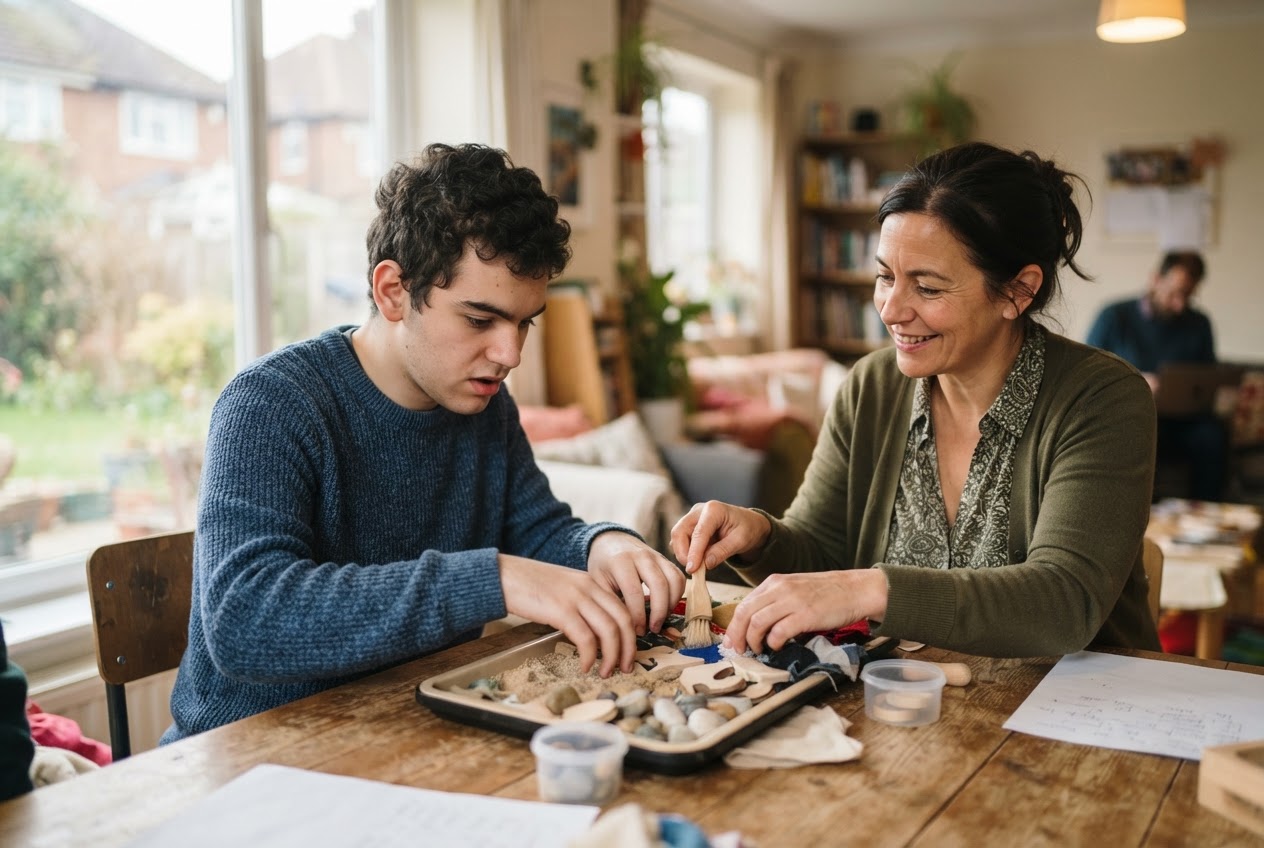
- Safe alternatives that meet the same need: chewing gum, popcorn, strong-tasting foods, chewy tubing, or a "pica box" of safe items.
- Attention for the right things: plenty of warm attention when the person isn't eating non-food items, and a safe way to ask for help.
- A fuller day: structured, meaningful activity so there's less time with nothing to do.
- Better communication, so pain, hunger and boredom can be expressed another way.
- Teaching the difference between edible and non-edible things, for example through sorting activities.
- Reviewing the plan regularly. It's a live document.
If your team is new to this approach, our guide to what positive behaviour support is explains the basics. Pica often sits alongside autism too, so autism awareness training can help staff understand sensory needs.
A safer environment, without over-restricting
The aim, in the Foundation's words, is keeping the person safe in the least restrictive way possible. Offering safer alternatives matters as much as removing items. Practical steps include:
- regular floor and room checks, especially after visitors, deliveries and activities
- counting small items such as craft materials, gloves and batteries in and out
- securing bins, cleaning products and toiletries
- choosing sturdy furniture and furnishings
- setting the right level of supervision in the risk assessment, and reviewing it
Two rules from the Foundation's example plans are worth sharing with every shift: if something is missing, treat it as possibly eaten, and don't assume it didn't happen just because nobody saw it.
In England, Regulation 12 of the Health and Social Care Act 2008 (Regulated Activities) Regulations 2014 requires providers to assess risks to people's health and safety and do all that's reasonably practicable to reduce them. Locking everything away for everyone isn't the only answer. Think about the effect on the person and anyone they live with, and record your reasoning.
What to do in an emergency
Every person with pica should have an emergency plan in their care plan. Drawing on the Challenging Behaviour Foundation and NHS advice:
- Choking: give choking first aid and call 999. See our choking training.
- Vomiting, or possibly swallowed something poisonous: call 999.
- Seems well but has swallowed something: call NHS 111 or go to A&E, and ask whether a scan or X-ray is needed to confirm what was swallowed.
- Don't try to make the person sick, and don't give them anything to eat or drink.
- Keep the packaging or a sample to show the hospital.
- Never pull out thread or material you can see. Get medical help.
Afterwards, record what happened, including near misses. The Foundation suggests flagging pica as a high-alert risk in every file so all staff, including agency workers, know the plan.
How Kasorb can help
Our pica awareness training helps staff support people who eat non-food items. In three hours, on-site or live online, it covers the signs and symptoms of pica, what causes it, the associated risks, supervision levels, managing pica in different settings, structured activities and preventative measures, emergency planning, and record keeping. Your trainer has used these skills for real, so bring questions about your own service. It's one flat rate for the group, and certificates are emailed the next day.
FAQs
What is pica disorder?
Pica disorder is repeatedly eating things that aren't food and have no nutritional value, such as soil, paper, hair or ice, for at least a month. It's only diagnosed when the behaviour isn't expected for the person's developmental stage and isn't part of a cultural practice.
What causes pica in adults?
The causes aren't fully understood. In adults, pica is linked with learning disability, autism, pregnancy and iron or zinc deficiency. The behaviour may meet a sensory need, bring attention, get the person something or help them escape a situation, or signal pain or an unmet need.
Is pica linked to iron deficiency?
It can be. The NHS lists wanting to eat non-food items such as paper or ice as a symptom of iron deficiency anaemia. That's why a GP health check with blood tests for iron and zinc is one of the first steps when someone starts showing pica.
What should you do if someone with pica swallows something harmful?
Call 999 if they're choking, vomiting or may have swallowed something poisonous. If they seem well, call NHS 111 or go to A&E. Don't make them sick, keep the packaging, and tell the hospital exactly what was swallowed. Follow the person's emergency plan.
Can pica be treated?
There's no single treatment. The usual approach is to treat any physical cause, such as iron deficiency, carry out a functional assessment, and use a positive behaviour support plan with safe alternatives, meaningful activity, the right supervision and a safer environment, reviewed regularly.
On-site training for your whole team at one flat rate. See what's covered, prices and how to book.
See the course

Not sure which course your team needs? Tell us about your setting and we'll confirm within 48 hours.