Emergency Paediatric First Aid vs Paediatric First Aid
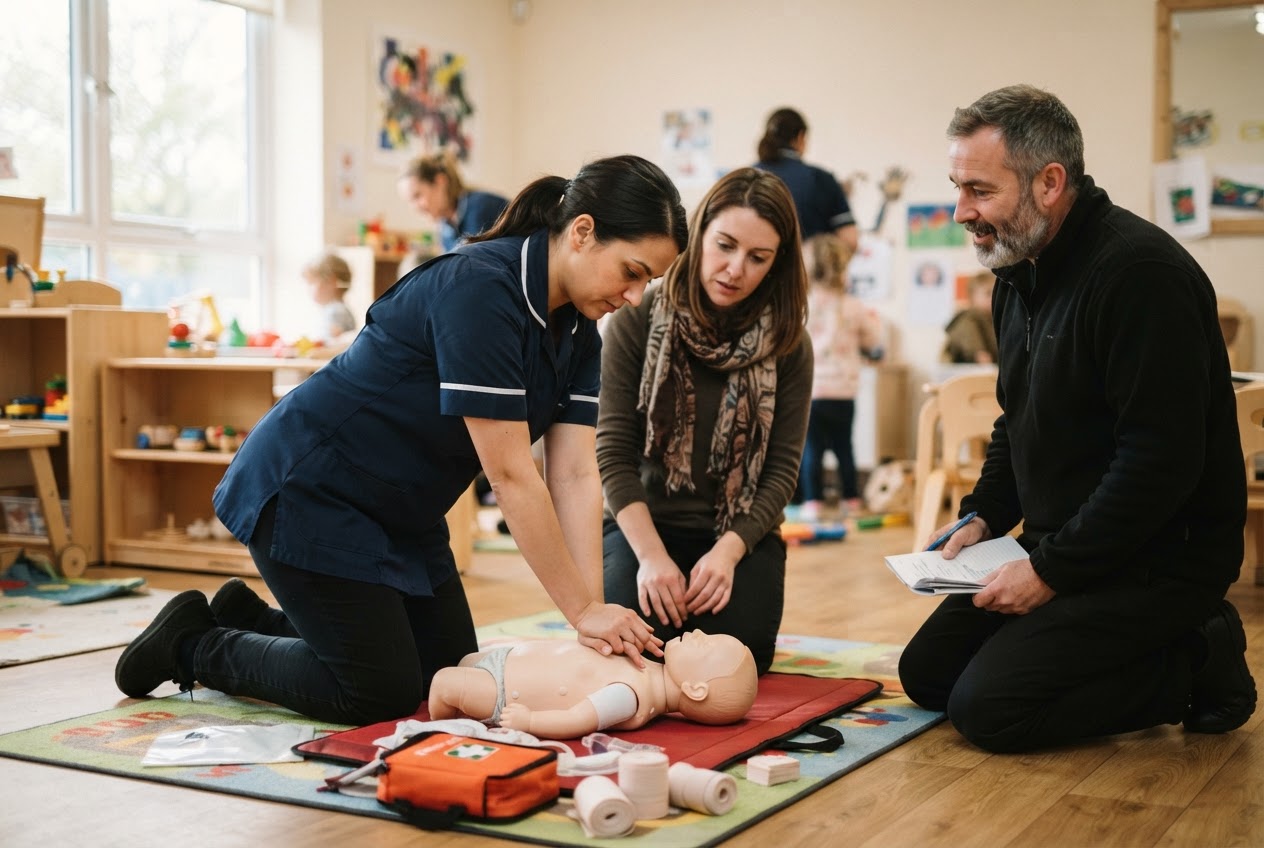

Emergency paediatric first aid is a one-day course of at least six hours covering the life-threatening situations: a baby or child who is unresponsive, CPR, choking, seizures, bleeding and shock. Full paediatric first aid takes at least 12 hours, so it runs over two days, and adds injuries and illnesses such as burns, fractures, anaphylaxis, asthma and meningitis. Early years settings in England need full certificate holders.
The difference at a glance
- Emergency paediatric first aid: at least 6 hours, excluding breaks. It covers the emergencies where minutes matter.
- Full paediatric first aid: at least 12 hours, excluding breaks. It covers everything in the emergency course, plus the wider range of injuries and illnesses you meet in a nursery or school week.
- Who it's for: the EYFS asks for the full course in early years settings in England. The emergency course suits staff who may face a serious incident with a child but aren't the required paediatric first aider.
- Renewal: both certificates last three years.
Those hour minimums come from Annex A of the EYFS statutory framework, which sets the criteria for paediatric first aid training in England.
What emergency paediatric first aid covers
Annex A lists the areas an emergency paediatric first aid course must cover. In plain terms, staff learn to:
- assess an emergency and decide what to do first
- help a baby or child who is unresponsive and breathing normally
- help a baby or child who is unresponsive and not breathing normally, which means CPR
- help a baby or child who is having a seizure
- help a baby or child who is choking
- deal with bleeding, and with shock caused by severe blood loss
Annex A says the emergency course should be taught face to face, and it rules out online platforms for this part.
What full paediatric first aid adds
The full course covers all of the above, then adds how to help a baby or child with:
- anaphylaxis, allergic reactions, asthma attacks and diabetic emergencies
- meningitis and febrile convulsions
- burns, scalds and electric shock
- suspected fractures, and head, neck or back injuries
- suspected poisoning
- something stuck in the eye, ear or nose, and eye injuries
- bites and stings
- the effects of extreme heat or cold
It also covers the role of the paediatric first aider, including what goes in a first aid box and how to record accidents and incidents. The emergency elements of the full course should also be taught face to face.
What the EYFS requires in England
The Department for Education publishes two EYFS frameworks: one for group and school-based providers, and one for childminders. The current versions took effect on 1 September 2026. For group and school-based providers, the paediatric first aid rules sit in paragraphs 3.37 to 3.40:
- On site at all times: at least one person with a current paediatric first aid certificate must be on the premises and available whenever children are present, and must go with children on outings. That certificate must be for a full course.
- Enough cover for your building: you should take into account the number of children, the number of staff and the layout of your premises, so a paediatric first aider can respond quickly.
- Newly qualified staff: anyone who gained a level 2 or level 3 early years qualification since 30 June 2016 must get a paediatric first aid qualification within three months of starting work to count in the staff:child ratios at that level, and must renew it every three years to stay in them.
- Mealtimes: while children are eating, a member of staff with a valid full paediatric first aid certificate should always be in the room.
- Tell parents: you should display staff certificates, or a list of staff with a current certificate, or make them available to parents and carers.
Childminders must hold a full paediatric first aid certificate for as long as they're registered. In both frameworks, the training must be renewed every three years, and Annex A suggests considering annual refresher training in between.
The mealtime rule is the one that catches nurseries out. If children eat in three rooms at once, you need a full certificate holder in each. Count across your rota, rooms and outings, not just your building.
The EYFS applies in England only. Scotland, Wales and Northern Ireland have their own childcare standards, so check the rules for your nation.
Schools, clubs and other settings
The Department for Education's guidance on first aid in schools, early years and further education treats reception classes and nurseries as early years settings, so the EYFS paediatric first aid rules apply there.
Outside early years, the picture is looser. The Health and Safety (First-Aid) Regulations 1981 only require employers to provide first aid for their own employees. The guidance strongly recommends that schools also consider pupils and visitors, and says there's no rule on the number of first aiders: that comes from your first aid needs assessment, and cover must extend to trips.
The same logic works for after-school clubs, holiday clubs and sports clubs. If you're on the Early Years Register, the EYFS rules apply. If you aren't, a needs assessment tells you what cover you need, and for most settings working with children that means some staff trained in paediatric first aid as well as adult first aid. Our guide to how many first aiders you need walks through the assessment.
When a combined adult and paediatric course fits
Many settings look after two groups at once: their own staff and the children in their care. Primary schools, sports clubs, children's therapy services and pharmacies that see families all fit this pattern. Rather than two separate courses and two days off the floor, a combined emergency course covers adults, children and infants in a single day.
The trade-off is plain. A combined emergency course doesn't meet the EYFS requirement for a full paediatric first aid certificate. If you run an early years setting, or a reception class, you still need full paediatric first aiders on site.
Certificates and renewal
Paediatric first aid certificates last three years. Book renewals before they expire, because staff in the ratios stop counting in them once their certificate lapses. Our guide on how long a first aid certificate lasts covers adult courses too.
How Kasorb can help
Our combined Emergency First Aid at Work and Emergency Paediatric First Aid course runs for one day at your workplace and leads to two regulated qualifications from Qualsafe: the Level 3 Award in Emergency First Aid at Work and the Level 3 Award in Emergency Paediatric First Aid. It's built for schools, sports clubs and childcare settings that need both, without sitting two separate courses.
Staff practise CPR and defibrillation for adults, children and infants, the recovery positions, choking, seizures, bleeding and shock, bites and stings, and minor injuries. Everyone is assessed through six practical assessments and a multiple-choice theory paper. Your trainer has used these skills for real, and brings adult, child and infant manikins and AED trainers. It's one flat rate for the group, with no per-person charges, and certificates are valid for three years.
For the full early years certificate, book our two-day Paediatric First Aid course instead.
This guide summarises the law and guidance; it isn't legal advice.
FAQs
What is the difference between emergency paediatric first aid and paediatric first aid?
Emergency paediatric first aid lasts at least six hours and covers life-threatening emergencies such as CPR, choking, seizures and bleeding. Full paediatric first aid lasts at least 12 hours and adds conditions such as anaphylaxis, asthma, burns, fractures and meningitis. Early years settings in England need full certificate holders.
Is emergency paediatric first aid enough for a nursery?
Not for the person who provides the required cover. The EYFS says at least one person with a current full paediatric first aid certificate must be on the premises whenever children are present, and a full certificate holder should be in the room while children eat. Other staff can hold the emergency certificate.
How long does a paediatric first aid certificate last?
Three years, for both the emergency and the full course. The EYFS says the training must be renewed every three years, and it suggests settings consider annual refresher training in between. Staff in the ratios stop counting if their certificate lapses.
Can paediatric first aid be done online?
Not fully. Annex A of the EYFS framework says the emergency course should be taught face to face, and it excludes online platforms. For the full course, the emergency elements should also be taught face to face, so staff practise CPR and choking on manikins.
Do schools need paediatric first aiders?
Reception classes and nurseries in schools are early years settings, so the EYFS paediatric first aid rules apply to them. For older year groups there's no set number of first aiders. Schools decide through a first aid needs assessment, and the Department for Education recommends considering pupils' needs as well as staff.
On-site training for your whole team at one flat rate. See what's covered, prices and how to book.
See the course

Not sure which course your team needs? Tell us about your setting and we'll confirm within 48 hours.