Medication Training in Care Homes: What CQC Inspectors Found


Part of the CQC Training Gap Index 2026, Kasorb's analysis of what CQC inspectors wrote about staff training in care home reports.
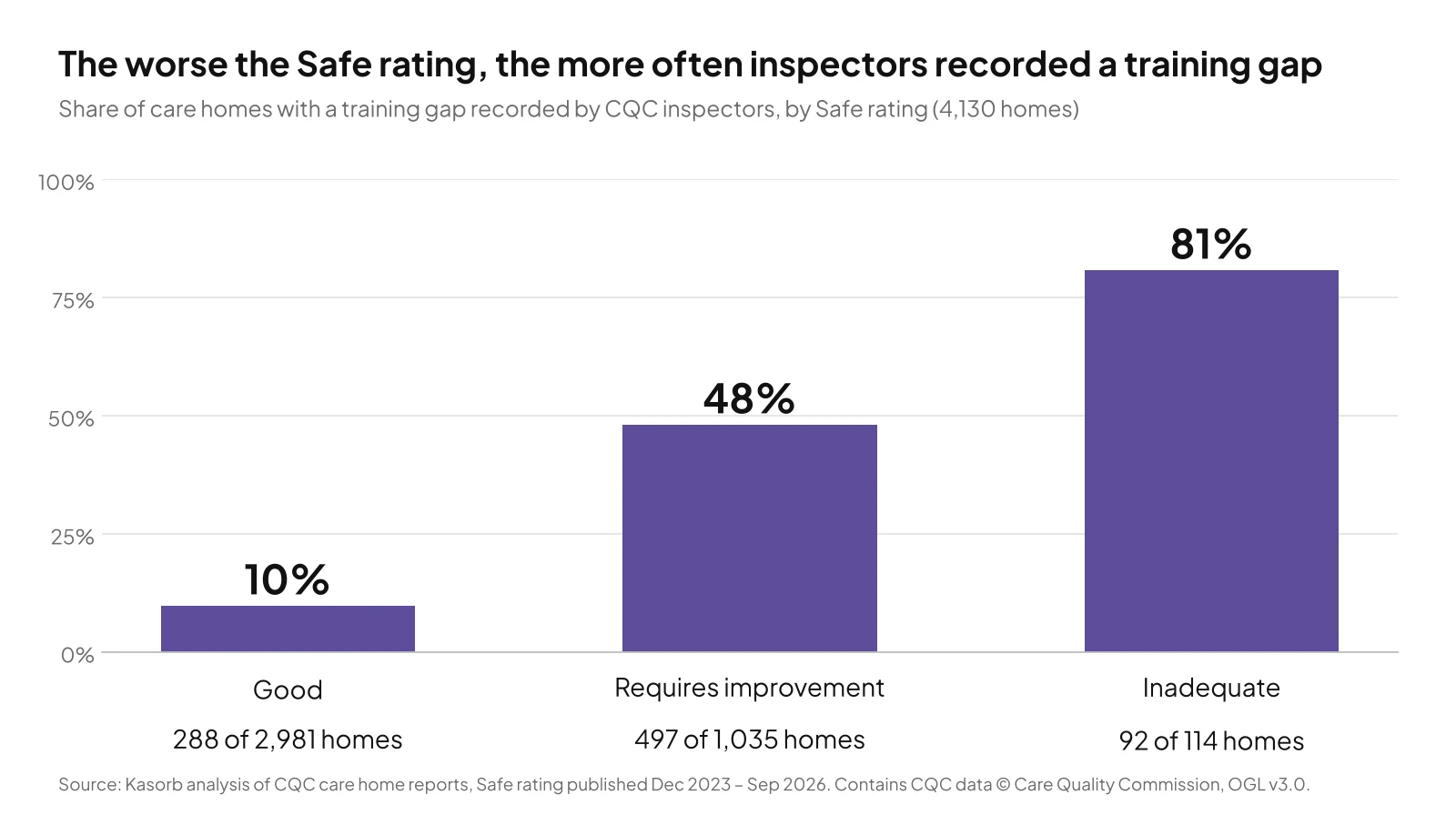
Medicines were the most common subject when CQC inspectors recorded a staff training gap in a care home. Of the 878 care homes where inspectors recorded a gap, 205 (23%) involved medicines, more than any other named subject, and it was the top named gap at every rating. In at least 4 in 10 of those, the gap involved competency checks: missing, out of date or not recorded.
What inspectors found
We read the Safe and Effective pages of each home's latest CQC report and pulled out every sentence about training, competence and induction. Medicines gaps fell into four patterns:
- Competency assessments missing, out of date or not recorded. The most common pattern. Staff had often done a medicines course, but nobody had observed and signed off their practice, or the sign-off had lapsed.
- Training not completed or out of date. The training matrix showed staff giving medicines whose training had expired or never happened.
- Specialist medicines not covered. Rescue medicines for seizures, "when required" (PRN) medicines, pain patches and controlled drugs, where competency checks didn't cover the route staff actually used.
- Too few trained staff on shift. Most often at night, leaving people waiting for medicines or untrained staff stepping in.
In inspectors' words
From CQC reports (no home named):
- "Two staff members had not completed medicines management training, and one staff member's competency assessment had expired."
- "The competency assessments viewed for medicines showed that several had last been completed in 2024 and were overdue."
- "For example, the competency assessments did not include administration of medicines requiring additional controls, eye drops, or application of patches."
- "This was a particular concern at night where only 1 member of the night staff team had been determined competent to give medication."
- "We observed staff administering medicine without having completed their medication training and having their competence assessed."
What CQC expects
CQC's guidance on medicines training and competence sets out the basics:
- New staff must not manage or give medicines until their competence has been assessed.
- NICE guidelines SC1 (care homes) and NG67 (care at home) recommend an annual review of each person's knowledge, skills and competence in managing and giving medicines.
- The person who assesses staff should be competent in the medicines tasks your service carries out.
- You need a formal assessment process, with records showing when each review is due.
Training and competency are two different things. A course gives staff the knowledge. Your own observed check, against your policy and the routes your staff actually use, shows they can apply it. Inspectors look for both.
What managers can do now
- List everyone who gives medicines, including bank, agency and night staff, with their training date and their last competency assessment date.
- Book competency reviews for anyone more than a year out, and before any new starter gives medicines alone.
- Check your competency assessment covers every route used in your home: PRN, patches, eye drops, controlled drugs, rescue medicines and anything else in people's care plans.
- Make sure the person signing off competency is competent in those tasks.
- Check the rota: is there always someone trained and signed off to give medicines on every shift, including nights?
How Kasorb can help
Kasorb runs medication administration training for up to 12 staff at your workplace or live online with a trainer, using example MAR charts and your own medicines policy. Staff leave trained and certified, ready for your own workplace sign-off. Specialist routes have their own courses, such as buccal midazolam.
About this analysis
Based on CQC reports for care homes rated since December 2023. A home counts as having a medicines training gap where inspectors recorded missing, incomplete or out-of-date medicines training or competency checks at that assessment. Full method and figures in the CQC Training Gap Index 2026. Contains CQC report text, © Care Quality Commission, used under the Open Government Licence v3.0.
FAQs
What is the most common training gap CQC finds in care homes?
Medicines. In our analysis of 4,146 care homes rated for Safe since December 2023, 23% of homes with a recorded training gap had a medicines gap, more than any other named subject.
How often should care staff have a medicines competency assessment?
NICE guidelines SC1 and NG67 recommend an annual review of knowledge, skills and competence for all staff who support people with medicines, and new staff must be assessed before they give medicines.
Is medication training the same as a competency assessment?
No. Training gives staff the knowledge. A competency assessment is the employer's observed check that each person can give medicines safely in your setting. CQC looks for both.
On-site training for your whole team at one flat rate. See what's covered, prices and how to book.
See the course

Not sure which course your team needs? Tell us about your setting and we'll confirm within 48 hours.