Oxygen Concentrator Safety: A Guide for Care Teams
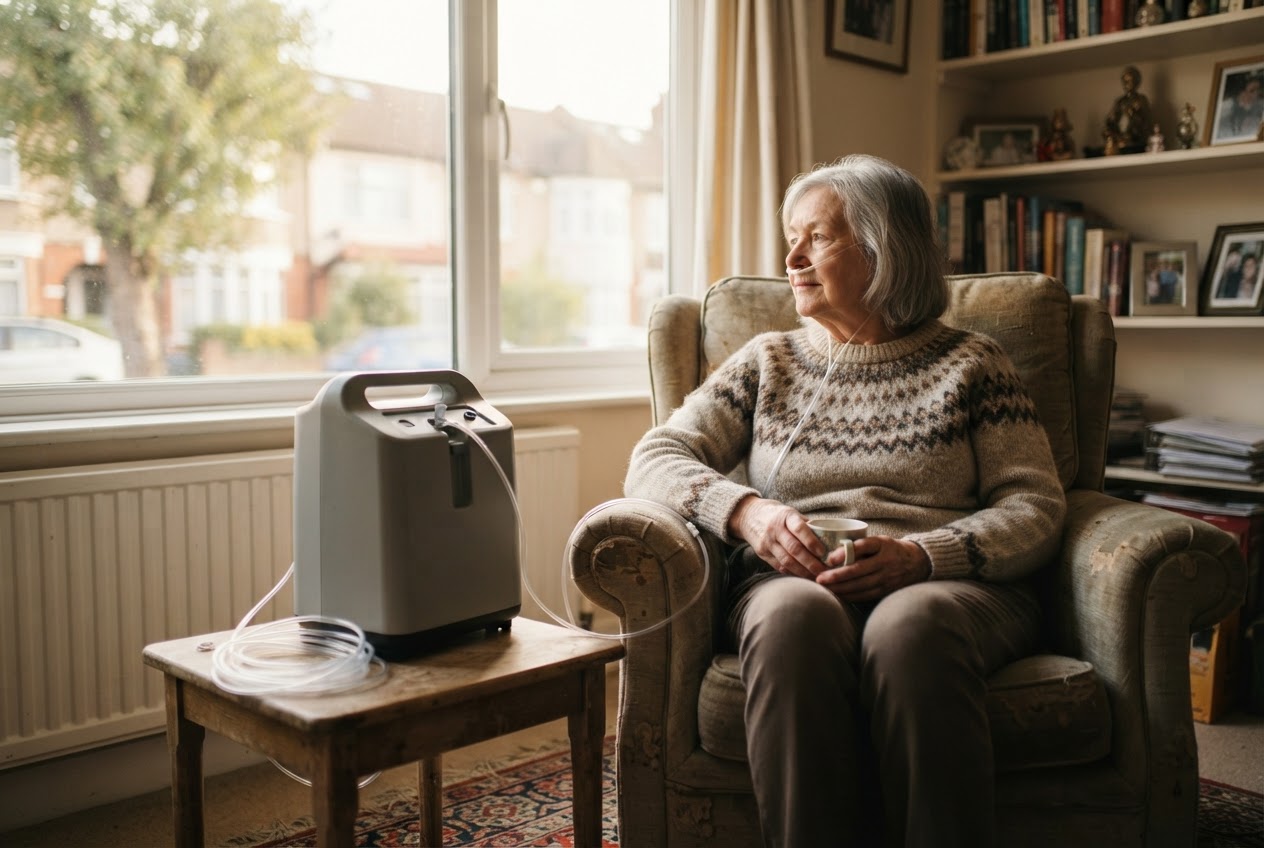

An oxygen concentrator is a mains-powered machine that makes oxygen from room air and delivers it through a mask or nasal tubes. A specialist prescribes it, usually for people who need oxygen for much of the day, including while they sleep. For care teams, the biggest everyday risk is fire: oxygen helps things catch light easily and burn fiercely.
Concentrators and cylinders: what's the difference?
- Oxygen concentrator: about the size of a bedside table, plugged into a wall socket. The NHS recommends it for people who need oxygen most of the day. Many people also have a back-up cylinder from their supplier for a power cut or breakdown, and some of the electricity cost is reimbursed.
- Large cylinders: usually prescribed for short-term needs, such as sudden breathlessness.
- Portable cylinders: also called ambulatory oxygen. The NHS says most weigh around 2 to 3kg and hold up to three hours of oxygen, and they aren't suitable for everyone.
Oxygen reaches the person through a nasal cannula (short tubes in the nostrils) or a mask. The NHS warns that buying oxygen online and using it without a prescription can be dangerous.
How home oxygen is prescribed and supplied in England
Oxygen is a medicine. CQC's guidance for adult social care in England says it must only be prescribed by a specialist, usually a respiratory professional, after a clinical review. The route usually looks like this:
- The GP or hospital team refers the person to a specialist home oxygen assessment service. Tests may include a blood test, a finger or earlobe oxygen reading, and a walking test.
- The oxygen is ordered on a Home Oxygen Order Form (HOOF). A risk assessment and consent form are completed at the same stage, covering things like smoking, smoke alarms and who else lives in the home.
- One of the NHS's contracted suppliers delivers the equipment. An engineer installs it and explains how to use it safely.
- The supplier remains responsible for maintaining the equipment, dealing with faults and replacing it.
If you're in Scotland, Wales or Northern Ireland, ask your local respiratory team how home oxygen is arranged there.
Why oxygen is a fire risk
Oxygen doesn't burn by itself, but it makes everything around it burn more easily. Hair, clothing and bedding soak up oxygen, so a spark or a cigarette can start a fast fire. Smoking-related home oxygen fires have caused injuries and deaths.
- Smoking: CQC says home oxygen should not be prescribed to a current smoker, and nobody should smoke where oxygen is used. If you're worried that someone is smoking, contact the home oxygen team or the prescriber straight away. Our smoking cessation training helps staff support people who want to stop.
- E-cigarettes: NHS England's risk assessment notes treat the ignition risk from e-cigarettes as the same as a lit cigarette, and say charging these devices has caused deaths in the UK. Keep vapes and their chargers out of any room where oxygen is used or stored.
- Emollients and creams: the MHRA warns that skin cream residue that dries on clothing, bedding and dressings helps fire spread, whether or not the product contains paraffin, and that hot washes reduce but don't remove it. The NHS advises against oil-based products such as Vaseline near oxygen. Don't stop a prescribed emollient: ask the prescriber or pharmacist about the safest option.
- Open flames and heat: CQC says to keep oxygen at least two metres from flames or heat sources. NHS advice for people at home is at least three metres from appliances with an open flame, such as a gas cooker or gas fire, and 1.5 metres from other electrical appliances and heaters. Use the distances in your supplier's safety information.
- Other hazards: aerosols, paint thinners, heaters and laptops all belong in the care plan.
Fire service home safety visits
The NHS advises people using home oxygen to tell their local fire and rescue service, which can arrange a free home fire safety check. NHS England's risk assessment notes recommend a referral to the fire and rescue service where smoke alarms are missing or not working.
In a care home, oxygen also belongs in your fire risk assessment. CQC expects hazard signs wherever oxygen is stored, including the person's bedroom, a personal emergency evacuation plan for each person on oxygen, and a plan for telling the fire service where oxygen is kept if they attend. CQC also suggests telling the local power network that the person uses oxygen. For the wider picture, see our fire safety awareness training.
Everyday safety checks for care staff
Most of this takes seconds each time you're in the room.
- Know the prescription. The care plan and medicines record should show the named prescriber, the reason for oxygen, the device and how it's to be used.
- Never change the flow rate. Only a specialist can change it. If the person seems to need more oxygen, that's a reason to escalate, not to turn the dial.
- Concentrator upright and plugged straight into the wall, with no extension lead, and kept clear of curtains, bedding and heaters.
- Tubing and masks clean and in good condition, used only by the person they're prescribed for, and routed so nobody trips on them.
- Cylinders secured upright so they can't fall, in a ventilated space away from exits, heat and anything that burns, never covered with clothing, and within their expiry date.
- No smoking, vaping or naked flames, and a check on which creams are being used.
- Equipment switched off when not in use.
- Oxygen levels monitored where the care plan asks for it, and the risk assessment reviewed at least yearly or sooner if anything changes.
What to do if something goes wrong
- The person seems unwell or more breathless: follow the escalation plan in their care plan and get clinical advice. In an emergency, call 999. Our guide to NEWS2 and RESTORE2 explains how care homes spot and report deterioration.
- The equipment alarms, stops or seems faulty: follow the supplier's instructions, use the back-up supply if the person has one, and call the supplier. Report the fault to the prescriber or home oxygen team.
- Someone is smoking or vaping near oxygen: make it safe, contact the home oxygen team or prescriber, and record it.
- Fire: follow your fire procedure and tell the fire service that oxygen is on site and where.
Follow your local policy and the person's care plan in every case.
How Kasorb can help
Kasorb's oxygen therapy training teaches care staff when and why oxygen is used, how to set up and use the equipment safely, and the risks, including fire. It runs in half a day, on-site or live online, and the trainer demonstrates on the equipment your team actually uses, whether that's concentrators, cylinders, masks or nasal cannulas.
The session covers the lungs, the clinical need for oxygen, the equipment, the care and safety of medical gases, potential hazards, general guidelines and procedures, health and safety, and ethical and legal responsibilities. Staff should already have first aid training. Your trainer has used these skills for real. You can run two sessions in one day at one flat rate while the rest of the team covers the floor, and certificates are emailed the next day. Prescribing oxygen and setting the flow rate stay with the prescribing clinician.
FAQs
Is an oxygen concentrator a fire risk?
Oxygen doesn't burn by itself, but it makes clothing, bedding and hair catch light more easily and burn faster. The risk comes from smoking, vapes, open flames, heaters and creams near the oxygen, so keep those away and follow your supplier's safety information.
Can you vape near an oxygen concentrator?
No. NHS England's home oxygen risk assessment notes treat e-cigarettes as an ignition risk equal to a lit cigarette, and say charging them has caused deaths in the UK. Keep vapes and chargers out of any room where oxygen is used or stored, and tell the home oxygen team if someone is vaping.
Can you use an extension lead with an oxygen concentrator?
No. CQC's guidance says concentrators should be kept upright and plugged directly into the mains, without an extension lead. Keep the concentrator clear of curtains, bedding and heat sources, and follow the supplier's instructions for where it should stand.
Who can change the oxygen flow rate?
Only the specialist who prescribed the oxygen, or their team. CQC's guidance says staff should not turn up a person's home oxygen without discussing it with a specialist. If someone seems to need more oxygen, follow the escalation plan in their care plan and get clinical advice.
Can you use Vaseline or emollient creams with oxygen?
The NHS advises against oil-based products such as Vaseline near oxygen, and the MHRA warns that dried residue from any emollient on fabric can help fire spread. Don't stop a prescribed cream without advice: ask the prescriber or pharmacist about the safest product and keep it away from the oxygen.
On-site training for your whole team at one flat rate. See what's covered, prices and how to book.
See the course

Not sure which course your team needs? Tell us about your setting and we'll confirm within 48 hours.