Non-Invasive Ventilation (BiPAP): A Guide for Care Teams
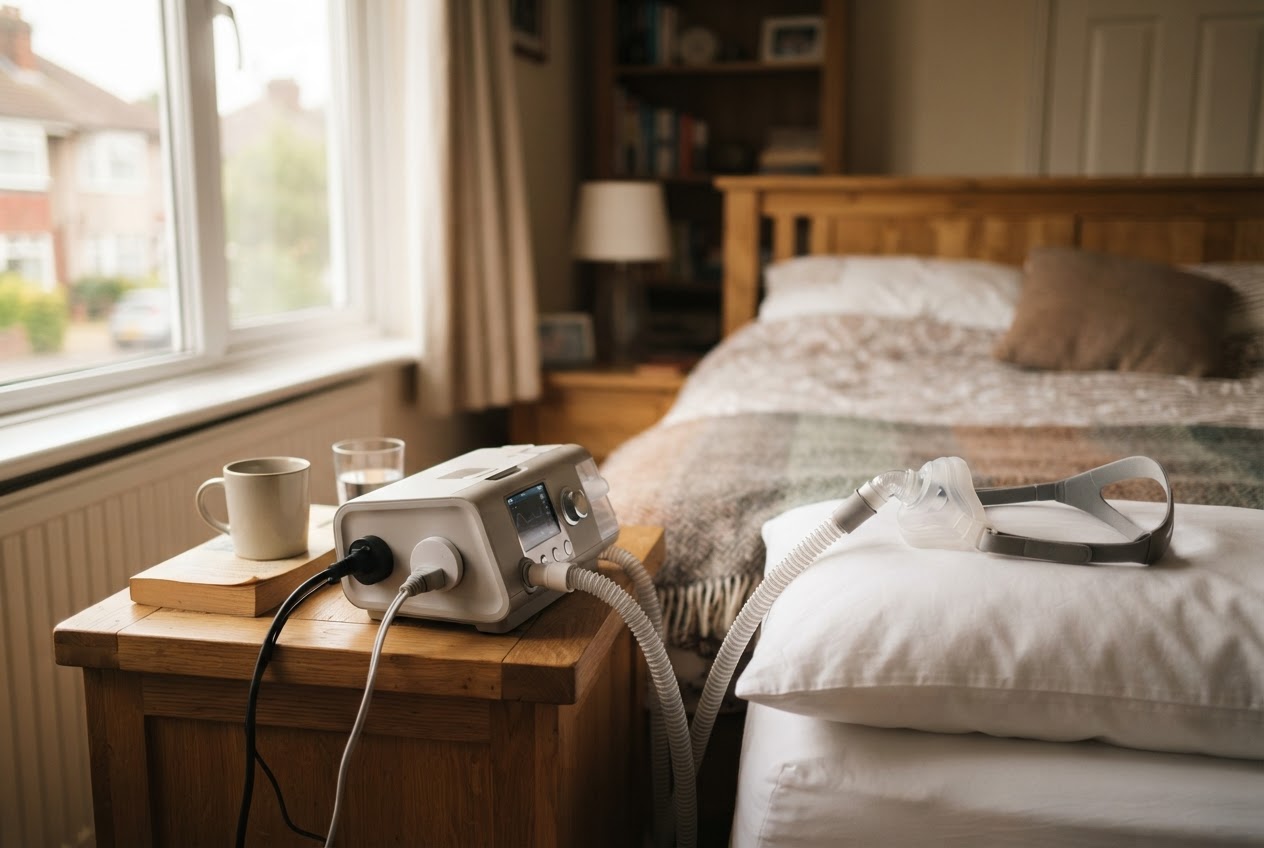

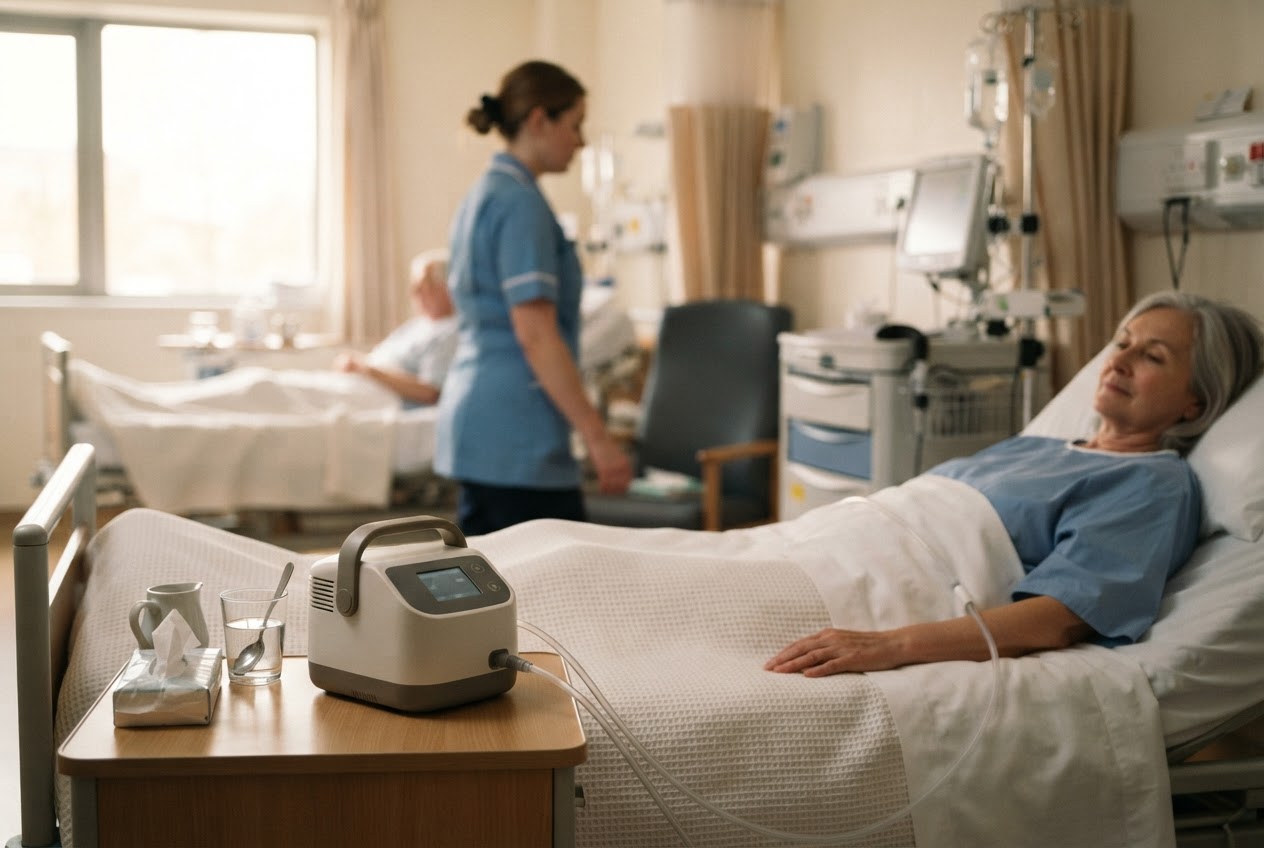
Non-invasive ventilation (NIV) is breathing support given through a mask rather than a tube in the windpipe. A small ventilator adds extra air as the person breathes in, helping them take a bigger breath and clear carbon dioxide. BiPAP, short for bilevel positive airway pressure, is a type of NIV, and many people use the two names for the same thing.
Some people need NIV in hospital for a few days. Others use it at home, in supported living or in a nursing home for years. This guide covers what your team needs to know when someone you support uses it. It doesn't cover settings, because those belong to the prescribing clinician.
How non-invasive ventilation works
The person wears a mask over the nose, or the nose and mouth, or uses nasal pillows (soft tubes that sit just inside the nostrils). The ventilator, connected by tubing, senses when they breathe in and adds airflow to make each breath bigger. A bilevel machine uses two pressures: a higher one to help the breath in, and a lower, steady one on the breath out, which can feel like a slight resistance. Some machines also give a breath automatically if the person hasn't breathed for a set time.
NIV, BiPAP, CPAP and tracheostomy ventilation
These terms get mixed up on handovers, so it helps to be clear:
- CPAP (continuous positive airway pressure) gives the same pressure when breathing in and out. It's mostly used for obstructive sleep apnoea, to stop the airway narrowing during sleep.
- BiPAP or bilevel NIV gives a higher pressure on the breath in and a lower one on the breath out. It supports people whose lungs or breathing muscles can't move enough air on their own.
- Tracheostomy ventilation is invasive. The ventilator connects to a tube placed through the front of the neck into the windpipe, fitted in hospital. People who use it are likely to depend on it fully, and their care needs a trained team. See our tracheostomy care training.
Who uses NIV at home or in care?
NIV helps when breathing has become too weak or tired to clear carbon dioxide, which can build up to dangerous levels. It's used for:
- Motor neurone disease (MND): NICE's quality standard says adults with MND who have breathing impairment should be offered NIV, with breathing checked at diagnosis or soon after and then every 2 to 3 months.
- COPD: NIV is used in hospital during some flare-ups, and NICE advises referring some people with long-term high carbon dioxide levels to a specialist centre to consider long-term NIV.
- Other neuromuscular conditions, chest wall deformity and obesity hypoventilation syndrome, where weak muscles, body shape or weight make it hard to breathe deeply enough.
Use often starts part-time. The MND Association notes that many people first need NIV only at night. It describes someone as dependent when they need a ventilator for more than 14 hours in every 24, or can't breathe effectively without it. At that point they need a back-up ventilator, a battery-powered machine for power cuts and more care support, including overnight.
Who does what
The specialist respiratory or home ventilation team assesses the person, prescribes NIV, chooses the machine and mask, and sets and adjusts the settings, sometimes remotely. The supplier arranges servicing.
Your team, working from the care plan, typically:
- helps the person put the mask on and take it off, and checks the fit
- checks the skin under and around the mask
- cleans the mask, tubing and any humidifier as instructed
- records NIV use and anything that seems different
- responds to alarms and escalates changes
Never change settings, swap equipment or add oxygen unless it's prescribed. The MND Association warns that oxygen should be used with extreme caution in MND, because oxygen alone can make carbon dioxide build-up worse. If oxygen is part of the plan, see our oxygen therapy training.
Masks, skin and comfort
A good mask fit solves a lot of problems, and a poor one causes most of them.
- Pressure damage: Great Ormond Street Hospital notes that overnight mask use raises the risk of pressure ulcers, often on the bridge of the nose or the forehead. Check the skin each time the mask comes off, and report redness that doesn't fade, or broken skin. Only use dressings the team recommends.
- Leaks: air leaking around the mask can irritate the eyes and skin. Follow the fitting guidance you were given.
- Dry mouth and nose: a humidifier, drinks (where safe for the person) and good mouth care help.
- Secretions: people with weak coughs may use a cough assist machine or need suctioning. If that's in the plan, see our oral suctioning training.
- Feeling closed in: some people find the mask claustrophobic at first. A calm, unhurried routine at bedtime makes a real difference.
Alarms and warning signs
Every machine is different, so the ventilation team should show your staff what each alarm means and what to check. When an alarm sounds, look at the person first, then the equipment.
Watch for more breathlessness, chest tightness, difficulty concentrating, new confusion or increasing drowsiness, which can mean carbon dioxide is building up. Treat sudden breathlessness or chest pain as an emergency. Our guide to NEWS2 and RESTORE2 explains how to spot and report change consistently.
Planning for emergencies
NICE guidance on MND says the care plan should cover device maintenance, 24-hour emergency clinical and technical support, the power supply (including battery back-up) and the risk of the ventilator failing, and that carers should be trained in what to do if the equipment fails. Check you have:
- out-of-hours numbers for the ventilation team and supplier, where every shift can find them
- charged batteries, any back-up ventilator, and spare masks and tubing
- a power cut plan, including asking the energy supplier to add the person to the Priority Services Register
- staff on every shift, including nights, who can remove or replace the mask in an emergency
- the person's wishes recorded, including any advance decision about tracheostomy ventilation
The person can choose to stop NIV at any time. For someone who depends on it fully, that needs careful planning with the palliative or respiratory team.
How Kasorb can help
Our Safe Use of a Ventilator course teaches nurses to use and look after the ventilator a service user depends on, trained on the make and settings that person actually uses. It covers why a ventilator is needed, setting up effective ventilation on your specific brand, recognising deterioration using NEWS2, the emergency action plan, and resetting and cleaning the equipment.
It runs on-site anywhere in the UK, in three hours, for up to 10 staff, at one price for the group. Your trainer has used these skills for real, and talks to you beforehand about the service user's care plan and ventilator. Settings stay with the prescribing clinician. Certificates are emailed the next day, ready for your own sign-off against the care plan.
FAQs
Is BiPAP the same as non-invasive ventilation?
BiPAP, short for bilevel positive airway pressure, is a type of non-invasive ventilation, and many people use the two names for the same thing. Both mean breathing support through a mask, with a higher pressure on the breath in and a lower one on the breath out.
What is the difference between CPAP and BiPAP?
CPAP gives one steady pressure when breathing in and out, and is mostly used for obstructive sleep apnoea. BiPAP gives a higher pressure on the breath in and a lower one on the breath out, which helps people whose lungs or breathing muscles need more support.
Can care staff change the settings on an NIV machine?
No. The specialist respiratory or home ventilation team prescribes and adjusts the settings. Care staff help with the mask, skin checks, cleaning, observations and alarms, and escalate changes. Follow your local policy and the person's care plan.
How many hours a day do people use NIV?
It varies. Many people start with NIV only at night and need more daytime use as their condition changes. The MND Association describes someone as dependent when they need a ventilator for more than 14 hours in every 24, or can't breathe effectively without it.
Can someone choose to stop using NIV?
Yes. NICE guidance on motor neurone disease says the person can stop non-invasive ventilation at any time. For someone who depends on it fully, stopping needs careful planning with the palliative or respiratory team, including symptom relief and support for family.
On-site training for your whole team at one flat rate. See what's covered, prices and how to book.
See the course

Not sure which course your team needs? Tell us about your setting and we'll confirm within 48 hours.