
Positive behaviour support (PBS) training for up to 12 staff, £795+VAT per session
Half a day · On-site or live online · Awareness level, non-physical
Positive behaviour support (PBS) training is for care and support staff who work with people whose behaviour can challenge. It covers why behaviour that challenges happens, how PBS plans work, and person-centred, evidence-based approaches that improve quality of life. It's awareness level and non-physical. Kasorb runs it in half a day, on-site or live online, for up to 12 staff. £795+VAT covers the session, and certificates are emailed the next day.
- Why behaviour that challenges happens, not only how to respond
- How PBS plans work, and how staff use and review them
- Awareness level and non-physical — no restrictive practice taught
- £795+VAT for the session, up to 12 staff — not per person
- Certificates emailed the next day
Tell us where you are and we’ll come back with dates and a price.
Not a booking. We'll send full details and answer any questions.
Prefer to speak? Call 0207 112 8412
The training was well put together. Professionally explained. Instructor was fun fluent and effective. It was alot to take away but delivered effectively
Trusted by health, workplace and care teams across the UK





Compliance and certification
Staff receive a Kasorb certificate of completion. It doesn't expire, but we recommend a refresher every three years. It's awareness-level, non-physical training: no restraint or restrictive practice is taught, and it isn't certified against the Restraint Reduction Network (RRN) Training Standards. It isn't a regulated qualification.
4 reasons teams choose Kasorb for Positive Behaviour Support Training
One price for the whole team
Kasorb trains your team on-site or live online for a flat £795+VAT per session, covering up to 12 people, with certification and paperwork included.
Training at your workplace
No travel planning, no separate venue booking and less disruption for your team on the day.
Understanding, not just reacting
Staff learn why behaviour happens, so they can prevent it — not only respond to it.
Compliance handled properly
Certificates are emailed the next day.
What 300+ UK organisations train with Kasorb for
177+
UK Trainers
230,000+
People Trained
438
Reviews rated 5/5 on Google & Feefo

Top 20
H&S Training Company, named by Training Industry in 2018 and 2019
Course specification
How it works
- Book online. On-site or live online. We'll confirm within 48 hours. We recommend booking at least four weeks in advance to secure your preferred date — live online offers the best availability of dates.
- Your trainer calls beforehand to confirm logistics, and to understand your service and the people you support.
- Three hours, with a short break — discussion-based, with case studies.
- Certificates are emailed the next day.
What the course covers
- What behaviour that challenges is, and why it happens
- What positive behaviour support is
- Developing and reviewing PBS plans
- Applying PBS principles in practice
- Action planning for next steps
Who needs this training
Care and support staff working with people whose behaviour can challenge:
- Support workers in learning disability and autism services
- Care and support staff in mental health services
- Supported living and residential care teams
- Team leaders who use and review PBS plans with their staff
New to PBS? Read our guide: What Is Positive Behaviour Support? A Guide for Managers.
We recommend at least Level 1 literacy and numeracy.
What the law says
In England, CQC's Regulation 13 says care must not include acts intended to control or restrain people unless they're necessary and proportionate, and CQC's Right support, right care, right culture guidance expects services for autistic people and people with a learning disability to keep restrictive practice to a minimum. Positive behaviour support is one of the main approaches services use to do that: understanding why behaviour happens, and changing what's around the person so it's less likely to happen.
Regulation 18 (staffing) also expects staff to have the training they need to support people safely. This course is awareness level and involves no physical intervention.
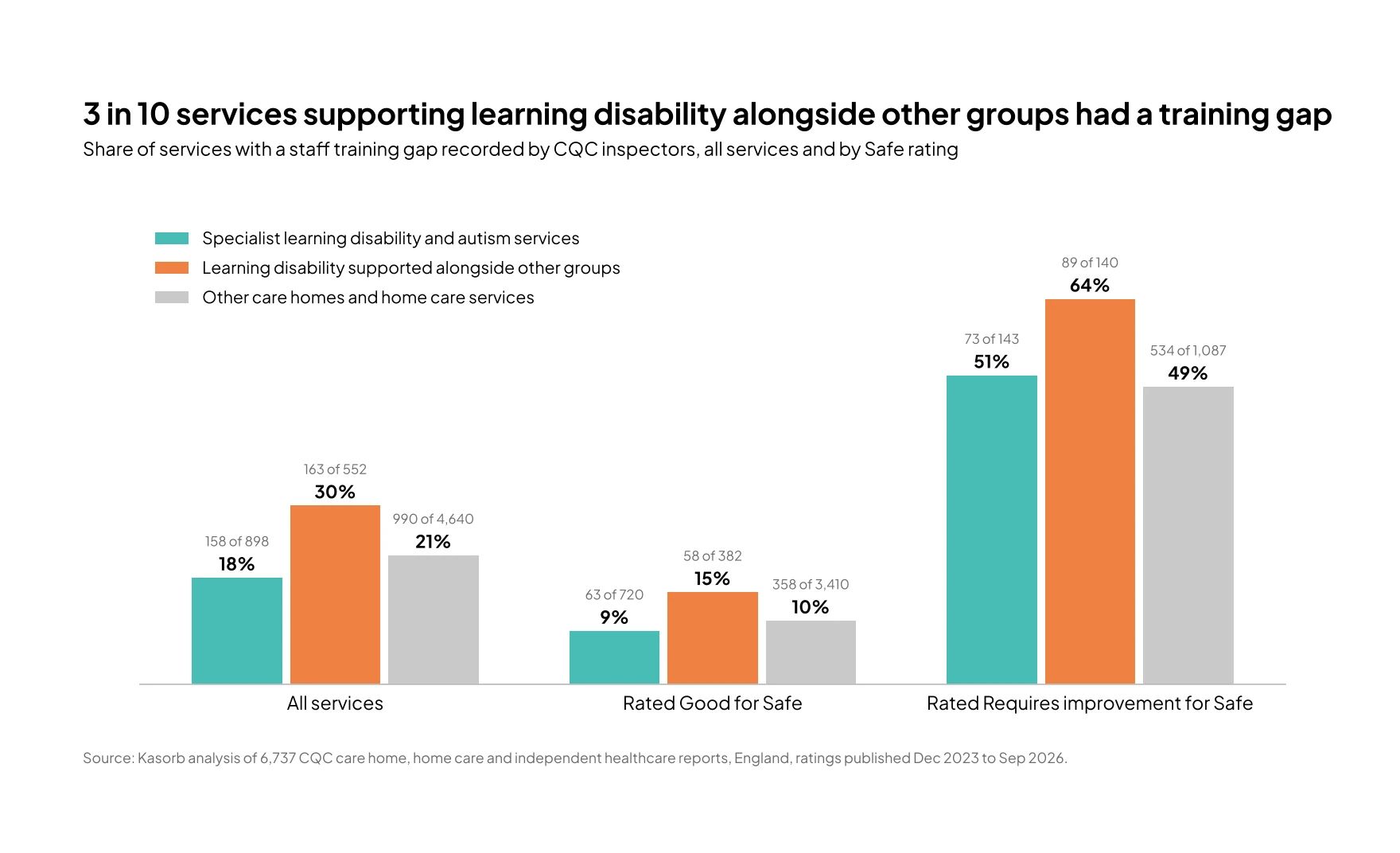
In our study of CQC reports for services supporting people with a learning disability, positive behaviour support or restrictive practice training was named at 19 of the 158 specialist learning disability and autism services with a staff training gap (12%).
How we assess learning
Learning is checked throughout the session, through case studies and questions.
Your trainer
Your trainer has used these skills for real, and runs the session as a discussion built around case studies — so staff leave understanding why behaviour happens, not only how to respond to it.
Logistics
- Room: seating for up to 12, classroom style, with a projector screen or blank wall
- The trainer brings: projector, laptop, flipchart and all general training equipment
- Group size: up to 12 per session, on-site or live online
- Timing: morning 09:30–12:30 or afternoon 13:30–16:30; staff arrive 15 minutes early
- Access: the trainer needs the room 45 minutes before the start
- Anywhere in the UK, or live online
- Live online: a quiet space and a device with camera and audio for each person joining — ideally one device each, and never more than two people per device
- Literacy: we recommend at least Level 1 literacy and numeracy
Cost explained
£795+VAT for the session, up to 12 staff. No per-person charges and no travel costs.
More to train? Book another session at the same flat rate. Several sites? Book each site through our booking site at no extra cost, or we'll arrange them for a £100+VAT admin fee.
Frequently asked questions
Who needs positive behaviour support training?
Care and support staff working with people whose behaviour can challenge: support workers in learning disability and autism services, staff in mental health services, supported living and residential care teams, and team leaders who use and review PBS plans. For more background, read our guide to positive behaviour support for managers.
Does this include physical intervention?
No. It's awareness level and non-physical: no restraint or restrictive practice is taught, and it isn't certified against the Restraint Reduction Network (RRN) Training Standards. If staff need to know how to get away safely from a grab or hold, ask us about breakaway training.
Is this enough to write PBS plans?
It gives a foundation: how PBS plans work, and how staff use and review them. Writing full PBS plans usually needs more specialist training.
Is it BILD-certified?
No. It's awareness-level PBS training, and staff receive a Kasorb certificate of completion.
How many staff can attend, and how long does it take?
Up to 12 staff per session, on-site or live online. It takes half a day: three hours, morning 09:30–12:30 or afternoon 13:30–16:30. Need to train more than 12? Book another session at the same flat rate.
How much does PBS training cost?
£795+VAT for the session, up to 12 staff, with no per-person charges and no travel costs. For a full group of 12, that works out at around £66 a head. E-learning is cheaper per head, but a trainer can answer questions about your own service, work through case studies and check understanding as they go.
Can it be done online?
Yes, live with a trainer, for up to 12 staff — not a recorded module. It's discussion-based, so it works well online. Each person needs a quiet space and a device with camera and audio, ideally one each and never more than two people per device.
How often should staff refresh?
The certificate doesn't expire, but we recommend a refresher every three years. Certificates are emailed the next day.
What does CQC expect?
In England, CQC's Regulation 13 says care must not include acts intended to control or restrain people unless they're necessary and proportionate, and its Right support, right care, right culture guidance expects services for autistic people and people with a learning disability to keep restrictive practice to a minimum. Positive behaviour support is one of the main approaches services use to do that.
How quickly can you come?
We confirm within 48 hours, and we recommend booking at least four weeks in advance to secure your preferred date.
Guides

Prefer to speak? Call 0207 112 8412