What Is PEG Feeding? A Guide for Care Teams

PEG feeding means giving liquid feed, fluids and medicines through a tube that passes through the skin of the tummy straight into the stomach. PEG stands for percutaneous endoscopic gastrostomy: the tube is placed with the help of an endoscope, a thin flexible camera. People have one when they can't eat or drink enough, or can't swallow safely.
Why people have a PEG tube
A PEG helps people who struggle to eat or drink enough to stay well, or who have swallowing problems (dysphagia) that make eating unsafe. NICE's guideline on nutrition support in adults says a gastrostomy should be considered for people likely to need tube feeding for four weeks or more.
A PEG doesn't cure the underlying condition. For some people it's temporary, until they can eat and drink safely again. For others it's long term, and part of everyday life.
PEG, RIG, NG and other tubes
The NHS Specialist Pharmacy Service groups feeding tubes by where they enter the body and where they end:
- NG (nasogastric) tube: a thin tube through the nose into the stomach.
- PEG: through the abdominal wall into the stomach, placed using an endoscope.
- RIG (radiologically inserted gastrostomy): also through the abdominal wall into the stomach, but placed using X-ray guidance. Some are held in place by a balloon rather than a fixed internal disc.
- PEJ or jejunostomy: through the abdominal wall into the jejunum, part of the small intestine. These narrower tubes tend to block more easily.
The care plan should say exactly which tube the person has and how to look after it.
Who does what
NICE says everyone having tube feeding in the community should be supported by a coordinated team, which can include dietitians, nurses, GPs and pharmacists. In practice:
- The dietitian sets the feeding regime: which feed, how it's given and when.
- The nutrition nurse or community nursing team advises on the tube and the stoma (the opening in the skin).
- The speech and language therapist assesses whether the person can safely have anything by mouth.
- The prescriber and pharmacist decide how medicines are given through the tube.
- Your care team carries out the plan, watches for problems and keeps records.
Who in your service gives feeds and medicines through a tube is set by your own policies and the person's care plan.
Day-to-day PEG care
This is awareness, not a procedure. Follow your local policy and the person's care plan, and only do tasks you've been trained and signed off for.
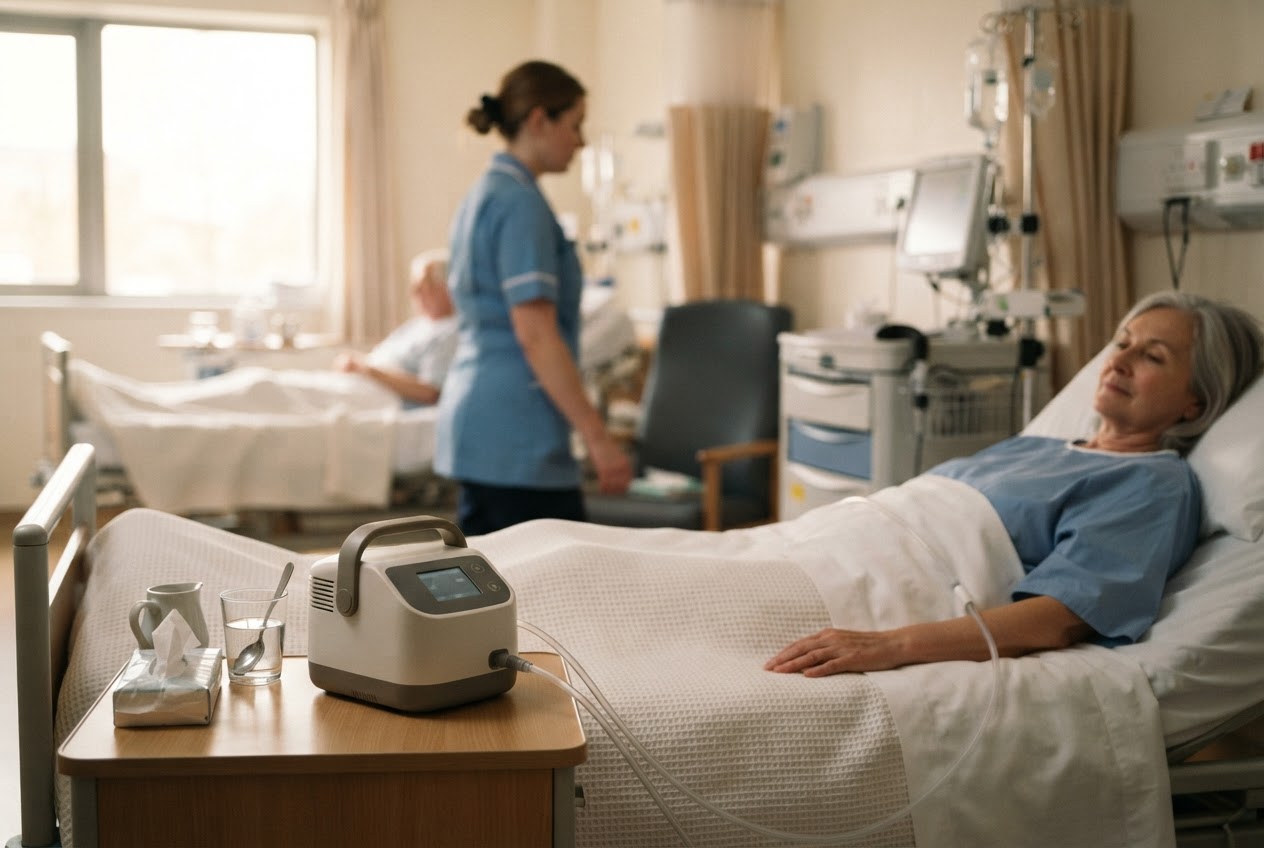
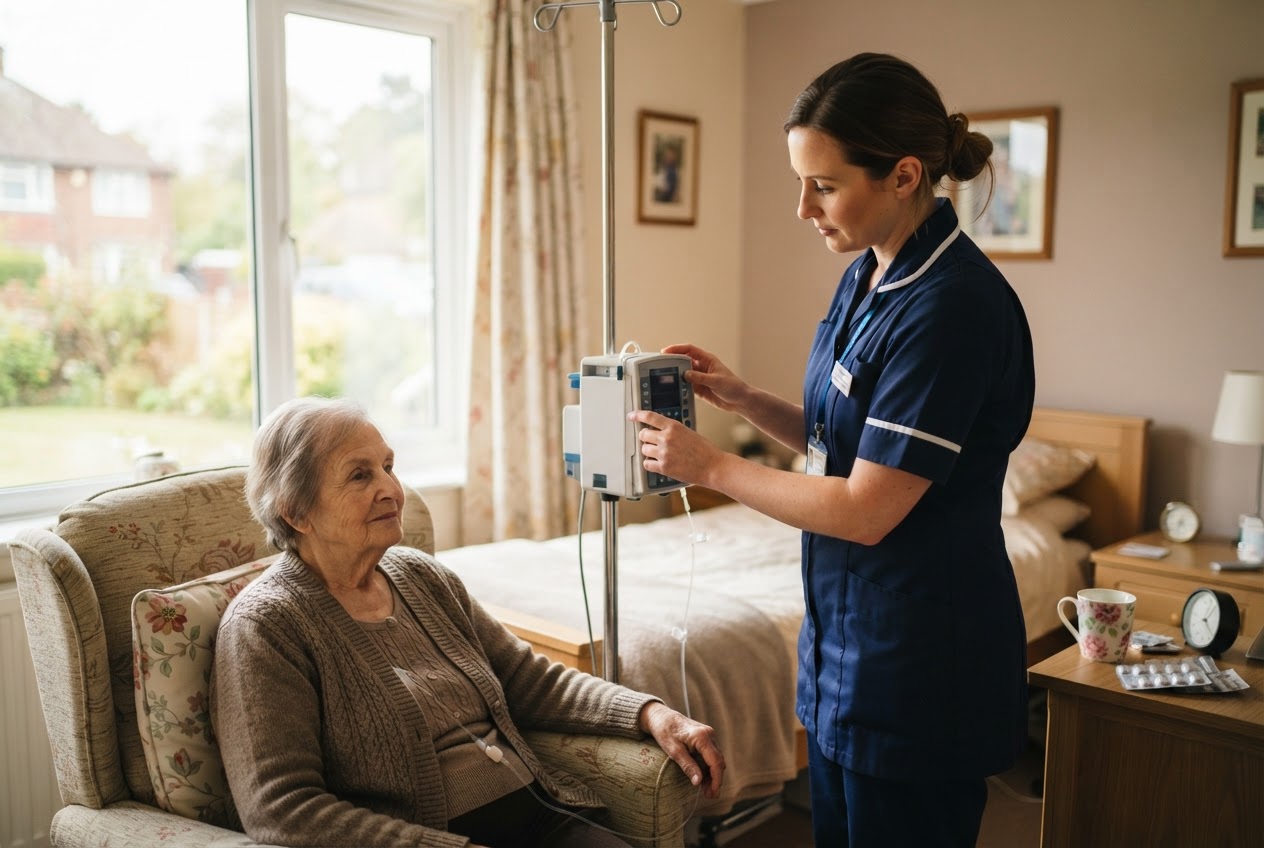
- Feeds are given by pump or in small amounts by syringe (bolus), as the dietitian's regime sets out.
- Flushing with water before and after feeds and medicines keeps the tube clear. The care plan says when and how.
- Positioning: feeds are given with the person upright, to reduce reflux and the risk of feed going into the lungs. For overnight feeds, pillows or a backrest help.
- Stoma care: clean the site daily and keep it dry. Watch for oozing, swelling, heat, redness, pain or an unpleasant smell, which can mean infection.
- Advance and rotate: some PEG tubes need gently pushing in and turning on a schedule, to stop the internal disc becoming buried in the stomach lining (buried bumper). Only do this if the care plan says so and you've been shown how.
- Mouth care: people who have nothing by mouth still build up plaque and bacteria. Clean teeth and tongue regularly, and tell the GP about a dry or sore mouth.
- Records: feeds, flushes, medicines, site checks and anything unusual.
Our nutrition and hydration training covers the wider picture of making sure people get enough to eat and drink.
Giving medicines through a PEG
Decisions about medicines through a tube belong to the prescriber and pharmacist. NHS Specialist Pharmacy Service guidance makes points care staff should know:
- Never assume a tablet can be crushed or a capsule opened. Some medicines can't be given this way, and using a medicine outside its licence puts extra responsibility on the prescriber.
- Prepare each medicine separately and never mix them. Flush between each one, as the care plan sets out.
- Use enteral (ENFit) syringes for flushing and medicines.
- Some medicines interact with feed and need a break in feeding. The pharmacist will advise.
Our medication administration training covers safe practice with medicines more broadly.
Complications and when to escalate
The tube falls out or is pulled out
Treat this as urgent. Torbay and South Devon NHS Foundation Trust's patient guide says the stoma will close very quickly, and if a new tube isn't put in soon the original procedure may need repeating, which may be risky or not possible. Don't use a tube that has moved. Contact the nutrition nurses or the number in the care plan straight away, and use NHS 111 or A&E out of hours. Don't try to reinsert it unless the care plan specifically says so and you've been trained.
Warning signs after a new tube
In the first few days after insertion, stop the feed, medicines and water and get urgent help if the person has pain when feeding, severe or lasting pain, fresh bleeding, leakage of stomach contents around the tube, a raised temperature or new breathlessness. This matters: a 2010 National Patient Safety Agency report, summarised in the BMJ, described 22 reported incidents after gastrostomy between 2003 and 2010, 11 of them fatal.
Other problems
- Blockage: never force the tube. Follow the care plan and contact the nutrition team.
- Pain, swelling of the tummy, nausea or vomiting during feeds: stop the feed and get advice.
- Breathlessness or breathing difficulty: stop the feed and get urgent help.
- Signs of infection at the site: contact the GP or nutrition team.
Quality of life and eating for pleasure
Having a PEG doesn't always mean nothing by mouth. Royal Berkshire NHS Foundation Trust's patient information explains that some people can keep eating and drinking, as advised by their dietitian and speech and language therapist, while others can't take anything by mouth if swallowing is unsafe. Swallowing is reassessed over time. If someone with a PEG has dysphagia, see our dysphagia awareness training.
Mealtimes are about more than nutrition. Ask whether the person would like to sit with others at meals, keep their mouth fresh and comfortable, and support any tastes the speech and language therapist has said are safe.
How Kasorb can help
Our PEG and enteral feeding training is delivered on-site for up to 10 staff. It covers what enteral feeding is and why PEG and NG tubes are used, giving feeds by pump and bolus, flushing and giving medication through the tube, stoma site care and positioning to reduce the risk of aspiration, mouth care for people who are nil by mouth, recognising blockage, displacement and infection, caring for an NG tube that's already in place, and working to the care plan and the dietitian's regime with accurate records. Your trainer has used these skills for real and builds the session around the tubes your team supports. It's one price for the group, and certificates are emailed the next day. Afterwards, your own supervised sign-off in practice confirms each person against the care plan.
FAQs
What does PEG stand for?
PEG stands for percutaneous endoscopic gastrostomy. Percutaneous means through the skin, endoscopic means it's placed with the help of an endoscope (a thin flexible camera), and gastrostomy means an opening into the stomach. The tube lets feed, fluids and medicines go straight into the stomach.
Can someone with a PEG tube still eat and drink?
Sometimes. Some people can keep eating and drinking alongside tube feeding, as advised by their dietitian and speech and language therapist. Others can't take anything by mouth because swallowing isn't safe. Follow the person's care plan, which should say exactly what's safe.
What should you do if a PEG tube falls out?
Treat it as urgent, because the stoma can close very quickly. Don't use the tube. Contact the nutrition nurses or the number in the care plan straight away, or NHS 111 or A&E out of hours. Don't try to reinsert it unless the care plan specifically says so and you've been trained.
Can care workers give PEG feeds?
In many services, yes, once they've been trained and signed off in practice. Who gives feeds and medicines through a tube is set by the provider's policies, the person's care plan and the clinical team overseeing their feeding, so check your own policy first.
Can medicines be given through a PEG tube?
Yes, but the prescriber and pharmacist decide how. Not every tablet can be crushed or capsule opened, each medicine is prepared and given separately with flushes in between, and some need a break from feeding. Always follow the care plan and check any new medicine with the pharmacist.
On-site training for your whole team at one flat rate. See what's covered, prices and how to book.
See the course

Not sure which course your team needs? Tell us about your setting and we'll confirm within 48 hours.