
Safeguarding adults training (Level 2) for up to 14 staff (12 online), £395+VAT
One day · On-site or live online · England & Wales or Scotland versions
Safeguarding adults Level 2 training is for frontline staff who support adults in health and social care. It helps them recognise an adult at risk, spot the signs of abuse and neglect, understand the barriers to disclosure, and know how to respond, report and record a concern. Kasorb runs it in one day, on-site for up to 14 staff or live online for up to 12, at £395+VAT for the group. Certificates are emailed the next day, and we recommend refreshing every three years.
- Level 2 safeguarding for all frontline staff
- Spotting abuse — and the barriers that stop people telling you
- Respond, report, record: exactly what to do
- England & Wales or Scotland versions
- On-site (up to 14 staff) or live online (up to 12)
Tell us where you are and we’ll come back with dates and a price.
Not a booking. We'll send full details and answer any questions.
Prefer to speak? Call 0207 112 8412
Great training. Trainer was very knowledgable and able to answer any additional questions that we had. Interactive training session.
Trusted by health, workplace and care teams across the UK






Compliance and certification
Each person receives a Kasorb certificate of completion. We recommend refreshing every three years, in line with the national Core Skills Training Framework, or sooner if your own policy requires. It isn't a regulated qualification. This version covers England and Wales; a Scotland version is available.
4 reasons teams choose Kasorb for Safeguarding Adults Training
One price for the whole team
Kasorb trains your team for a flat £395+VAT fee, covering up to 14 people on-site or 12 live online, with certificates emailed the next day.
Training at your workplace
No travel planning, no separate venue booking and less disruption for your team on the day.
Discussion, not slides
Real scenarios, grey areas and barriers to disclosure, worked through with your team.
Compliance handled properly
Certificates are emailed the next day.
What 300+ UK organisations train with Kasorb for
177+
UK Trainers
230,000+
People Trained
438
Reviews rated 5/5 on Google & Feefo

Top 20
H&S Training Company, named by Training Industry in 2018 and 2019
Course specification
How it works
- Book online — England & Wales or Scotland version, or the combined adults and children course. We'll confirm within 48 hours. We recommend booking at least four weeks in advance to secure your preferred date.
- Send your safeguarding policy in advance if you'd like the session to reflect your own procedures.
- One day, 09:30–16:30, on-site or live online — discussion-based, working through real scenarios.
- Certificates are emailed the next day.
What the course covers
- Recognising who is an adult at risk
- Recognising the signs and symptoms of abuse and neglect
- The legislative, regulatory and policy framework
- Barriers to disclosure, and supporting the adult at risk
- How to respond, report and record concerns
- Your own role and responsibilities, and when to share information with other people or agencies
Who needs this training
All staff supporting adults in health, social care and education settings — care workers, support workers, nurses, domestic and kitchen staff, and volunteers. Safeguarding leads need our Level 3 Designated Safeguarding Lead course. We recommend at least Level 1 literacy and numeracy.
Options: a combined adults and children version for services that support both, and a Scotland version reflecting Scottish legislation, both at the same £395+VAT; and a one-day Safeguarding for Managers course at £595+VAT. This version covers England and Wales.
What the law says
In England, CQC's Regulation 13 requires registered providers to protect people from abuse and improper treatment, with effective systems to prevent abuse and to investigate concerns immediately. CQC expects staff to be trained in safeguarding from induction. Level 2 is for staff who have regular contact with patients, service users or their families, so they can recognise abuse and know what to do.
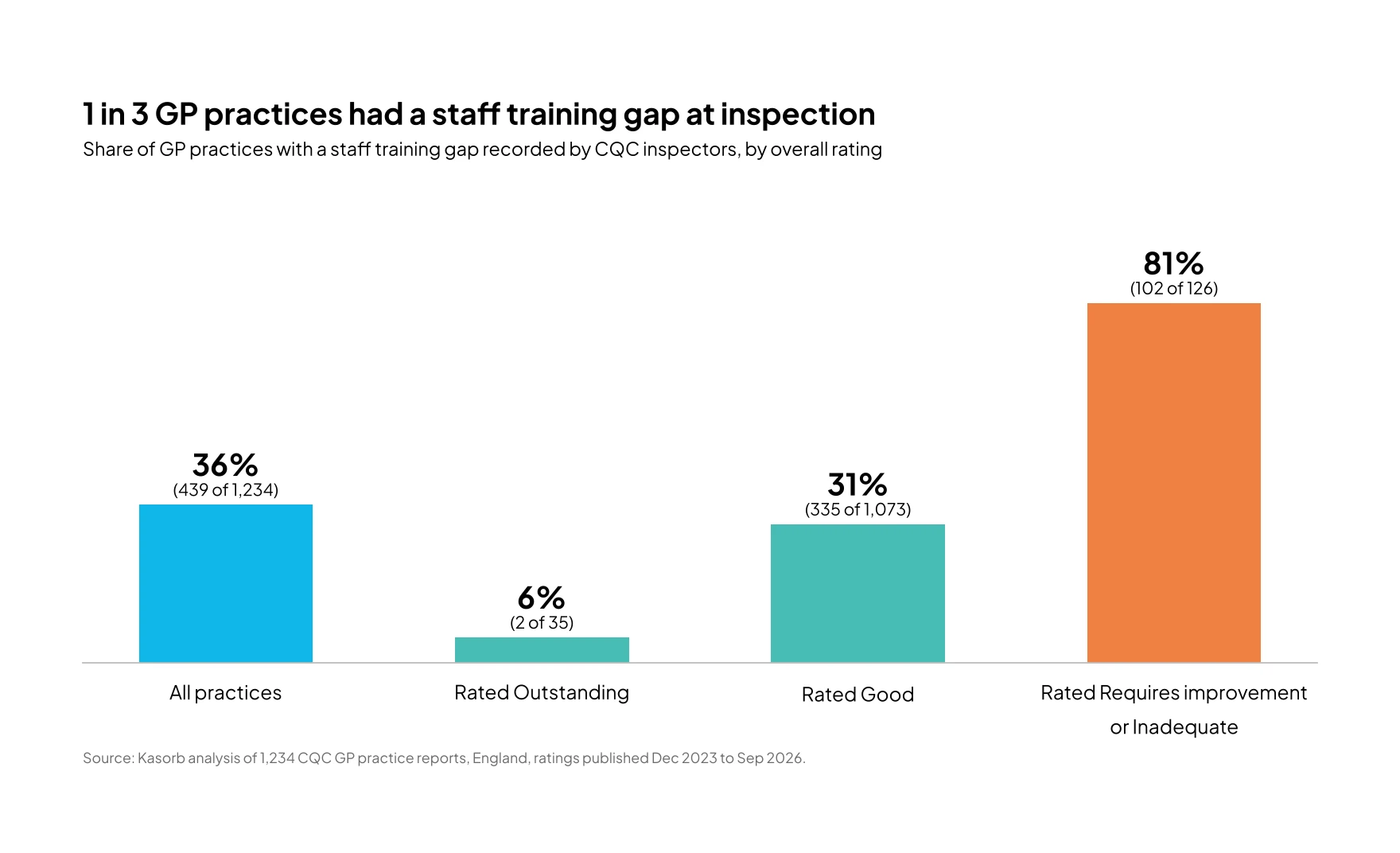
In our study of 1,234 CQC GP practice reports, safeguarding was the training subject inspectors named most often in the gaps they recorded, at 146 practices.
In our study of CQC independent hospital and clinic reports, safeguarding was named in 135 of the 286 staff training gaps inspectors recorded (47%).
How we assess learning
Learning is checked through discussion, scenarios and questions throughout the day. There's no formal end-of-course assessment.
Your trainer
Your trainer has worked in safeguarding and/or care, and runs the session as a discussion, not a lecture — because the learning that sticks in safeguarding comes from talking it through.
Logistics
- Room: table and chairs — conference, U-shape or classroom style
- You provide: a projector screen or blank wall, and a flipchart
- The trainer brings: projector, laptop, pens, flipcharts and all general training equipment
- Live online: a quiet space and a device with camera and audio for each person joining — ideally one device each, and never more than two people per device
- Group size: up to 14 face to face, 12 online
- Timing: 09:30–16:30; staff arrive 15 minutes early
- Access: the trainer needs the room 45 minutes before the start
- Literacy: we recommend at least Level 1 literacy and numeracy
Cost explained
£395+VAT for up to 14 staff (12 online) — the same for the combined adults and children version and the Scotland version. Safeguarding for Managers is £595+VAT. More than 14? Book another day at the same flat rate. Several sites? Book each site through our booking site at no extra cost, or we'll arrange them for a £100+VAT admin fee.
Frequently asked questions
Is this Level 2, and who needs it?
Yes. This is safeguarding adults Level 2, the level for frontline staff who have regular contact with patients, service users or their families. That includes care workers, support workers, nurses, domestic and kitchen staff, and volunteers in health, social care and education settings. Safeguarding leads need our Level 3 Designated Safeguarding Lead course.
How long does it take?
One day, 09:30–16:30. Staff arrive 15 minutes early.
How many staff can attend, and why up to 14?
Up to 14 staff face to face, or 12 live online. Safeguarding is learned best by talking through real situations, not just listening. With up to 14 staff, everyone can take part in case-study discussions, raise questions from their own workplace, and get time with the trainer. Need to train more? Book another day at the same flat rate.
What does it cost?
£395+VAT for the whole group, not per person — up to 14 staff on-site or 12 online. The combined adults and children version and the Scotland version are the same price. Safeguarding for Managers is a separate one-day course at £595+VAT.
On-site or live online?
Either. On-site, the trainer comes to your workplace. Live online, staff need a quiet space and a device with camera and audio — ideally one device each, and never more than two people per device.
Why a live trainer, when there's e-learning?
Safeguarding is an emotive subject, and the learning that sticks comes from discussion. A trainer works through real scenarios with your team, including the grey areas and barriers to disclosure that e-learning skims over, and answers questions about your own procedures.
Do you have Scotland and adults and children versions?
Yes. This version covers England and Wales. A Scotland version reflects Scottish legislation, and a combined adults and children version suits services that support both. Tell us which you need when you book.
Is it suitable for staff outside care and health settings?
The course is written for frontline staff who have contact with service users. If you send your own safeguarding policy and procedures in advance, the trainer works from them on the day.
How often should staff refresh?
We recommend refreshing this training every three years, in line with the national Core Skills Training Framework. Some employers require more frequent refreshers, so check your organisation's policy. Each person gets a Kasorb certificate of completion, emailed the next day.
What does CQC expect?
In England, CQC's Regulation 13 requires registered providers to protect people from abuse and improper treatment, and CQC expects staff to be trained in safeguarding from induction. For the wider picture, read our guide to mandatory training for care workers and what CQC expects.
How quickly can you come?
We confirm within 48 hours, and we recommend booking at least four weeks in advance to secure your preferred date.
Guides



Prefer to speak? Call 0207 112 8412